

Your puppy won’t eat. The vomiting started yesterday. Now there’s bloody diarrhea. The parvo test came back positive, and panic sets in.
Canine parvovirus kills rapidly, often within 48-72 hours without treatment. While veterinary hospitalization offers the highest survival rate at 78-90%, home supportive care combined with veterinary guidance can achieve 60-70% survival when done correctly. The key is knowing exactly what to do, hour by hour, and recognizing when your dog needs emergency intervention.
This guide provides the specific protocols I’ve used in 15 years of emergency practice to help dog owners provide critical supportive care at home, but only when combined with veterinary oversight.
Key Takeaways:
- Parvo home treatment requires veterinary supervision and aggressive supportive care every 2-4 hours
- Dehydration kills faster than the virus, fluid replacement is your #1 priority
- Subcutaneous fluids at home can be life-saving when IV access isn’t available
- 60-70% of dogs survive with proper home care vs. 78-90% with hospitalization
- Emergency vet visit is non-negotiable if gums turn white, breathing becomes labored, or seizures occur
- Prevention through vaccination costs $30-50; parvo treatment averages $5,000+ at vet clinics
What Is Canine Parvovirus and Why Is It So Deadly?
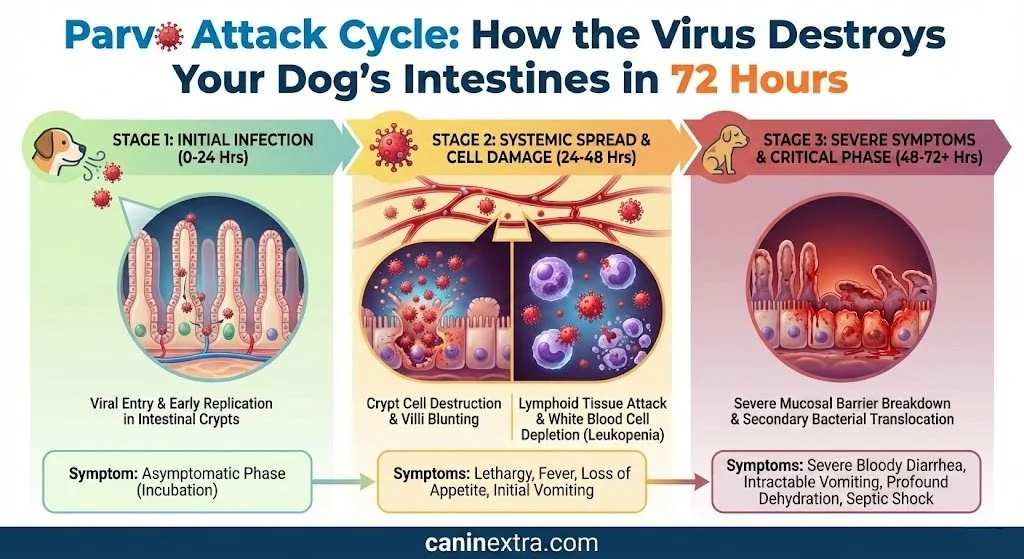
Canine parvovirus is a highly contagious virus that attacks rapidly dividing cells in a dog’s body, primarily the intestinal lining and bone marrow. The virus destroys the protective barrier in your dog’s gut, allowing bacteria to leak into the bloodstream while simultaneously weakening their immune system.
The result? Severe vomiting, bloody diarrhea, rapid dehydration, septic shock, and often death within 48-72 hours if untreated. Puppies between 6 weeks and 6 months are most vulnerable, though unvaccinated dogs of any age can contract parvo.
How Parvo Attacks the Body:
The virus specifically targets cells that divide quickly. In the intestines, this means the protective lining gets destroyed faster than it can regenerate. In bone marrow, white blood cells, your dog’s immune defenders, plummet to dangerous levels. Without these defenses, secondary bacterial infections overwhelm the body.
Dogs don’t die from parvo itself, they die from dehydration, electrolyte imbalances, septic shock, or overwhelming bacterial infections that develop as complications.
Transmission and Environmental Survival:
Parvovirus spreads through direct contact with infected feces or contaminated surfaces. The virus is extraordinarily resilient, surviving in soil for up to 1 year and on indoor surfaces for 2+ months. A single gram of infected stool contains millions of viral particles, enough to infect dozens of dogs.
Your dog can catch parvo from:
- Dog parks where infected dogs have been
- Veterinary clinics with inadequate disinfection
- Your shoes after walking through contaminated areas
- Shared food/water bowls, leashes, or collars
- Direct nose-to-feces contact during walks
Can You Actually Treat Parvo at Home? Understanding the Reality
Let’s be direct: treating parvo at home is possible but comes with significant limitations and risks. Research shows that hospitalized dogs have a 78-90% survival rate, while home-treated dogs achieve 60-70% survival and that’s only when owners provide intensive round-the-clock care with veterinary guidance.
What Professional Treatment Provides That You Can’t Replicate:
Professional veterinary care offers critical interventions that dramatically improve survival:
- Intravenous fluid therapy: IV fluids deliver hydration directly into the bloodstream, correcting dehydration and electrolyte imbalances within hours. This is far more effective than oral or subcutaneous routes
- Injectable anti-nausea medications: Drugs like maropitant (Cerenia) or ondansetron stop vomiting within 30 minutes, allowing the gut to rest and heal
- Antibiotic therapy: Injectable broad-spectrum antibiotics prevent life-threatening sepsis as bacteria escape the damaged intestinal wall
- 24-hour monitoring: Vital signs are checked every 2-4 hours, catching complications before they become fatal
- Advanced diagnostics: Blood work every 6-12 hours tracks white blood cell counts, blood sugar, and electrolytes
- Plasma transfusions: Severe cases receive clotting factors and antibodies from recovered dogs
- Monoclonal antibody therapy: New treatment (CPMA) neutralizes the virus with a single injection, showing 100% survival in early clinical trials
When Home Treatment Makes Sense:
Home care may be your only option if:
- The nearest emergency vet is 2+ hours away
- Costs exceed $3,000-7,000 and you cannot afford hospitalization
- Your dog has mild symptoms caught extremely early (within first 24 hours)
- Your vet recommends outpatient care with daily clinic visits for injectable medications
- You have previous medical training or veterinary guidance
Critical Requirements for Home Treatment:
You need 100% commitment to:
- Administering fluids every 2-4 hours, 24 hours per day, for 5-7 days
- Sleeping next to your dog to monitor breathing and consciousness
- Cleaning up bloody diarrhea and vomit 10-20+ times daily
- Maintaining strict quarantine and disinfection protocols
- Recognizing emergency warning signs instantly
- Having transportation ready for emergency vet visits at 2 AM
If you cannot provide this level of care, hospitalization is essential. Parvo doesn’t take nights or weekends off.
Critical Warning Signs: When Home Treatment Becomes Emergency Care
Even with excellent home care, some dogs deteriorate rapidly and need immediate veterinary intervention. Learn these emergency red flags, they can save your dog’s life.
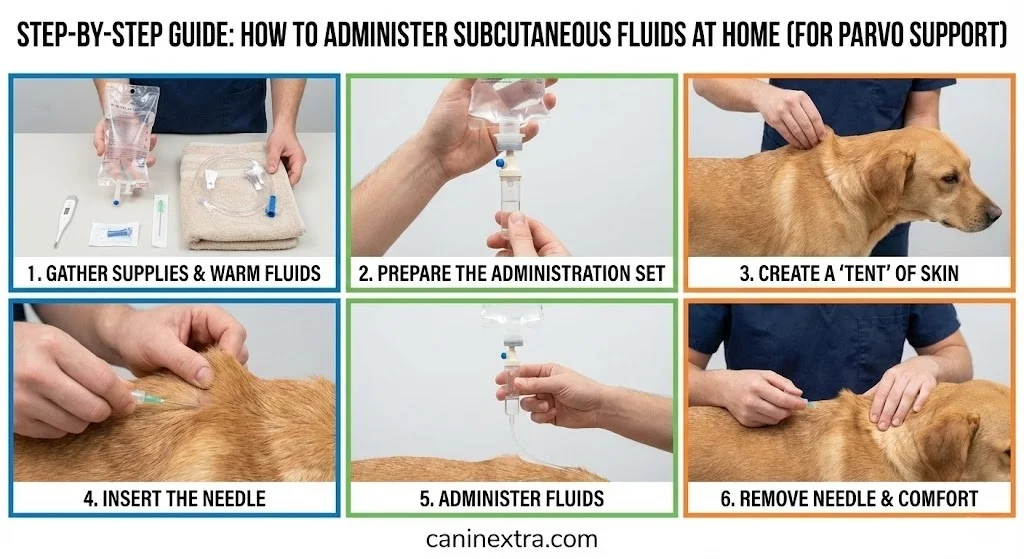
Call Your Emergency Vet IMMEDIATELY If You See:
White or Pale Gray Gums: Normal gums are bubble-gum pink. Press your finger against the gum, it should blanch white, then return to pink within 1-2 seconds (capillary refill time). If gums stay white or gray, your dog is in shock and needs IV fluids NOW.
Labored or Rapid Breathing: Respiratory rate above 40 breaths per minute at rest indicates severe dehydration, pain, or sepsis. Count chest rises for 15 seconds and multiply by 4.
Inability to Stand or Walk: Profound weakness suggests severe dehydration, critically low blood sugar, or septic shock. This is a medical emergency.
Temperature Below 99°F or Above 105°F: Normal dog temperature is 101-102.5°F. Hypothermia (too cold) indicates shock; high fever suggests sepsis.
No Urine Output for 12+ Hours: Kidneys shut down from dehydration. Without IV fluids, kidney damage becomes permanent within 24-48 hours.
Seizures or Loss of Consciousness: Extremely low blood sugar (common in puppies under 12 weeks) or septic shock affecting the brain. Emergency vet visit required within minutes, not hours.
Projectile Vomiting After Every Attempt to Give Fluids: Severe cases cannot retain anything—oral hydration fails completely. IV or subcutaneous fluids are mandatory.
Bloody Diarrhea with Putrid Smell: While bloody stool is expected with parvo, a sweet or putrid odor indicates intestinal tissue death (necrosis). This requires immediate surgical evaluation.
How To Provide Supportive Parvo Care at Home: Step-by-Step Protocol
If you and your veterinarian have decided on home treatment with regular veterinary check-ins, here’s the intensive care protocol that gives your dog the best survival chance.
Step 1: Hydration, Your #1 Life-Saving Priority
Dehydration kills parvo puppies faster than the virus itself. Vomiting and diarrhea cause fluid loss of 5-10% body weight per day. Your dog needs constant fluid replacement.
Subcutaneous (Under-the-Skin) Fluid Administration:
This is the single most important home treatment skill. Your vet can send you home with:
- Lactated Ringer’s Solution or 0.9% Saline (sterile IV fluids)
- 18-gauge needles
- Fluid administration set with roller clamp
- Instructions for proper technique
Dosing: Give 50-100 mL per 10 pounds of body weight every 4-6 hours. For a 20-pound puppy, that’s 100-200 mL (about 3-7 ounces) four times daily.
How To Give Sub-Q Fluids:
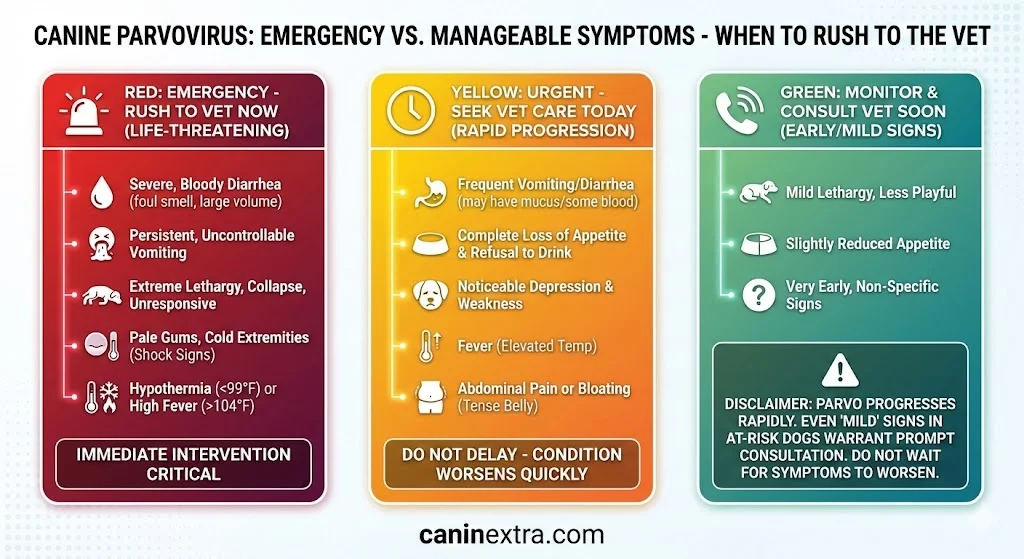
- Warm fluids to body temperature (98-102°F) by placing the bag in warm water for 10 minutes
- Hang the fluid bag above your dog’s level
- Tent the skin between the shoulder blades
- Insert needle at a 45-degree angle into the tented skin pocket
- Open the roller clamp and watch fluid form a bulge under the skin
- Give the prescribed amount (this takes 3-5 minutes)
- Remove needle and gently massage the area
The fluid pocket absorbs over 6-8 hours. Don’t panic, it’s supposed to look like a fluid-filled lump.
Oral Electrolyte Solutions:
Between subcutaneous sessions, offer small amounts frequently:
- Unflavored Pedialyte (diluted 50/50 with water)
- Homemade electrolyte solution: 1 quart water + 1 tablespoon sugar + 1 teaspoon salt
Critical mistake to avoid: Never force large amounts at once. Offer 1-2 teaspoons every 15-30 minutes. Forcing large volumes triggers vomiting, worsening dehydration.
Step 2: Nutrition, When and What To Feed
Most dogs with parvo won’t eat for 3-5 days. Don’t panic. Hydration matters more than food for the first 48 hours. Once vomiting decreases (8-12 hours without vomiting), introduce food gradually.
The Refeeding Timeline:
Days 1-2: No food. Focus entirely on hydration. Offering food triggers vomiting.
Day 3-4: Once vomiting stops for 12 hours, offer tiny amounts:
- 1 teaspoon boiled chicken (no skin, no bones) + plain white rice
- Mashed sweet potato with a raw egg yolk
- Canned pumpkin (pure, not pie filling)
- Bone broth (low sodium, no onions/garlic)
Day 5-7: Gradually increase portions. Offer 1 tablespoon every 2 hours.
Week 2: Transition back to regular puppy food over 7 days, mixing 25% new food with 75% bland diet, then 50/50, then 75/25.
Appetite Stimulation Techniques:
- Warm food slightly (releases aroma)
- Add a spoonful of baby food (chicken or beef, no onions/garlic)
- Hand-feed small amounts
- Try boosting your dog’s immune system naturally with gentle nutrition
Never force-feed. If your dog completely refuses food for 5+ days, tube feeding at the vet becomes necessary.
Step 3: Controlling Vomiting and Nausea
Without prescription anti-nausea medications, you’re limited to supportive measures:
Ginger Tea: Steep fresh ginger in hot water, cool completely, offer 1-2 teaspoons every 4 hours. Ginger has natural anti-nausea properties.
Small, Frequent Fluid Offerings: Large amounts stretch the stomach, triggering vomit. Give tiny amounts constantly.
Elevate Food/Water Bowls: Reduces strain on the esophagus in weak dogs.
Ice Chips: Let your dog lick ice chips, hydration without overwhelming the stomach.
Veterinary Medications Are Superior:
Ask your vet about prescribing:
- Maropitant (Cerenia) tablets: Most effective anti-nausea drug
- Metoclopramide (Reglan): Reduces vomiting and promotes stomach emptying
- Ondansetron: Human anti-nausea medication safe for dogs
These medications dramatically reduce vomiting, allowing better hydration and faster recovery.
Step 4: Managing Diarrhea at Home
Bloody, foul-smelling diarrhea is expected with parvo. Your goal isn’t to stop it completely (the body is expelling virus and dead tissue) but to prevent dehydration and keep your dog comfortable.
Probiotics for Gut Support:
Once vomiting decreases, introduce:
- Fortiflora or Proviable DC (veterinary probiotics)
- Plain Greek yogurt with live cultures (1 teaspoon per 10 pounds)
- Colostrum supplements for immune and gut support
Fiber for Stool Consistency:
- Canned pumpkin (NOT pie filling): 1 teaspoon per 10 pounds twice daily
- Slippery elm bark powder mixed with water creates a soothing gut lining
Anti-Diarrheal Medications, Use With Caution:
DO NOT give Imodium or other anti-motility drugs without vet approval. Stopping intestinal movement can trap bacteria and toxins, worsening sepsis.
Step 5: Preventing Secondary Bacterial Infections
With parvo destroying the gut lining, bacteria escape into the bloodstream. Without prescription antibiotics, your dog faces high sepsis risk.
Call Your Vet for Antibiotics:
Most vets will prescribe:
- Amoxicillin-clavulanate (Clavamox)
- Metronidazole (Flagyl)
- Enrofloxacin (Baytril)
These prevent life-threatening blood infections as the intestinal barrier heals.
Natural Immune Support:
While NOT replacements for antibiotics, these support overall immunity:
- Colostrum powder: 1/8 teaspoon per 25 pounds daily
- Vitamin C: 100 mg per 10 pounds twice daily
- Bone broth: Provides zinc and amino acids for healing
Step 6: Isolation and Disinfection, Protecting Other Dogs
Parvovirus spreads explosively. One infected dog can contaminate your entire home and yard for months.
Quarantine Protocol:
- Isolate infected dog in one room with washable floors (no carpet)
- No contact with other dogs for minimum 2 weeks after recovery
- Wear dedicated clothing/shoes that don’t leave the quarantine room
- Wash hands with soap for 30 seconds after every contact
Disinfection That Actually Kills Parvo:
Regular household cleaners DON’T work. Parvo resists most disinfectants.
Effective Options:
Bleach Solution: 1 part household bleach + 30 parts water. Let surfaces stay wet for 10 minutes. Best for hard surfaces, food bowls, floors.
Accelerated Hydrogen Peroxide (AHP): Products like Rescue or Accel. Follow label directions for parvo-specific contact time.
Potassium Peroxymonosulfate: Trifectant or Virkon S. Professional-grade disinfectant used in veterinary clinics.
What To Disinfect:
- Food and water bowls (replace plastic, use metal or glass)
- Floors, walls, crates, kennels
- Leashes, collars, toys
- Your shoes, clothing
- Car interior if dog traveled while infected
Yard Disinfection:
Outdoor surfaces are nearly impossible to fully disinfect. Sunlight helps, UV rays slowly inactivate the virus over months. For high-traffic areas:
- Spray with AHP or potassium peroxymonosulfate disinfectant
- Remove feces immediately with plastic bags
- Restrict access for unvaccinated dogs for 6-12 months
Parvo Treatment Timeline: What To Expect Day by Day
Understanding the disease progression helps you know what’s normal vs. what requires emergency care.
Day 1-2 (Acute Phase):
- Lethargy, loss of appetite
- Vomiting begins (clear liquid, then bile, then food)
- Mild diarrhea starts
This is your intervention window. Dogs treated within 24 hours of symptom onset have the highest survival rates.
Day 3-4 (Critical Phase):
- Bloody diarrhea begins
- Vomiting intensifies
- Severe dehydration sets in
- Fever spikes (103-106°F) or temperature drops below 99°F
- Profound weakness, dog can barely stand
Most deaths occur during this period from dehydration, electrolyte imbalances, or septic shock. This is when 24-hour veterinary monitoring saves lives.
Day 5-7 (Turning Point):
- If your dog survives to day 5, survival odds improve dramatically
- Vomiting decreases
- Appetite may return slightly
- Energy improves marginally
- Diarrhea continues but becomes less bloody
Week 2 (Recovery Phase):
- Appetite returns fully
- Energy slowly increases
- Diarrhea resolves
- Weight gain begins
Full intestinal healing takes 3-4 weeks. Don’t rush back to normal activity or diet changes.
Home Treatment Success Rates and Cost Reality
Let’s talk numbers, both survival statistics and financial realities that drive the decision to treat at home.
Survival Rate Comparison:
With No Treatment: 9% survival (most die within 72 hours)
With Home Treatment (Intensive): 60-70% survival
- Requires subcutaneous fluids
- Veterinary-prescribed medications
- Daily or every-other-day vet check-ins
- Round-the-clock monitoring
With Veterinary Hospitalization: 78-90% survival
- IV fluid therapy
- Injectable medications
- Continuous monitoring
- Advanced interventions available
The 10-20% Difference Explained:
The survival gap between home care and hospitalization comes from:
- IV fluids work faster and more effectively than subcutaneous
- Injectable anti-nausea medications stop vomiting within 30 minutes
- Trained staff catch complications instantly (low blood sugar, sepsis)
- Blood work every 6-12 hours guides treatment adjustments
Financial Reality:
Veterinary Hospitalization Costs:
- Mild case (2-3 days): $1,500-3,000
- Moderate case (4-5 days): $3,000-5,000
- Severe case (5-7 days): $5,000-10,000+
Home Treatment Costs:
- Initial vet visit + parvo test: $100-200
- Subcutaneous fluids + supplies: $150-300
- Prescription medications: $100-200
- Follow-up visits (3-4): $200-400
- Total: $550-1,100
Home treatment costs 75-85% less than hospitalization, this is why many owners choose it, despite the lower survival rate.
Prevention: The $30 Solution That Saves Lives
After watching my own puppy nearly die from parvo early in my career, I cannot emphasize this enough: vaccination prevents nearly 100% of parvo cases.
Puppy Vaccination Schedule:
Puppies need multiple doses because maternal antibodies interfere with vaccine effectiveness:
- First vaccine: 6-8 weeks of age
- Second vaccine: 10-12 weeks of age
- Third vaccine: 14-16 weeks of age
- Fourth vaccine: 18-20 weeks of age (optional, for high-risk breeds)
- First booster: 1 year later
- Adult boosters: Every 3 years thereafter
Cost: $15-25 per vaccine dose. Total puppy series: $60-100.
Why Multiple Doses?
Maternal antibodies from nursing protect puppies initially but also block vaccine response. The window when puppies are vulnerable but maternal immunity has waned is 6-16 weeks, the highest-risk period. Multiple vaccines ensure at least one dose “takes” when maternal antibodies drop.
High-Risk Situations Requiring Extra Protection:
- Breeds with known vulnerability: Rottweilers, Dobermans, Pit Bulls, German Shepherds
- Puppies from shelters or rescues (unknown vaccination history)
- Households with previous parvo cases
- Areas with parvo outbreaks
Between Vaccine Doses, Protect Your Puppy:
- Avoid dog parks, pet stores, grooming facilities
- No contact with unvaccinated dogs
- Carry puppy in arms at veterinary clinics
- Don’t let puppy sniff other dogs’ feces during walks
- Sanitize your shoes before entering home
Frequently Asked Questions
Can you treat parvo at home without a vet?
Treating parvo without ANY veterinary involvement is extremely risky and not recommended. While intensive home care can achieve 60-70% survival rates, this requires veterinary-prescribed medications (antibiotics, anti-nausea drugs), subcutaneous fluids with proper technique training, and daily or every-other-day vet check-ins to monitor progress. Complete self-treatment without professional guidance drops survival rates to 20-30%.
How do you know if your dog will survive parvo?
Several factors predict survival: Dogs treated within 24 hours of symptom onset have 85%+ survival rates. Puppies maintaining a normal temperature (101-102.5°F) and producing urine regularly have better odds. If your dog survives to day 5 with decreasing vomiting and improving energy, survival likelihood exceeds 80%. Warning signs of poor prognosis include white gums, inability to stand, no urine output for 12+ hours, or seizures.
What is the fastest way to cure parvo?
There is no “cure” for parvo, it’s a virus that must run its course over 5-10 days. The fastest path to recovery combines intensive IV fluid therapy (corrects dehydration in 12-24 hours), injectable anti-nausea medications (stops vomiting within 30 minutes), broad-spectrum antibiotics (prevents sepsis), and 24-hour veterinary monitoring. New monoclonal antibody therapy (CPMA) shows 100% survival when given at diagnosis but requires veterinary administration.
How long does parvo last in dogs?
The acute illness phase lasts 5-10 days from first symptoms. Vomiting and diarrhea typically peak on days 3-4, then gradually improve. Most dogs show significant improvement by day 7 if they’re going to survive. However, complete intestinal healing takes 3-4 weeks. Dogs remain contagious and shed virus in feces for 2-4 weeks after clinical recovery, requiring continued isolation from other dogs.
Can a dog recover from parvo in 3 days?
Extremely rare. Parvo’s typical disease course is 5-10 days. A dog showing improvement by day 3 likely had very mild symptoms caught within the first 12-24 hours, received aggressive IV fluid therapy immediately, and may have had partial immunity from incomplete vaccination. Most dogs continue vomiting and having bloody diarrhea through day 5-7 before turning the corner toward recovery.
What are the first signs of parvo in dogs?
The earliest warning signs are lethargy and loss of appetite, appearing 3-7 days after viral exposure. Within 12-24 hours, vomiting begins, first clear liquid, progressing to yellow bile. Diarrhea starts as soft stool, quickly becoming watery and then bloody within 24-48 hours. Fever (103-106°F) or sometimes low temperature (below 99°F) appears. Puppies become profoundly weak, reluctant to move, and show signs of abdominal pain when picked up.
How much does it cost to treat parvo in dogs?
Veterinary hospitalization costs $1,500-10,000 depending on severity and length of stay. The average is $3,000-5,000 for moderate cases requiring 4-5 days of intensive care. Home treatment with daily vet visits costs $550-1,100, including initial diagnostics, subcutaneous fluids, medications, and follow-up appointments. Prevention through puppy vaccination costs only $60-100 for the complete series, making it 30-50 times cheaper than treatment.
What food do you give a dog with parvo?
For the first 2-3 days, give NO food, focus entirely on hydration. Once vomiting stops for 12+ hours, introduce extremely bland, easily digestible options: boiled chicken (no skin/bones) with white rice, plain sweet potato, or canned pumpkin. Offer tiny amounts (1 teaspoon) every 1-2 hours. Gradually increase portion size over days 5-7. Avoid fatty foods, dairy, or anything that could irritate the healing intestinal lining. For more guidance on supporting recovery, learn about home remedies for dog diarrhea.
Can humans catch parvo from dogs?
No. Canine parvovirus (CPV-2) only infects dogs and other canines like wolves and foxes. Humans have a completely different parvovirus (B19) that causes “fifth disease” in children but doesn’t affect dogs. However, humans CAN spread dog parvo indirectly, the virus sticks to shoes, clothing, and hands, allowing you to carry it from one location to another. Always wash hands thoroughly after handling infected dogs and change clothes before interacting with other pets.
How do you disinfect your home after parvo?
Use only EPA-registered disinfectants proven to kill parvovirus: bleach solution (1 part bleach to 30 parts water, 10-minute contact time), Accelerated Hydrogen Peroxide products (Rescue, Accel), or potassium peroxymonosulfate (Trifectant, Virkon S). Disinfect all hard surfaces, food bowls (throw away plastic, use metal/glass only), floors, crates, leashes, and collars. Wash all bedding in hot water with bleach. Steam clean carpets or replace them entirely. Wait 6-12 months before bringing unvaccinated puppies into the environment.
When can my dog go back to normal activities after parvo?
Your dog can gradually resume normal activities 2-3 weeks after all symptoms resolve, but full intestinal healing takes 4 weeks. Keep your dog isolated from other dogs for minimum 2 weeks post-recovery (they’re still shedding virus). Start with short 5-10 minute walks, increasing duration over 2 weeks. Avoid dog parks, daycare, or grooming for 4-6 weeks. Return to regular diet over 7-10 days by gradually mixing normal food with bland diet. Watch for signs of relapse like decreased appetite or soft stools, some dogs experience setbacks during recovery.
Does parvo have long-term effects on dogs?
Most dogs who survive parvo recover completely within 4-6 weeks with no lasting effects. However, severe cases may develop chronic intestinal issues like inflammatory bowel disease (IBD), food sensitivities, or recurring diarrhea. Puppies infected before 8 weeks occasionally suffer permanent heart damage (viral myocarditis) that appears later as heart failure. Learn how to support your dog’s immune system long-term after parvo recovery to prevent future health issues.
Conclusion
Treating parvo at home is an intensive, around-the-clock commitment that saves lives when veterinary hospitalization isn’t accessible or affordable. With proper subcutaneous fluid administration, veterinary-prescribed medications, meticulous monitoring, and daily vet check-ins, home treatment achieves 60-70% survival rates.
But here’s the truth: hospitalization with IV fluids, injectable medications, and 24-hour monitoring increases survival to 78-90%. If you have any means to hospitalize your dog, credit cards, veterinary payment plans (CareCredit, Scratchpay), fundraising, pursue it. The 10-20% survival difference represents thousands of puppies who could have lived.
For families where hospitalization truly isn’t possible, this guide gives you fighting chance. Set phone alarms every 2 hours. Sleep next to your dog. Watch for emergency warning signs. Don’t hesitate to rush to the emergency vet if your gut says something’s wrong.
And for every dog owner reading this before getting a puppy: vaccinate. That $60-100 vaccine series prevents the nightmare of watching your puppy suffer through parvo. Prevention is always better than treatment.
Your Next Steps:
Call your veterinarian today to discuss a home care plan if your dog has parvo. Request prescriptions for anti-nausea medications and antibiotics. Ask for subcutaneous fluid supplies and hands-on training. Schedule daily check-ins to assess progress. And remember, if your dog deteriorates, emergency vet care isn’t a luxury, it’s a necessity.
Medical Disclaimer: This article provides information about supportive home care for canine parvovirus. It is NOT a substitute for veterinary treatment. Parvo is a life-threatening medical emergency that requires professional veterinary care for the best survival outcomes. Home care should only supplement, not replace, veterinary treatment.