

Your dog brings joy to every moment, but how many years will you have together?
Dogs live between 10 to 13 years on average, though this varies dramatically based on size, breed, and care. Small breeds like Chihuahuas often reach 15-20 years, while giant breeds like Great Danes typically live just 7-10 years. Understanding what affects your dog’s lifespan helps you make informed decisions that could add precious years to their life.
In this guide, you’ll discover the science behind canine longevity, breed-specific life expectancies, and proven strategies that can extend your dog’s healthy years.
Key Takeaways:
- Small dog breeds live 10-15 years on average, with some reaching 20 years
- Large and giant breeds have shorter lifespans of 8-12 years due to accelerated aging
- Mixed-breed dogs typically outlive purebreds by 1-2 years due to genetic diversity
- Weight management alone can add up to 2.5 years to your dog’s lifespan
- Five key factors, diet, exercise, veterinary care, genetics, and environment, determine longevity
What Is the Average Lifespan of Dogs?
Dogs live between 10 to 13 years on average, though recent research suggests this number has been steadily increasing over the past four decades. Contrary to popular reports, the median lifespan of domesticated dogs has not decreased but rather has increased steadily from 1981 to 2023.
This average masks significant variation. Mixed-breed dogs have an average life expectancy of 13.2 years in Western countries, while specific purebreds can range from 5 to 20 years depending on their characteristics.
The wide range exists because dog lifespan depends on multiple interacting factors: breed, size, genetics, health conditions, diet, exercise, and quality of care. Think of the average as a starting point, your dog’s actual lifespan will reflect their unique combination of these elements.
Historical Context
Dog lifespans have improved significantly over recent decades thanks to advances in veterinary medicine, better nutrition, and increased awareness of preventive care. Vaccinations, parasite control, and early disease detection now help dogs live longer, healthier lives than ever before.
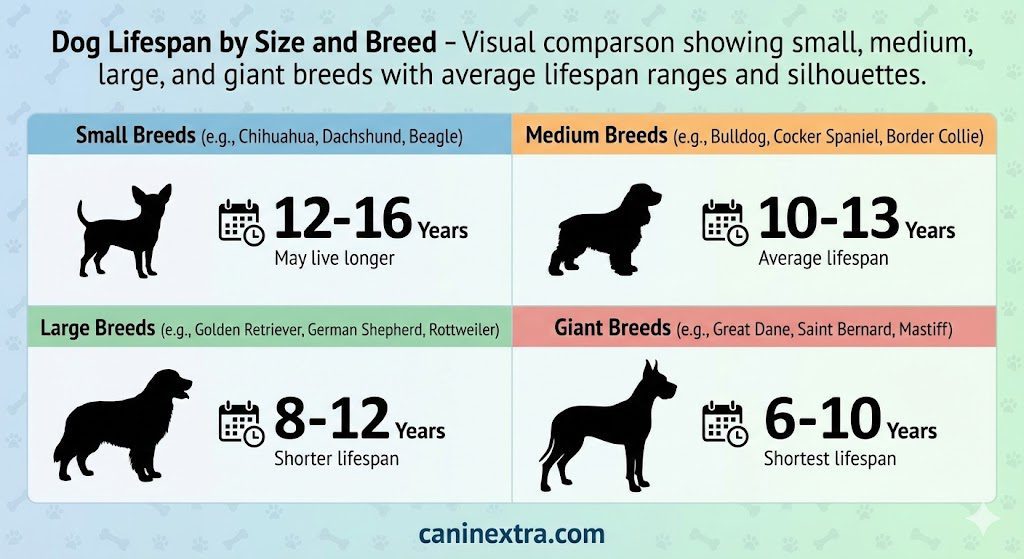
How Long Do Dogs Live by Size?
Size dramatically impacts canine lifespan in a pattern opposite to most mammals. While elephants outlive mice in nature, small dogs consistently outlive giant dogs, sometimes by a decade.
Small Dogs (Under 25 lbs): 10-15 Years
Small breeds have an average lifespan of 10-15 years, with some even exceeding 18 years in age. These pint-sized companions benefit from slower metabolic rates and reduced strain on their organs and joints.
Popular small breeds and their lifespans:
- Chihuahua: 14-17 years
- Yorkshire Terrier: 13-16 years
- Toy Poodle: 14-18 years
- Dachshund: 12-16 years
- Maltese: 12-15 years
- Shih Tzu: 10-16 years
Smaller dogs simply don’t burn through energy as quickly as larger dogs do, which means their bodies don’t have to work as hard to maintain their health. This efficiency translates directly into longer lifespans.
Medium Dogs (25-50 lbs): 10-13 Years
Medium-sized dog breeds align more with the overall average dog lifespan of 10-13 years. These breeds strike a balance between the longevity of small dogs and the shorter lives of large breeds.
Representative medium breeds:
- Border Collie: 12-15 years
- Beagle: 12-15 years
- Cocker Spaniel: 12-15 years
- Australian Shepherd: 12-15 years
- Bulldog: 8-10 years (shorter due to brachycephalic features)
Large Dogs (50-100 lbs): 8-12 Years
Large-breed dogs have a slightly shorter lifespan than medium breed dogs, at 9-12 years. Their size makes them more susceptible to joint problems, heart disease, and certain cancers.
Common large breeds:
- Labrador Retriever: 10-12 years
- Golden Retriever: 10-12 years
- German Shepherd: 9-13 years
- Rottweiler: 8-11 years
- Boxer: 10-12 years
Popular breeds like the Golden Retriever and Bernese Mountain Dog are particularly prone to cancer, which significantly impacts their average lifespan.
Giant Dogs (Over 100 lbs): 6-10 Years
Giant dog breeds have the lowest minimum lifespan, with an overall average of 8-10 years. These magnificent dogs age at an accelerated rate, with a 6-year-old Great Dane considered a senior.
Giant breed lifespans:
- Great Dane: 7-10 years
- Mastiff: 6-10 years
- Saint Bernard: 8-10 years
- Irish Wolfhound: 6-8 years
- Bernese Mountain Dog: 7-10 years
Giant breeds reach adulthood at around two years old compared to the norm of around 13-15 months for other breeds. This delayed maturity combined with rapid growth creates unique health challenges.
| Dog Size | Weight Range | Average Lifespan | Common Health Concerns |
|---|---|---|---|
| Toy | Under 10 lbs | 12-20 years | Dental disease, liver disease |
| Small | 10-25 lbs | 10-15 years | Dental disease, pancreatitis |
| Medium | 25-50 lbs | 10-13 years | Allergies, joint issues |
| Large | 50-100 lbs | 8-12 years | Hip dysplasia, cancer, heart disease |
| Giant | 100+ lbs | 6-10 years | Bone cancer, bloat, joint disease |
Why Do Small Dogs Live Longer Than Large Dogs?
This counterintuitive pattern puzzles scientists, but several theories explain why a 5-pound Chihuahua outlives a 150-pound Mastiff.
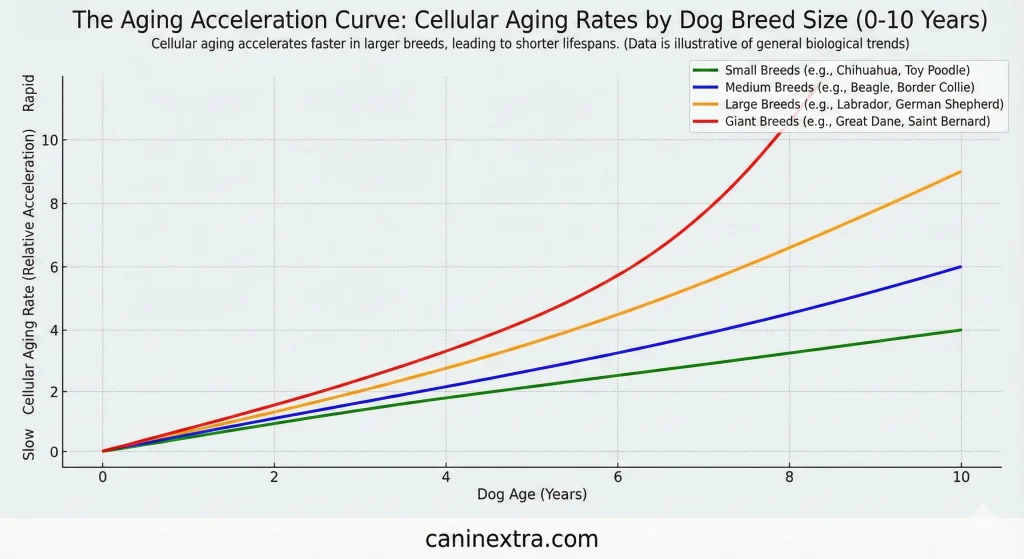
The Accelerated Aging Theory
Research suggests that larger dogs age faster, possibly due to accelerated growth leading to abnormal cell growth, such as cancer. The dramatic growth rate required for a puppy to reach 100+ pounds in two years may trigger cellular changes that promote disease.
The accelerated rate of growth required by the drastic change in size exhibited in giant breeds is speculated by scientists at the American Kennel Club to lead to a higher risk of abnormal cell growth and cancer.
Oxidative Stress and DNA Damage
Oxidative DNA damage measured in puppies was found to be higher in larger dog breeds with shorter lifespans than in smaller breed dogs with longer life spans. This suggests that DNA repair mechanisms fail earlier in larger breeds, allowing more damage to accumulate over time.
Metabolic Differences
Smaller dogs simply don’t burn through energy as quickly as larger dogs do, resulting in less cellular wear and tear over a lifetime. Lower metabolic rates mean fewer free radicals and oxidative stress, key factors in aging.
Disease Susceptibility
Larger breeds are more susceptible to severe ailments such as cancer, bone-related diseases, and neurological issues. Conversely, small dogs face ocular, cardiac, and respiratory issues that don’t significantly reduce overall lifespan.
How Long Do Different Dog Breeds Live?
Breed-specific genetics create dramatic lifespan variations even among dogs of similar size. Here’s what research reveals about breed longevity.
Longest-Living Breeds (14-20 Years)
The Lancashire Heeler has the longest average life expectancy of 15.4 years among breeds tracked in recent studies. Other long-lived breeds include:
- Australian Cattle Dog: 12-16 years (the record holder, Bluey, lived to 29 years)
- Chihuahua: 14-17 years
- Toy Poodle: 14-18 years
- Jack Russell Terrier: 13-16 years
- Yorkshire Terrier: 13-16 years
- Shih Tzu: 10-16 years
- Maltese: 12-15 years
Shortest-Living Breeds (5-8 Years)
The Caucasian Shepherd Dog has the shortest average life expectancy of 5.4 years. Other breeds with concerning low lifespans:
- Bernese Mountain Dog: 7-10 years
- Irish Wolfhound: 6-8 years
- Great Dane: 7-10 years
- English Bulldog: 8-10 years
- French Bulldog: 9-11 years (affected by brachycephalic issues)
The Brachycephalic Problem
In 2024, a study published in Scientific Reports involving 584,734 British dogs revealed that breeds with flattened faces tended to have shorter average lifespans. Bulldogs, Pugs, and similar breeds face respiratory challenges that reduce longevity and quality of life.
Dolichocephalic breeds, such as Greyhounds and Collies, typically do not suffer from the same respiratory issues and tend to have longer lifespans as a result. Their elongated noses allow better airflow and reduced breathing-related health problems.
Do Mixed Breeds Live Longer Than Purebreds?
Yes. Mixed-breed dogs have an average life expectancy of 13.2 years, while purebreds average 11.0 years, a difference of over two years.
The Hybrid Vigor Effect
Mixed-breed dogs benefit from a more diverse genetic pool, which reduces the likelihood of inherited health problems that are commonplace in some purebred lines. This “hybrid vigor” protects against genetic diseases concentrated in purebred populations through selective breeding.
Genetic diversity in mixed breed dogs contributes to their overall health and longer lifespan due to what is referred to as hybrid vigor.
Purebred Health Challenges
Purebred dogs tend to have slightly lower life expectancy because of things like inbreeding, where dogs are mated with others that share similar gene pools. Breeding practices that prioritize appearance over health can concentrate harmful recessive genes.
Many purebred lines carry breed-specific genetic diseases:
- Golden Retrievers: High cancer rates (over 60% die from cancer)
- German Shepherds: Hip dysplasia, degenerative myelopathy
- Cavalier King Charles Spaniels: Heart disease (mitral valve disease)
- Bulldogs: Respiratory issues, spinal problems
- Dachshunds: Intervertebral disc disease
Designer Breeds: A Middle Ground?
Popular designer mixes like Goldendoodles and Labradoodles were initially created to combine health benefits from diverse genetics. However, as these crosses become standardized breeds, they may lose some hybrid vigor benefits and develop their own breed-specific issues.
What Factors Determine How Long Your Dog Lives?
Five major factors interact to determine whether your dog lives 8 years or 18 years. Understanding these elements empowers you to maximize your dog’s healthy lifespan.
1. Genetics and Breed
Genetics set your dog’s baseline potential. You can’t change your dog’s breed, but you can:
- Research breed-specific health concerns before getting a dog
- Choose breeders who prioritize health testing over appearance
- Consider mixed breeds for genetic diversity
- Know your dog’s family health history
Studies have shown that breeds with larger effective population sizes tend to have longer lifespans, suggesting genetic diversity significantly impacts health and longevity.
2. Weight and Body Condition
Research suggests that overweight dogs have a shortened life expectancy by as much as 2.5 years. Excess weight stresses joints, increases diabetes and cancer risk, and strains the cardiovascular system.
Studies have shown that dogs kept at a healthy weight can live up to two years longer than their overweight counterparts.
Maintaining ideal body condition means:
- Visible waist when viewed from above
- Ribs easily felt but not prominently visible
- Tucked abdomen when viewed from the side
- No fat deposits over the back or tail base
3. Diet and Nutrition
Researchers associated with the Dog Aging Project report that dogs that are fed just once daily are healthier on average than dogs fed more frequently. Dogs receiving one meal per day showed fewer disorders of dental, gastrointestinal, musculoskeletal, kidney, and urinary systems.
Quality nutrition matters more than feeding frequency. Focus on:
- High-quality protein sources as the first ingredient
- Appropriate calories for age, size, and activity level
- Age-specific formulations (puppy, adult, senior)
- Limited treats (under 10% of daily calories)
4. Exercise and Physical Activity
Dogs that aren’t exercised regularly are more likely to put on weight, which we know can reduce their life expectancy. Regular physical activity maintains healthy weight, supports cardiovascular health, and keeps joints mobile.
Tailor exercise to your dog:
- Small breeds: 30-60 minutes daily of walks and play
- Medium breeds: 60-90 minutes of moderate activity
- Large breeds: 60-120 minutes, including low-impact options
- Giant breeds: Moderate exercise to protect developing joints in puppies
Over-exercising can harm older dogs or those with pre-existing conditions, while under-exercising can lead to obesity and related health issues.
5. Veterinary Care and Disease Prevention
Routine veterinary care is essential for monitoring a dog’s health and detecting potential issues early. Regular check-ups catch problems when they’re most treatable.
Essential preventive care includes:
- Annual wellness exams (twice yearly for seniors)
- Core vaccinations (rabies, distemper, parvovirus)
- Parasite prevention (heartworm, fleas, ticks)
- Dental cleanings every 1-2 years
- Blood work screening starting at age 7
Regular veterinary dental cleanings can reduce the risk of death by nearly 20%, suggesting a strong link between oral health and overall wellbeing.
6. Spaying and Neutering
Neutered females lived longest of dogs dying of all causes, though intact females lived longest of dogs dying of natural causes, with neutered males having the shortest lifespan in each category. The relationship between sterilization and lifespan is complex.
Neutering eliminates specific risks:
- Pyometra (life-threatening uterine infection in females)
- Testicular cancer in males
- Mammary tumors (when spayed before first heat)
- Roaming and accident risks
However, timing matters. Recent research suggests waiting until after physical maturity for some breeds may reduce orthopedic disease risk.
7. Environmental and Social Factors
A recent study of 21,000 dogs revealed that social companionship, such as living with other dogs, has a significant positive association with better health outcomes. Dogs are social animals who thrive with appropriate companionship.
The extent of a dog’s social support network emerged as the most influential factor on improved health outcomes, having an impact five times greater than financial conditions, household stability, or the owner’s age.
Environmental factors affecting lifespan:
- Safe, low-stress living conditions
- Protection from extreme temperatures
- Smoke-free household (secondhand smoke affects dogs)
- Mental stimulation and enrichment
- Positive human-animal bond
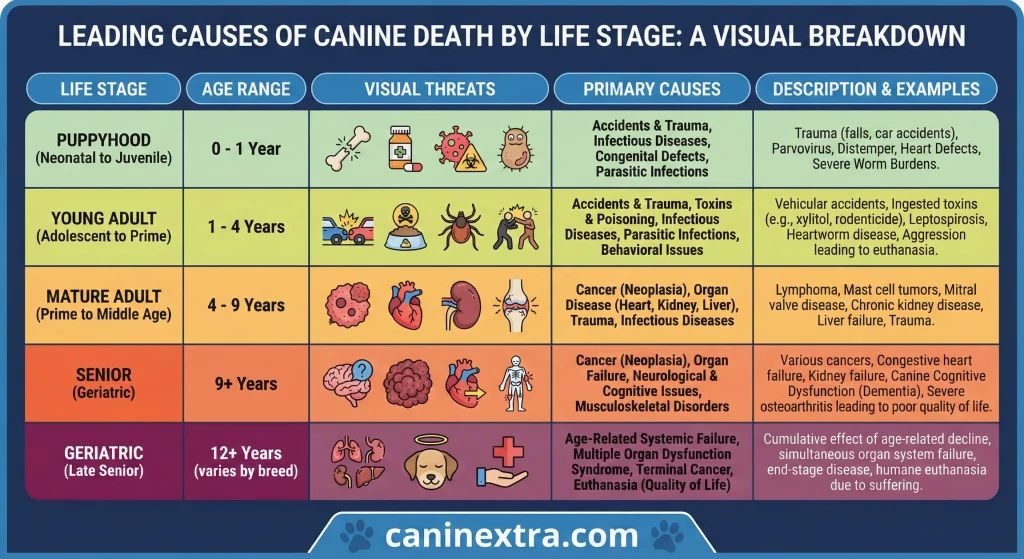
Common Causes of Death in Dogs by Age
Understanding what threatens dogs at different life stages helps you provide targeted prevention and early intervention.
Puppies and Young Dogs (Under 2 Years)
Early death in dogs less than two years of age is most often associated with trauma, congenital diseases, or infectious causes.
Primary risks:
- Parvovirus and distemper (vaccine-preventable)
- Congenital defects (heart, kidney, liver abnormalities)
- Accidents and trauma
- Toxic ingestions
- Parasitic infections
Prevention focuses on vaccinations, puppy-proofing your home, and regular veterinary monitoring during rapid growth phases.
Adult Dogs (2-7 Years)
Healthy adult dogs face lower mortality risk, but accidents and sudden illness can occur:
- Trauma (vehicle accidents, fights)
- Bloat/gastric dilatation-volvulus (large, deep-chested breeds)
- Infectious diseases in unvaccinated dogs
- Toxin exposure
- Acute illnesses
Senior Dogs (7+ Years for Large Breeds, 10+ for Small)
Cancer is the leading cause of death in large dog breeds across the board. Neoplasia was the most frequent cause of death at 34.0%, occurring more frequently in large breeds, namely German Shepherd, Labrador Retriever and Boxer.
Leading causes in senior dogs:
- Cancer (various types, location varies by breed)
- Heart disease (dilated cardiomyopathy, valve disease)
- Kidney failure (chronic renal disease)
- Liver disease
- Arthritis and mobility decline leading to euthanasia decisions
- Cognitive dysfunction (canine dementia)
Degenerative diseases mostly affected small-sized dogs like Miniature Pinscher and Dachshund, while large breeds faced higher cancer rates.
How to Calculate Your Dog’s Age in Human Years
The old “7 dog years equals 1 human year” rule is overly simplistic and inaccurate. Dogs age much faster in their first two years, then the rate varies by size.
Modern Age Calculation
Recent research using DNA methylation patterns reveals dogs age non-linearly. A more accurate formula:
- Year 1: Dogs reach approximately 15 human years
- Year 2: Dogs reach approximately 24 human years (9 years added)
- Years 3+: Add 4-5 years annually for small dogs, 5-6 for medium, 6-7 for large, 7-8 for giant breeds
A 10-year-old dog is roughly:
- Small breed: 56 human years
- Medium breed: 60 human years
- Large breed: 66 human years
- Giant breed: 72 human years
Age Conversion Table by Size
| Dog’s Age | Small Breed | Medium Breed | Large Breed | Giant Breed |
|---|---|---|---|---|
| 1 year | 15 years | 15 years | 15 years | 15 years |
| 2 years | 24 years | 24 years | 24 years | 24 years |
| 5 years | 36 years | 38 years | 40 years | 42 years |
| 8 years | 48 years | 52 years | 56 years | 64 years |
| 10 years | 56 years | 60 years | 66 years | 78 years |
| 15 years | 76 years | 85 years | N/A | N/A |
This helps you understand when dogs enter senior status and need adjusted care.
Signs Your Dog Is Aging
Recognizing aging signs early allows you to adapt care and maintain quality of life during senior years.
Physical Changes
- Graying muzzle and face (often starts around age 7)
- Decreased energy and stamina
- Stiffness after rest, especially in the morning
- Weight changes (gain or loss)
- Cloudiness in eyes (nuclear sclerosis, usually not vision-threatening)
- Decreased hearing
- Thinner, duller coat
- Lumps and bumps (should always be checked by vet)
Behavioral Changes
- Sleeping more (16-18 hours daily for seniors)
- Reduced interest in play
- Confusion or disorientation
- House-training accidents
- Anxiety or clinginess
- Changes in social interactions
- Altered sleep-wake cycles
Health Conditions
Common age-related conditions include:
- Arthritis and joint disease
- Dental disease
- Heart disease
- Kidney disease
- Liver disease
- Vision and hearing loss
- Cognitive dysfunction syndrome
- Incontinence
Early detection transforms management. Senior dogs should see the veterinarian every 6 months rather than annually.
How to Help Your Dog Live Longer
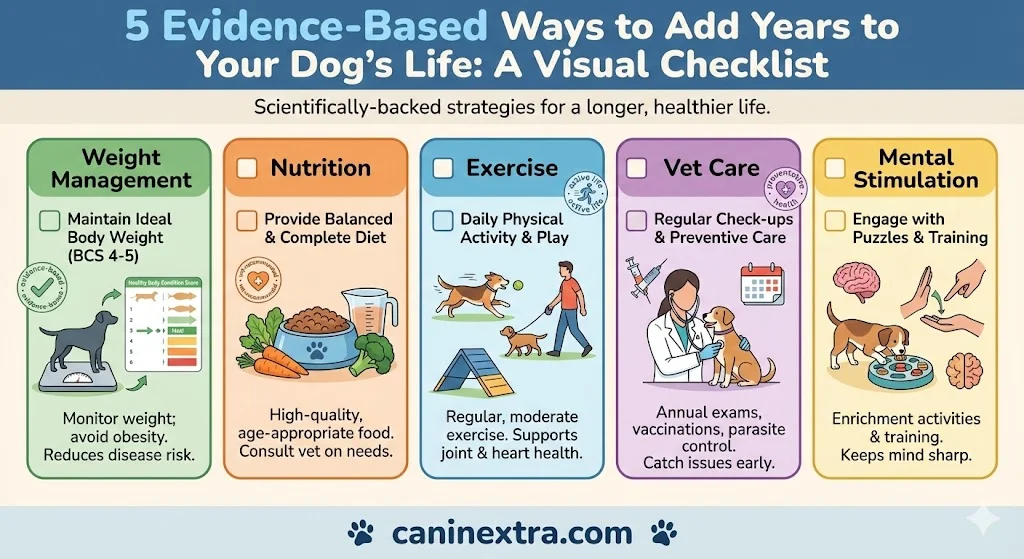
While you can’t change your dog’s genetics, you control many factors that influence lifespan. These evidence-based strategies can add healthy years.
1. Maintain Optimal Weight
This single factor can add 2-2.5 years to your dog’s life. Monitor body condition monthly:
- Feel ribs easily without pressing hard
- See a waist from above
- Observe abdominal tuck from the side
If your dog is overweight:
- Calculate correct daily calories with your vet
- Measure all food (don’t estimate)
- Reduce treats to under 10% of calories
- Increase exercise gradually
- Use low-calorie vegetables as treats
2. Feed High-Quality, Appropriate Nutrition
Choose foods that list meat as the first ingredient and avoid fillers. Consider:
- Age-appropriate formulas
- Breed size-specific foods
- Health condition-specific diets if needed
- Fresh whole foods as toppers (in moderation)
Recent studies suggest once-daily feeding may benefit some dogs, though always transition feeding schedules gradually and consult your vet first.
3. Provide Regular Exercise
Daily physical activity maintains healthy weight, cardiovascular fitness, mental stimulation, and joint mobility. Create a routine your dog enjoys:
- Morning and evening walks
- Interactive play sessions
- Swimming (excellent low-impact exercise)
- Mental enrichment games
- Breed-appropriate activities
Adjust intensity as your dog ages. Senior dogs still need movement but may prefer shorter, gentler sessions.
4. Prioritize Preventive Veterinary Care
The saying “an ounce of prevention is worth a pound of cure” applies perfectly to pet health:
- Annual exams for adults, twice yearly for seniors
- Stay current on vaccinations
- Year-round heartworm prevention
- Regular flea and tick control
- Annual dental cleanings starting at age 2-3
- Baseline blood work at age 7, then annually
Early disease detection often means better treatment outcomes and lower costs.
5. Practice Excellent Dental Hygiene
Dental disease affects 80% of dogs by age 3 and significantly impacts overall health. Bacteria from infected gums enter the bloodstream and damage organs.
Daily dental care includes:
- Brushing with dog-specific toothpaste
- Dental chews approved by VOHC (Veterinary Oral Health Council)
- Professional cleanings as recommended
- Monitoring for bad breath, drooling, or reluctance to chew
6. Manage Breed-Specific Health Risks
Know your dog’s breed predispositions and screen appropriately:
- Hip/elbow radiographs for dysplasia-prone breeds
- Cardiac screening for breeds prone to heart disease
- Eye exams for breeds with hereditary eye conditions
- Cancer awareness for high-risk breeds
Work with your veterinarian to create a personalized prevention plan.
7. Provide Mental Stimulation and Social Interaction
Recent research highlights social support as a major longevity factor. Ensure your dog has:
- Daily interaction with family members
- Appropriate socialization with other dogs (if they enjoy it)
- Mental challenges (puzzle toys, training)
- New experiences and environments
- Consistent routine with quality time
Cognitive decline accelerates in under-stimulated dogs. Keep their minds active throughout life.
8. Control Environmental Hazards
Protect your dog from preventable dangers:
- Secure fencing to prevent roaming
- Pet-proof your home (secure toxins, small objects)
- Maintain comfortable temperature (avoid heat stress)
- Provide clean, fresh water always
- Keep household smoke-free
9. Monitor Health Changes Closely
You know your dog best. Report changes to your vet promptly:
- Appetite changes lasting more than 24 hours
- Lethargy or behavior changes
- Vomiting or diarrhea
- Difficulty breathing
- Limping or pain signs
- Unusual lumps or bumps
Early intervention often prevents minor issues from becoming major problems.
Frequently Asked Questions
What is the oldest dog ever recorded?
The longest living dog on record is Bobi, a purebred Rafeiro do Alentejo who lives in Portugal and celebrated his 31st birthday on May 11, 2023. That makes Bobi approximately 139 in human years, an extraordinary outlier.
For more typical longevity records, Australian Cattle Dogs hold impressive records, with Bluey living to 29 years and 5 months.
Do male or female dogs live longer?
Research by the Royal Veterinary College shows that the average life expectancy of female dogs is 11.4 years, compared to 11.1 years for males. The difference is modest but consistent across studies.
Can mixed breed dogs really live longer than purebreds?
Yes. Multiple studies confirm mixed breeds outlive purebreds by 1-2 years on average due to greater genetic diversity. The hybrid vigor effect reduces the concentration of harmful recessive genes common in purebred populations.
At what age is a dog considered a senior?
Senior status depends on size:
- Giant breeds: 5-6 years old
- Large breeds: 7-8 years old
- Medium breeds: 9-10 years old
- Small breeds: 10-11 years old
This is when you should increase veterinary visits to twice yearly and adjust care routines.
What kills most dogs?
Cancer accounts for nearly 16 percent of dog deaths, twice as many as heart disease. Other leading causes include kidney disease, liver disease, and complications from arthritis or cognitive decline.
How can I tell if my dog is nearing the end of life?
Signs include profound weakness, inability to stand, loss of interest in food and water for multiple days, difficulty breathing, uncontrolled pain, loss of bladder/bowel control, and lack of interest in surroundings. Consult your veterinarian about quality of life assessment tools to guide difficult decisions.
Does neutering or spaying affect lifespan?
The relationship is complex. Sterilization eliminates certain disease risks but may slightly increase others. Overall, neutered females tend to live longest when considering all causes of death. The decision should consider individual health factors, breed, and lifestyle risks. Discuss optimal timing with your vet.
Can diet really extend my dog’s life?
Absolutely. Studies show proper nutrition and maintaining healthy weight can add 2-2.5 years to your dog’s lifespan. Quality food, appropriate portions, and avoiding obesity are among the most powerful tools you have to influence longevity.
What role does exercise play in dog longevity?
Regular exercise maintains healthy weight, supports cardiovascular health, preserves joint function, and provides mental stimulation, all factors that promote longer life. However, exercise must be appropriate for age, breed, and health status. Over-exercising can cause injury, while under-exercising promotes obesity.
Are there supplements that help dogs live longer?
While no supplement guarantees longer life, certain ones may support health:
- Joint supplements (glucosamine, chondroitin) for arthritis prevention
- Omega-3 fatty acids for inflammation reduction
- Antioxidants for cellular health
- Probiotics for digestive health
Always discuss supplements with your vet before starting, as some can interact with medications or conditions.
Do indoor dogs live longer than outdoor dogs?
Indoor dogs typically live longer due to reduced exposure to parasites, diseases, temperature extremes, and trauma risks. However, outdoor dogs with proper shelter, veterinary care, and protection from hazards can also live long lives. The key is comprehensive care regardless of housing.
How accurate are DNA tests for predicting my mixed breed dog’s lifespan?
DNA tests identify breed composition, which helps predict potential health issues and general size-based lifespan expectations. However, they can’t account for individual variation, care quality, or the beneficial effects of genetic diversity in mixed breeds.
Conclusion
Dogs live an average of 10-13 years, with small breeds enjoying 10-15 years and giant breeds living 6-10 years. This wide variation reflects the powerful influence of size, genetics, and care quality on canine longevity. While you can’t change your dog’s breed or genetic baseline, you control the factors that often determine whether a dog reaches their breed’s lower or upper lifespan range.
The five most impactful actions you can take are maintaining healthy weight, providing high-quality nutrition, ensuring regular exercise, committing to preventive veterinary care, and nurturing your dog’s emotional wellbeing through social connection. Research increasingly shows that the love and attention you provide does more than create happiness, it may literally extend your dog’s life.
Every dog owner eventually faces the reality that our companions’ time with us is too short. But understanding what influences their lifespan empowers you to maximize both the quantity and quality of those precious years.
Schedule your dog’s next wellness exam, calculate their ideal weight, and commit to daily exercise. Track changes in energy, mobility, and appetite over the next six weeks. These simple actions could add months or even years to your time together, and ensure every moment is filled with the vitality your dog deserves.