


Your female dog seems tired and isn’t eating, maybe she’s just having an off day? If she’s unspayed and had a heat cycle within the past eight weeks, this could be pyometra, a life-threatening uterine infection that kills without treatment.
Pyometra in dogs is a bacterial infection that fills the uterus with pus, turning a normal reproductive organ into a toxic reservoir. Research shows approximately 20-25% of intact female dogs will develop this condition by age 10, making it one of the most common emergencies in veterinary medicine.
In this guide, you’ll learn exactly what pyometra looks like, why it develops, how veterinarians diagnose it within hours, and the critical decision between emergency surgery and attempting medical treatment. Whether you caught this early or your dog is already showing severe symptoms, understanding this condition could save her life.

Key Takeaways:
- Two types exist: open pyometra (visible discharge) and closed pyometra (more dangerous, no discharge)
- Dogs with closed pyometra can die within 24-48 hours from uterine rupture and sepsis
- Survival rates reach 97% with prompt surgical treatment in non-specialized settings
- Emergency spay surgery removes the infected uterus and prevents future recurrence
- Spaying before first heat virtually eliminates pyometra risk
What Is Pyometra in Dogs?
Pyometra is a hormonally-driven bacterial infection of the uterus that causes massive pus accumulation inside the womb. The condition typically strikes 2-8 weeks after a heat cycle when progesterone levels remain elevated.
High progesterone levels stimulate the uterine lining to thicken, inhibit the uterine muscles from contracting to expel bacteria, and prevent white blood cells from entering the uterus to fight infection. This creates perfect conditions for bacteria, usually E. coli from the vagina or intestines, to multiply unchecked.
Understanding the Two Types
Open Pyometra: The cervix stays partially open, allowing pus and blood to drain through the vagina. You’ll notice foul-smelling discharge on your dog’s bedding, fur under her tail, or where she sleeps. While still serious, the draining provides some relief and makes diagnosis easier.
Closed Pyometra: The cervix seals shut, trapping all infection inside. No discharge appears, making this form harder to detect and significantly more dangerous. The abdomen swells as pus accumulates, and without drainage, toxins build rapidly in the bloodstream.
How Does Pyometra Develop in Female Dogs?
The development of pyometra follows a predictable but dangerous pattern tied to your dog’s reproductive cycle.
The Hormonal Trigger
After each heat cycle, progesterone dominates for 8-10 weeks whether pregnancy occurs or not. This hormone prepares the uterus for potential puppies by:
- Thickening the uterine lining (endometrium)
- Stimulating gland secretion
- Relaxing the cervix temporarily during estrus
- Suppressing immune function in the uterus
After many years of estrous cycles without pregnancy, the uterine wall undergoes changes that promote this disease. The lining develops fluid-filled cysts, a condition called cystic endometrial hyperplasia (CEH), creating an ideal bacterial breeding ground.
The Bacterial Invasion
E. coli is found in 71% of pyometra cases and 81% of concurrent urinary infections, making it the primary culprit. During heat, when the cervix relaxes to allow sperm entry, vaginal bacteria ascend into the primed uterus. The thickened, cystic lining secretes fluids that bacteria feed on, while weakened immune defenses and impaired uterine contractions allow infection to flourish.
The Progression to Emergency
Once established, the infection escalates quickly:
- Bacteria multiply in the nutrient-rich uterine environment
- The immune system responds with white blood cells, creating pus
- Toxins and bacteria infiltrate the uterine wall and leak into the bloodstream
- Kidney function deteriorates from bacterial toxins
- The uterus stretches dangerously, risking rupture
- Without treatment, sepsis and organ failure follow
Recent 2024 research confirms that pseudoplacentational endometrial hyperplasia (PEH) is significantly associated with pyometra development, particularly in middle-aged dogs.
Warning Symptoms of Pyometra in Dogs
Recognizing pyometra symptoms early dramatically improves survival odds. Clinical signs typically appear 2-8 weeks after the last heat cycle.
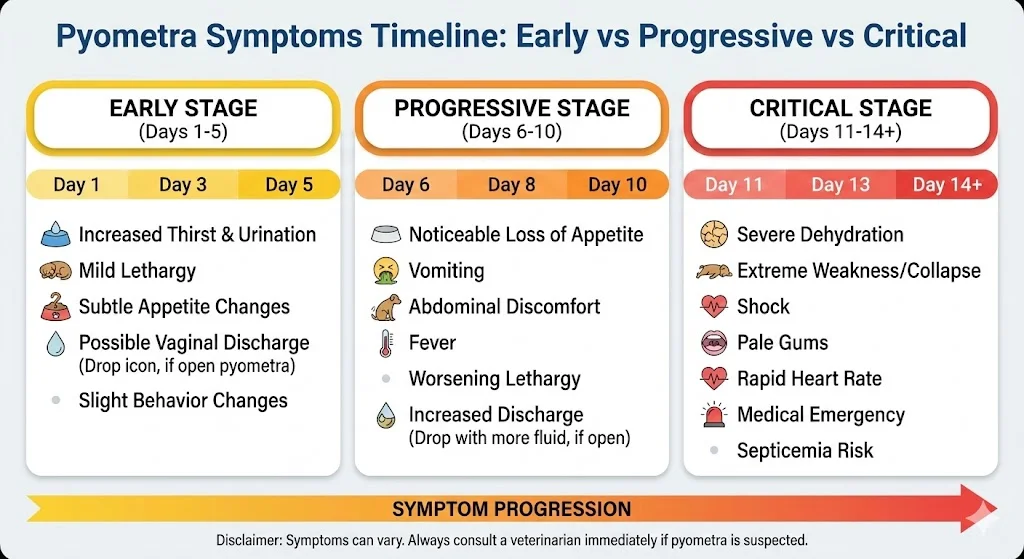
Early Stage Symptoms (First 1-3 Days)
- Decreased appetite or refusing food entirely
- Lethargy and reluctance to play or walk
- Increased thirst (polydipsia)
- Frequent urination, sometimes with difficulty
- Mild fever (above 102.5°F)
- Vaginal discharge, cream, yellow, brown, or bloody (open pyometra only)
Many owners initially mistake these signs for a simple stomach upset or bladder infection. The key differentiator is timing: symptoms appearing weeks after a heat cycle should always trigger concern.
Progressive Symptoms (Days 3-7)
- Vomiting and diarrhea
- Visible abdominal swelling or distention
- Weakness and difficulty standing
- Pale gums indicating anemia
- Dehydration despite increased drinking
- Foul odor from vaginal area (open pyometra)
Critical Emergency Signs
- Collapse or inability to stand
- Extreme lethargy or unresponsiveness
- Cold extremities (ears, paws)
- Rapid, shallow breathing
- Weak pulse
- Disorientation or confusion
At this stage, the dog is likely experiencing septic shock. Closed pyometra can prove fatal within 24-48 hours due to uterine rupture and sepsis risk. Immediate veterinary intervention is essential.
Why Closed Pyometra Is More Dangerous
Research demonstrates that closed cervix is associated with more severe illness in dogs with pyometra. Without drainage, internal pressure builds rapidly. The infected uterus can rupture, spilling toxic pus into the abdomen and causing peritonitis, a condition with high mortality even with aggressive treatment.
Dogs Most at Risk of Developing Pyometra
While any intact female dog can develop pyometra, certain factors significantly increase risk.
Age and Reproductive History
The mean age of diagnosis is 7.0 years, with most cases occurring in middle-aged to senior dogs. However, I’ve diagnosed pyometra in dogs as young as 12 months and as old as 15 years.
Nulliparous dogs, those who’ve never been pregnant, face higher risk. Each heat cycle without pregnancy further changes the uterine lining, accumulating years of hormonal exposure that prime the tissue for infection.
Breed Predisposition
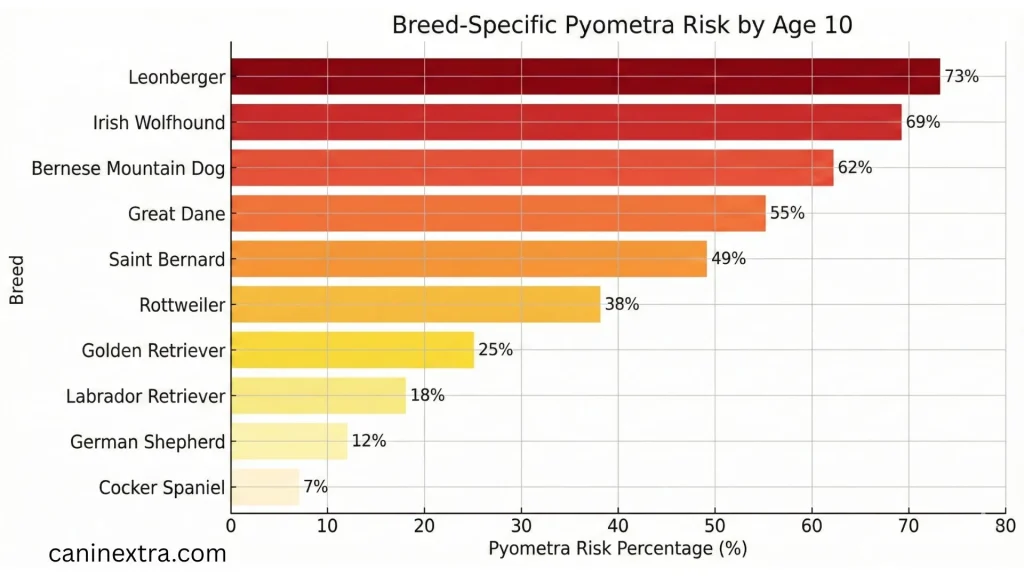
Certain breeds show dramatically elevated incidence rates, with Leonbergers, Irish Wolfhounds, and Bernese Mountain Dogs showing 60-73% lifetime risk. Other high-risk breeds include:
- Golden Retrievers
- Rottweilers
- Cavalier King Charles Spaniels
- Rough Collies
- Bernese Mountain Dogs
- Great Danes
- Dobermans
- St. Bernards
Breeds with lower risk include German Shepherd Dogs, Miniature Dachshunds, and Swedish Hounds, though no intact female is immune.
Hormonal Medications
Dogs receiving progesterone-based treatments or estrogen therapy face elevated pyometra risk. These medications mimic the hormonal environment that enables infection. Any intact female on reproductive hormone therapy requires careful monitoring after each heat cycle.
The Stump Pyometra Exception
If a dog was spayed but not all ovarian tissue was removed, she could develop stump pyometra, where residual uterine tissue becomes infected. While rare, this reminds us that complete surgical removal of reproductive organs is critical.
How Veterinary Diagnose Pyometra
Quick, accurate diagnosis is essential because treatment delays increase mortality risk. Here’s what to expect at your emergency vet visit.
Physical Examination
Your veterinarian will systematically assess your dog’s condition:
- Temperature check: Fever suggests active infection, but hypothermia indicates advanced sepsis
- Abdominal palpation: An enlarged, fluid-filled uterus feels like a thick, tubular mass in the rear abdomen
- Vaginal examination: Checking for discharge, inflammation, or cervical opening
- Mucous membrane color: Pale gums signal anemia; brick-red gums suggest sepsis
- Hydration status: Skin tenting and sunken eyes indicate severe fluid loss
Blood Work Analysis
Dogs with pyometra usually have severe elevation of the white blood cell count and elevated globulins associated with the immune system. Complete blood count (CBC) and chemistry panel reveal:
Common findings:
- White blood cell count: 25,000-100,000 (normal: 6,000-17,000)
- Neutrophilia with left shift (immature white cells)
- Anemia in chronic cases
- Elevated kidney values (BUN, creatinine)
- Low albumin (protein)
- Elevated liver enzymes
- Urine specific gravity below 1.020
The specific gravity of urine is very low due to toxic effects of bacteria on the kidneys, even when dogs drink excessively.
Diagnostic Imaging
Radiographs (X-rays): Useful for closed pyometra where the enlarged, fluid-filled uterus appears as a large, tubular structure in the abdomen. If the cervix is open, minimal uterine enlargement may occur, making radiographs less conclusive.
Ultrasound examination: The gold standard for pyometra diagnosis. Ultrasound reveals:
- Fluid accumulation within the uterus
- Thickened uterine walls
- Distinction from pregnancy (no fetal heartbeats)
- Free fluid in the abdomen if rupture occurred
Ultrasound also helps identify concurrent complications like peritonitis before surgery.
Confirming the Diagnosis
Veterinarians diagnose pyometra based on the combination of:
- Intact female status
- Recent heat cycle (within 2-8 weeks)
- Compatible clinical signs
- Bloodwork abnormalities
- Imaging confirmation of enlarged uterus
Once confirmed, treatment planning begins immediately, often within the hour.
Treatment for Pyometra in Dogs: Your Options
Pyometra requires prompt treatment. Without intervention, survival is virtually impossible. You’ll face two primary choices, though one is vastly superior.
Emergency Surgical Treatment (Ovariohysterectomy)
Surgery remains the gold standard and preferred treatment for pyometra. The preferred treatment is to surgically remove the uterus and ovaries by performing an ovariohysterectomy (spay).
What happens during pyometra surgery:
- Pre-surgical stabilization: IV fluids correct dehydration and support blood pressure. Antibiotics begin fighting sepsis. Pain medication provides comfort.
- Anesthesia: Your dog receives general anesthesia with careful monitoring of heart rate, blood pressure, and oxygen levels.
- Surgical removal: The surgeon makes an abdominal incision, carefully isolates the infected uterus, ligates blood vessels, and removes the entire uterus and ovaries. Extreme caution is taken to ensure pus and bacteria aren’t spilled into the abdominal cavity.
- Abdominal flushing: If uterine rupture occurred, the surgeon flushes the abdomen repeatedly to remove contamination.
- Closure and recovery: The incision is closed in layers, and your dog moves to recovery with continued IV fluids and monitoring.
Success rates and recovery:
A major 2022 study of 405 dogs showed a 97% survival rate with surgical treatment in non-specialized settings. This remarkable success rate demonstrates that general practitioners can effectively treat pyometra, making life-saving surgery accessible.
44% of dogs stayed hospitalized two nights or longer, and only 3% experienced uterine rupture. Most dogs recover fully within 10-14 days, returning to normal activity levels.
Surgical costs: Pyometra surgery is considerably more expensive than routine spaying—typically 5-10 times higher due to the complexity, emergency nature, extended hospitalization, and intensive monitoring required.
Medical Treatment (Prostaglandin Therapy)
Medical treatment can be used in selected cases, though it has variable success rates, risk of disease recurrence, and potential complications. This option is rarely recommended and only considered for valuable breeding dogs.
How prostaglandin treatment works:
Prostaglandin injections cause the uterus to contract and expel pus while lowering progesterone levels. Treatment requires:
- Multiple injections over 5-7 days
- Hospitalization for monitoring
- Concurrent antibiotic therapy
- Only viable for open pyometra cases
Major limitations:
There is no clinical improvement for about 48 hours, so severely ill dogs needing immediate life-saving treatment are poor candidates. Additionally:
- Because prostaglandins cause uterine contraction, the uterus can rupture, spilling infection into the abdominal cavity
- After receiving prostaglandin treatment, the dog must be bred during her next heat cycle or recurrence rate is extremely high, estimated at 77%
- Side effects include panting, drooling, vomiting, diarrhea, and abdominal pain
- Never appropriate for closed pyometra
From 18 years treating emergency cases, I strongly discourage medical treatment except in exceptional breeding circumstances with open pyometra, good general health, and owner acceptance of high risks.
Post-Treatment Care
After successful surgery, most dogs require:
- Hospitalization: 1-3 days for stable cases, longer for complicated ones
- IV fluids: Continue until eating and drinking normally
- Pain management: Injectable then oral medications for 7-10 days
- Antibiotics: Recent 2025 research shows post-operative antibiotics may not reduce infection rates, only 2.7% of untreated dogs developed surgical site infections compared to 7.8% of treated dogs. Your veterinarian will make evidence-based decisions about antibiotic duration.
- Activity restriction: Prevent running, jumping, and rough play for 10-14 days
- Incision monitoring: Check daily for swelling, redness, or discharge
- Follow-up examination: Typically scheduled 10-14 days post-surgery
Preventing Pyometra: The Definitive Solution
One decision eliminates pyometra risk almost entirely: spaying.
Why Spaying Prevents Pyometra
Pyometra occurs in up to 25% of unspayed dogs, but spaying removes the uterus and the source of female hormones that drive infection. Without a uterus, infection cannot develop. Without progesterone cycling, the hormonal trigger disappears.
When to Spay Your Dog
Ideal timing:
- Before first heat (5-7 months): Provides maximum protection against pyometra and reduces mammary cancer risk by 99.5%
- Between heat cycles: Safe and effective, though requires waiting 8-12 weeks after heat ends
- Senior dogs: Even older intact females benefit from spaying, as pyometra risk increases with age
Spaying Benefits Beyond Pyometra Prevention
- Eliminates heat cycles and bleeding
- Prevents unwanted pregnancies
- Dramatically reduces mammary tumor risk
- Eliminates risk of ovarian tumors
- Stops hormone-driven behavioral issues
- Removes the need for emergency surgery later in life
What About Breeding Dogs?
For valuable breeding females, consider these risk-reduction strategies:
- Breed during most heat cycles rather than skipping multiple cycles
- Spay immediately after breeding career ends
- Monitor vigilantly 2-8 weeks after each heat
- Maintain regular veterinary check-ups
- Consider ultrasound screening if any symptoms appear
In Swedish insurance data covering over 260,000 female dogs, 19% developed pyometra by age 10, this substantial risk makes careful management essential for intact females.
What Happens If Pyometra Goes Untreated?
Understanding the progression of untreated pyometra reinforces why immediate action is critical.
The Fatal Timeline
Days 1-3: Bacteria multiply rapidly. White blood cells flood the uterus, creating pus. Toxins begin entering the bloodstream. Your dog feels unwell but may still eat small amounts.
Days 4-7: Bacterial toxins damage kidney tubules, impairing the kidneys’ ability to concentrate urine. Dehydration worsens despite increased drinking. The liver struggles to filter toxins. Appetite disappears completely.
Days 8-14: The infected uterus stretches dangerously. In closed pyometra, internal pressure builds until rupture occurs. Sepsis advances, causing organ failure. Blood pressure drops. Without intervention, death follows.
If treatment is not performed quickly, toxic effects from bacteria will be fatal in many cases. The mortality rate of untreated pyometra approaches 100%.
The Rupture Risk
If the cervix is closed, the uterus can rupture, spilling infection into the abdominal cavity—this will be fatal. Uterine rupture causes:
- Acute, severe abdominal pain
- Sudden collapse
- Rapid deterioration
- Peritonitis (abdominal cavity infection)
- Septic shock
- Multi-organ failure
Even with aggressive surgical intervention after rupture, survival rates drop dramatically.
Frequently Asked Questions About Pyometra in Dogs
How quickly does pyometra develop in dogs?
Pyometra usually occurs two to eight weeks after the last estrous or heat cycle. Once symptoms begin, the condition progresses rapidly, especially closed pyometra, which can become life-threatening within 24-48 hours. The infection doesn’t develop during heat itself but rather during the progesterone-dominated phase that follows.
Can pyometra go away on its own without treatment?
No. The chance of successful resolution without surgery or prostaglandin treatment is extremely low. The infected uterus cannot self-cleanse, and bacteria continue multiplying until organ failure occurs. Home remedies, antibiotics alone, or waiting for improvement will not cure pyometra and will likely result in death.
How much does pyometra surgery cost?
Pyometra surgery typically costs $1,500-$6,000 depending on your location, the dog’s size, illness severity, and hospitalization length. Emergency clinics often charge more than regular veterinary hospitals. The surgery costs 5-10 times more than routine spaying because it requires emergency care, complex surgery on fragile tissue, intensive monitoring, and extended hospitalization. Pet insurance often covers pyometra treatment if your dog was enrolled before symptoms appeared.
What are the first signs of pyometra that owners notice?
The earliest signs most owners detect are increased thirst and urination combined with decreased appetite. In open pyometra, foul-smelling vaginal discharge, often cream, yellow, or blood-tinged, appears on bedding or fur. Many owners initially think their dog has a bladder infection or stomach upset. The key warning is any illness developing 2-8 weeks after a heat cycle in an unspayed female.
Can a dog survive pyometra without surgery?
Survival without surgery is extremely rare and unpredictable. Without surgery or successful prostaglandin injection, it is nearly impossible for a dog to recover from pyometra. Medical treatment with prostaglandins carries significant risks, takes several days to show any improvement, only works for open pyometra, and has a 77% recurrence rate. Surgical treatment achieves 97% survival rates, making it vastly superior.
Is pyometra contagious to other dogs or humans?
No, pyometra is not contagious. The condition results from hormonal changes unique to each female dog’s reproductive cycle combined with normal bacteria from her own body. The bacteria causing pyometra, primarily E. coli, are already present in the dog’s vagina and intestines. While you should practice good hygiene when handling discharge, you cannot “catch” pyometra, and other dogs cannot contract it through contact.
What is the difference between open and closed pyometra?
The cervix status determines the type. In open pyometra, the cervix remains partially open, allowing pus to drain through the vagina, you’ll see discharge. In closed pyometra, the cervix seals completely, trapping all pus inside the uterus with no visible discharge. Closed cervix is associated with more severe illness because pressure builds internally, the abdomen distends, and the risk of uterine rupture increases dramatically.
Can pyometra happen after a dog is spayed?
Standard spaying, complete removal of the uterus and both ovaries, eliminates pyometra risk entirely. However, if ovarian tissue remains after spaying, a dog could develop stump pyometra where residual uterine tissue becomes infected. This rare complication emphasizes the importance of complete surgical removal by experienced veterinarians. Dogs with ovarian remnant syndrome can also experience heat-like symptoms because leftover ovarian tissue continues producing hormones.
How long is recovery after pyometra surgery?
Most dogs require 1-3 days of hospitalization after pyometra surgery, with 44% staying two nights or longer depending on illness severity. At home, recovery takes 10-14 days with activity restriction, incision care, and medication administration. Dogs typically feel significantly better within 3-5 days once the infection source is removed. Complete healing and return to normal activity usually occurs by three weeks post-surgery.
What causes pyometra to recur after treatment?
Pyometra can only recur if the uterus remains. After surgical removal of the uterus and ovaries, recurrence is impossible. Dogs treated medically with prostaglandins face a 77% recurrence rate if not bred during the next heat cycle. This is why veterinarians strongly recommend surgery over medical management, surgery provides permanent cure while medical treatment leaves the dog vulnerable to repeated, potentially fatal infections.
Are certain dog breeds more prone to pyometra?
Yes, breed predisposition exists. Research shows Leonbergers face 73% lifetime risk, Irish Wolfhounds 69%, and Bernese Mountain Dogs 69%. Golden Retrievers, Rottweilers, Cavalier King Charles Spaniels, and Rough Collies also show elevated rates. Breeds with relatively lower risk include German Shepherd Dogs, Miniature Dachshunds, and Swedish Hounds, though any intact female regardless of breed can develop pyometra. Genetic factors likely influence susceptibility, but the primary risk factor remains being unspayed.
Can pyometra affect puppies or young dogs?
While pyometra is more common in middle-aged females over age 6, it has been diagnosed in dogs as young as 4 months. Young dogs who’ve had even one heat cycle can develop pyometra, though it’s far less common. The cumulative effect of multiple heat cycles increases risk over time, which is why cases peak in dogs aged 6-10 years. Regardless of age, any intact female showing concerning symptoms after a heat cycle needs immediate veterinary evaluation.
Conclusion
Pyometra in dogs is a medical emergency that demands swift recognition and decisive action. The infection transforms rapidly from vague illness to life-threatening crisis, especially in closed pyometra cases where internal pressure builds without warning.
Remember these critical points: any lethargy, decreased appetite, increased thirst, or unusual discharge in an unspayed female dog within eight weeks of her heat cycle warrants immediate veterinary examination. Don’t wait to see if symptoms improve, pyometra only worsens without treatment.
Emergency surgical removal of the infected uterus saves lives with remarkable consistency, achieving 97% survival rates even in general practice settings. The procedure eliminates both the immediate threat and any future pyometra risk, protecting your dog permanently.
If your dog is intact and showing any concerning symptoms, contact your veterinarian immediately. If you’re not planning to breed, schedule a spay consultation to prevent this preventable disease. For dogs already diagnosed with pyometra, authorize emergency surgery without delay, every hour counts when fighting this deadly infection.
The best treatment for pyometra is prevention through spaying. The second-best treatment is recognizing symptoms early and acting fast.