

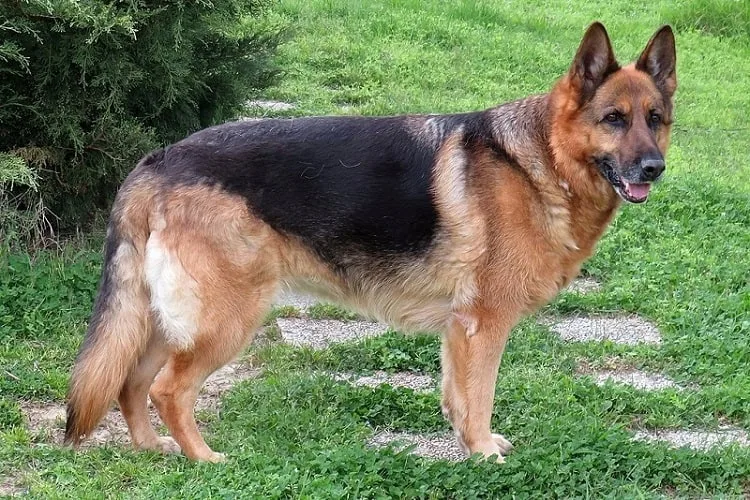
Your unspayed dog is nesting with her toys, her mammary glands are swollen, and she’s acting protective, but she wasn’t bred. False pregnancy is affecting your dog, a condition where hormonal shifts after her heat cycle trick her body into behaving as though puppies are on the way. This happens to the vast majority of intact female dogs at some point in their lives.
Around 80% of unspayed female dogs will experience at least one false pregnancy during their lifetime, with 67% having recurring episodes. Understanding what’s happening helps you provide the right support and know when veterinary care is necessary.
In this guide, you’ll discover exactly what causes false pregnancy, how to identify the signs, what timeline to expect, and the most effective treatments backed by veterinary science.
Key Takeaways:
- False pregnancy affects up to 80% of unspayed female dogs and is caused by normal hormonal changes
- Symptoms appear 4-9 weeks after heat and typically resolve within 2-3 weeks without treatment
- Physical signs include swollen mammary glands, milk production, and behavioral changes like nesting
- Most cases don’t require medical intervention, supportive care at home is usually sufficient
- Spaying prevents future episodes but should only be done after symptoms completely resolve
What Is False Pregnancy in Dogs?
False pregnancy in dogs, also called pseudopregnancy, pseudocyesis, or phantom pregnancy, occurs when an unspayed female displays maternal behaviors and physical pregnancy signs following her heat cycle, despite not actually being pregnant.
Here’s what makes this condition unique: essentially all dogs that go through a heat cycle experience the same hormonal changes whether they’re bred or not. The difference is in how intensely individual dogs react to these changes.
Why Does This Happen?
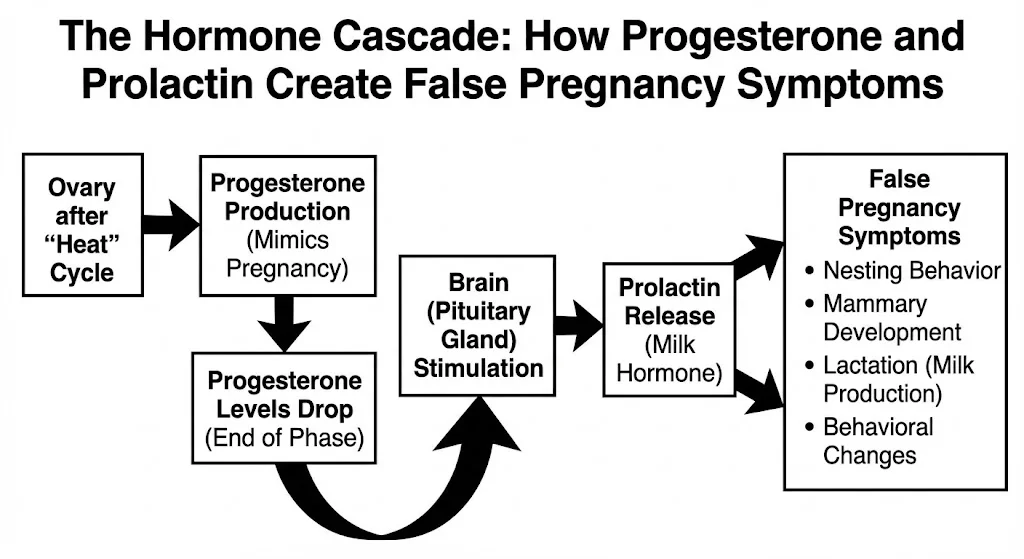
After your dog’s heat cycle ends, her body experiences hormonal shifts as progesterone levels drop and prolactin levels rise. These are the exact same hormones that would sustain an actual pregnancy.
One report indicates that 87% of intact female dogs show signs of false pregnancy two or more times during their lives. The intensity varies dramatically, some dogs show barely noticeable changes while others experience pronounced physical and behavioral symptoms.
The Evolutionary Theory
There’s a fascinating biological reason this might occur. One theory suggests that when dogs lived in packs, pseudopregnancy helped create available females who could provide protection and even milk to the pack’s puppies, even if they hadn’t given birth themselves.
When Does False Pregnancy Occur in Dogs?
Timeline: False pregnancy symptoms typically begin 45 to 60 days (approximately 4-9 weeks) after your dog’s most recent heat cycle.
Duration: Most cases last between one and four weeks, with the majority of symptoms resolving within 14-21 days.
Does It Happen After Every Heat?
Not necessarily. Your dog might experience false pregnancy after one heat cycle but not the next. Some females show signs when they’re young that stop as they age, while others don’t show signs until they’re older. There’s no consistent age or breed predisposition.
How Often Can Dogs Go Into Heat?
Depending on breed and individual variation, dogs typically cycle into heat 1-3 times per year. Each heat cycle creates the potential for false pregnancy symptoms to develop.
Signs and Symptoms of False Pregnancy in Dogs
False pregnancy creates both physical changes and behavioral shifts that closely mimic actual pregnancy.
Physical Signs to Watch For
The most common physical indicators include:
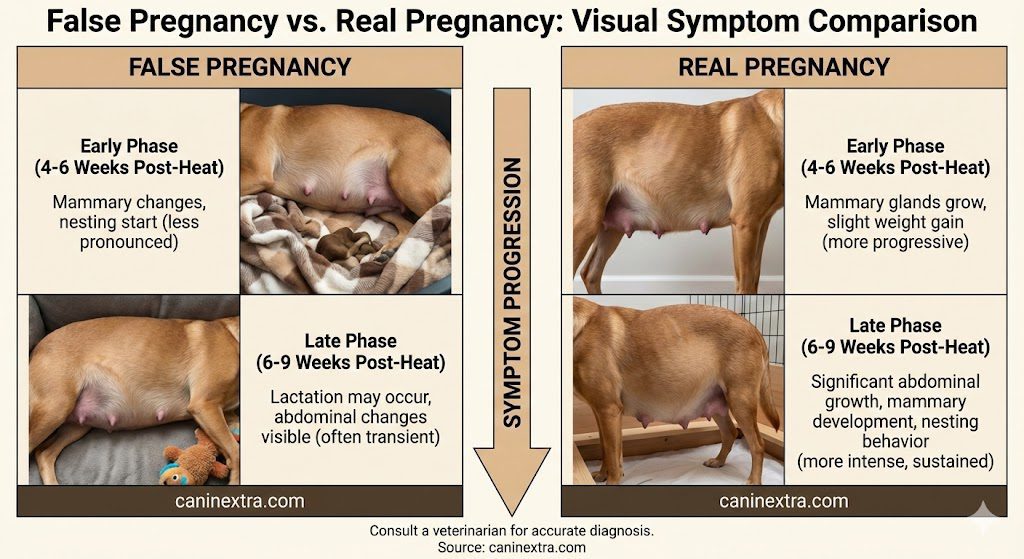
Mammary Gland Changes: Approximately 90% of dogs with false pregnancy experience enlarged mammary glands, which may or may not produce milk. The glands become noticeably swollen and may feel warm to the touch.
Milk Production: Some dogs begin lactating even though no puppies are present. You might notice milk droplets when gently pressing the nipples or find wet spots where your dog has been lying.
Abdominal Enlargement: The belly may appear slightly distended due to fluid retention and hormonal effects on the rib cage.
Physical Changes: Dogs with false pregnancy often retain excess fluid, experience decreased appetite, and may vomit periodically. Despite eating less, they seldom lose weight because of the fluid retention.
Behavioral Changes That Signal False Pregnancy
Behavioral symptoms often appear first and can be quite striking:
Nesting Behavior: Around 66% of dogs with false pregnancies gather toys and belongings in a specific area and become protective of that spot. Your dog might dig, arrange bedding, or create a “den-like area” in quiet corners.
Mothering Objects: About 54% of dogs with false pregnancies will guard and constantly carry around particular toys, treating them as puppies. This behavior can become quite intense.
Restlessness and Anxiety: Dogs experiencing phantom pregnancy often pace, seem unable to settle, and display general agitation.
Changes in Activity Level: Many dogs show decreased interest in physical activity and become more lethargic.
Protective Aggression: Some dogs become unusually protective of their “nest” or toys, showing irritability or aggression if anyone approaches.
Increased Affection: Conversely, some dogs become more clingy and seek constant attention from their owners.
What Causes False Pregnancy in Dogs?
The Hormonal Mechanism
Understanding the hormone cascade helps explain why this happens:
Stage 1 – Heat Cycle: During heat, progesterone and other hormones necessary to host fetuses increase significantly.
Stage 2 – Post-Heat Transition: After heat ends, a female dog’s ovaries continue producing hormones for 4-6 weeks regardless of whether she’s pregnant. These hormones prepare the uterus to receive and maintain a pregnancy.
Stage 3 – Hormone Shift: When the dog is no longer in heat, decreasing progesterone levels trigger an increase in prolactin, the hormone responsible for preparing and maintaining lactation.
Stage 4 – False Pregnancy Symptoms: As hormone levels decline in non-pregnant dogs, they send signals to the body that stimulate false labor and mammary gland development.
Can Spaying Cause False Pregnancy?
Yes, but only under specific circumstances. If a dog is spayed during or within 6-8 weeks after her heat cycle when progesterone levels are still elevated, the sudden removal of the ovaries can cause a rapid progesterone drop that triggers false pregnancy symptoms.
This is why experienced veterinarians recommend waiting 8-10 weeks after a heat cycle before scheduling spay surgery.
How to Diagnose False Pregnancy in Dogs
When to See Your Veterinarian
If this is your dog’s first time showing these symptoms, schedule a veterinary visit to rule out:
- Actual pregnancy
- Pyometra (uterine infection)
- Mammary tumors
- Other medical conditions causing similar symptoms
Your veterinarian will examine your dog’s abdomen and mammary glands, discuss her recent heat cycles, and assess whether she could have been mated.
Diagnostic Tests
Ultrasound: If there’s any possibility your dog was mated, your vet can perform an ultrasound to determine if actual pregnancy exists.
X-rays: Provide definitive confirmation after day 45 of pregnancy when fetal bones are visible.
Physical Examination: Veterinarians can often identify false pregnancy through abdominal palpation, confirming the absence of developing puppies.
Red Flags Requiring Immediate Care
Contact your veterinarian right away if you notice:
- Symptoms lasting longer than 8 weeks (may indicate hypothyroidism or liver dysfunction)
- Red, hot, painful mammary glands (possible mastitis)
- Green or bloody vaginal discharge
- Severe behavioral changes or aggression
- Loss of appetite for more than 48 hours
Treatment Options for False Pregnancy in Dogs
When No Treatment Is Needed
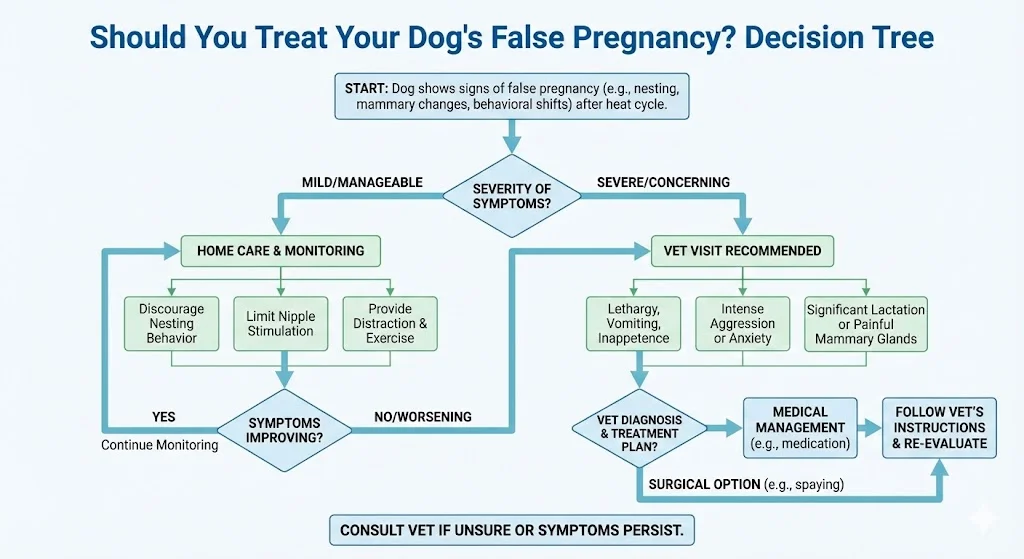
Good news: most false pregnancies are mild and don’t require medical treatment since symptoms naturally subside within approximately 14-21 days.
In the UK, approximately 52% of veterinarians choose not to treat false pregnancy cases, allowing them to resolve naturally.
Home Care Strategies
While symptoms run their course, you can help your dog stay comfortable:
Avoid Stimulating Mammary Glands: Never massage or milk the teats during false pregnancy, as this stimulates more milk production and prolongs symptoms.
Remove Nesting Objects: If your dog is mothering toys, remove them in a non-stressful way, take her for a walk while someone else quietly removes the objects.
Increase Exercise: More physical activity and play help distract your dog and reduce symptoms naturally.
Dietary Adjustments: Reducing food and water intake by half for one day may help decrease milk production, though consult your vet first.
Prevent Self-Nursing: Use a protective body suit or Elizabethan collar to stop your dog from licking her nipples, which increases milk production and can cause mastitis.
Medical Treatment: Cabergoline
For moderate to severe cases, veterinarians may prescribe medication.
What It Is: Cabergoline is a prolactin-inhibiting drug approved for use in dogs that stops pregnancy hormones from being produced and reduces pseudopregnancy symptoms, especially milk production.
Dosage: The standard dose is 5 micrograms per kilogram of body weight, given by mouth every 24 hours for 5-10 days.
Effectiveness: Clinical studies demonstrate 80-100% efficacy rates for treating false pregnancy with cabergoline.
How Quickly It Works: The medication is typically given as a liquid by mouth for 1-2 weeks, with behavioral signs alleviating first, followed by reduction in mammary gland enlargement, then finally suppression of lactation.
Possible Side Effects: Some animals may experience vomiting, temporary loss of appetite, or mild drowsiness during the first 2 days of treatment.
Other Treatment Approaches
Sedatives: May be prescribed for severe anxiety or aggressive behavior.
Diuretics: Can help reduce fluid retention and milk production.
Avoid Certain Medications: Phenothiazine sedatives should not be used as they stimulate prolactin secretion and worsen symptoms.
Preventing False Pregnancy: The Spaying Solution
Why Spaying Works
Spaying, the surgical removal of your dog’s uterus and ovaries, permanently prevents false pregnancies by stopping estrus cycles completely.
Critical Timing Considerations
Never Spay During False Pregnancy: If surgery is performed while your dog is experiencing false pregnancy symptoms, those symptoms may persist for several weeks despite the spay.
Wait for Complete Resolution: All behavioral and physical signs must completely disappear before scheduling surgery.
Optimal Timing Window: Wait 2-3 months after your dog’s last heat cycle before spaying to avoid triggering false pregnancy. Schedule surgery during anestrus (the resting phase between heat cycles).
Additional Benefits of Spaying
Beyond preventing false pregnancy, spaying offers significant health advantages:
- Prevents mammary gland cancer
- Eliminates risk of pyometra (deadly uterine infection)
- Removes possibility of unplanned pregnancies
- Reduces risk of ovarian and uterine cancers
Potential Complications of False Pregnancy
While false pregnancy itself isn’t dangerous, recurring episodes can lead to health issues.
Mastitis (Mammary Gland Infection)
The most common complication is mastiti, painful inflammation of the breast tissue that makes mammary glands appear red, swollen, and warm to the touch. This requires antibiotic treatment and pain medication.
Pyometra Risk
Whether false pregnancy directly causes pyometra is debatable, but repeated hormonal imbalances can result in this serious uterine inflammation where the womb fills with pus. Pyometra is life-threatening without emergency treatment.
Increased Cancer Risk
Hormonal imbalances may increase your dog’s risk of breast cancer, which is common in dogs, about half of mammary tumors are cancerous.
Behavioral Issues
Repeated severe false pregnancies can cause:
- Chronic anxiety
- Resource guarding problems
- Aggression toward family members
- Obsessive-compulsive behaviors
False Pregnancy vs. Real Pregnancy: Key Differences
How do you tell them apart?
Similarities That Cause Confusion
Both conditions produce:
- Swollen mammary glands
- Behavioral changes and nesting
- Decreased activity levels
- Appetite changes
- Abdominal enlargement
Critical Differences
Timing: True pregnancy lasts approximately 63 days from breeding, while false pregnancy symptoms appear 45-60 days after heat without breeding.
Duration: Real pregnancy progresses steadily toward birth. False pregnancy symptoms typically peak then gradually resolve within 2-3 weeks.
Diagnostic Confirmation: Only ultrasound (after day 25) or X-rays (after day 45) can definitively confirm actual pregnancy.
Breeding History: If your dog had no opportunity to mate with an intact male, pregnancy is impossible.
Frequently Asked Questions
Can false pregnancy happen to spayed dogs?
Yes, but only under specific circumstances. If a dog is spayed during the luteal phase (within 6-8 weeks after heat) when progesterone levels are elevated, the surgery can trigger false pregnancy symptoms. This doesn’t occur in dogs spayed during anestrus or before their first heat.
How long does false pregnancy last in dogs?
Most cases last between one and four weeks, with the majority resolving completely within 14-21 days without medical intervention. If symptoms persist beyond 8 weeks, consult your veterinarian.
Is false pregnancy dangerous for my dog?
False pregnancy itself is not life-threatening and is considered a fairly normal physiological process for intact female dogs. However, complications like mastitis or repeated episodes increasing cancer risk warrant veterinary attention.
Will my dog have a false pregnancy after every heat cycle?
Not necessarily. Some females show signs when young that stop as they age, while others don’t show signs until they’re older. The pattern varies significantly between individual dogs.
Can I prevent false pregnancy without spaying my dog?
No permanent prevention method exists besides spaying. Females who aren’t spayed and experience false pregnancies may have them during every heat cycle. Medication treats individual episodes but doesn’t prevent future occurrences.
Should I let my dog “nurse” her toys during false pregnancy?
No. Do not massage or allow stimulation of the mammary glands, as this signals the body to continue milk production and prolongs symptoms. Remove toys in a gentle, non-confrontational way.
Can false pregnancy affect my dog’s future fertility?
No, studies show that fertility and fecundity at the next breeding remain undisturbed after false pregnancy episodes. The condition doesn’t impact your dog’s ability to conceive or carry puppies successfully.
What breeds are most prone to false pregnancy?
Certain breeds including Beagles, Dachshunds, and Afghan Hounds show higher incidence rates, approximately 75% compared to the 50% average for all breeds. However, any intact female dog of any breed can experience phantom pregnancy.
When should I take my dog to the vet for false pregnancy?
Seek veterinary care if:
- This is the first time your dog shows these symptoms
- Symptoms last longer than 8 weeks
- Mammary glands become red, hot, or painful
- Your dog shows severe behavioral changes or aggression
- You need help ruling out actual pregnancy
Can false pregnancy cause permanent behavioral changes?
Behavioral changes during false pregnancy typically resolve within 14-21 days along with physical symptoms. Permanent changes are rare, though repeated severe episodes may contribute to anxiety or guarding behaviors.
How soon after false pregnancy can I spay my dog?
Wait until all signs and symptoms of false pregnancy completely disappear before scheduling spay surgery. Spaying during active symptoms can cause them to persist. Most veterinarians recommend waiting at least 2-3 months after symptoms resolve.
Does false pregnancy mean my dog wants puppies?
No. False pregnancy is a physiological response to normal hormonal changes that occur after every heat cycle, regardless of breeding. It’s not driven by emotional desire but by biological processes your dog cannot control.
Conclusion
False pregnancy affects the vast majority of unspayed female dogs at some point and results from normal hormonal fluctuations following heat cycles. While the physical symptoms and behavioral changes can be concerning, most cases resolve naturally within 2-3 weeks without requiring medical intervention.
The key is understanding what’s happening, providing supportive care, and knowing when veterinary attention is necessary. Avoid stimulating the mammary glands, increase exercise, and remove toys your dog is mothering. For severe cases, cabergoline medication offers 80-100% effectiveness in resolving symptoms.
If your dog experiences recurring false pregnancies or you’re not planning to breed, spaying remains the only permanent prevention method. Schedule the surgery during anestrus, at least 8-10 weeks after her last heat cycle, to avoid triggering another episode.
Next Steps: Monitor your dog’s symptoms for 2-3 weeks. If physical signs worsen, mammary glands become painful, or behavioral changes are severe, consult your veterinarian. Otherwise, provide comfort and patience while her hormones naturally rebalance.