

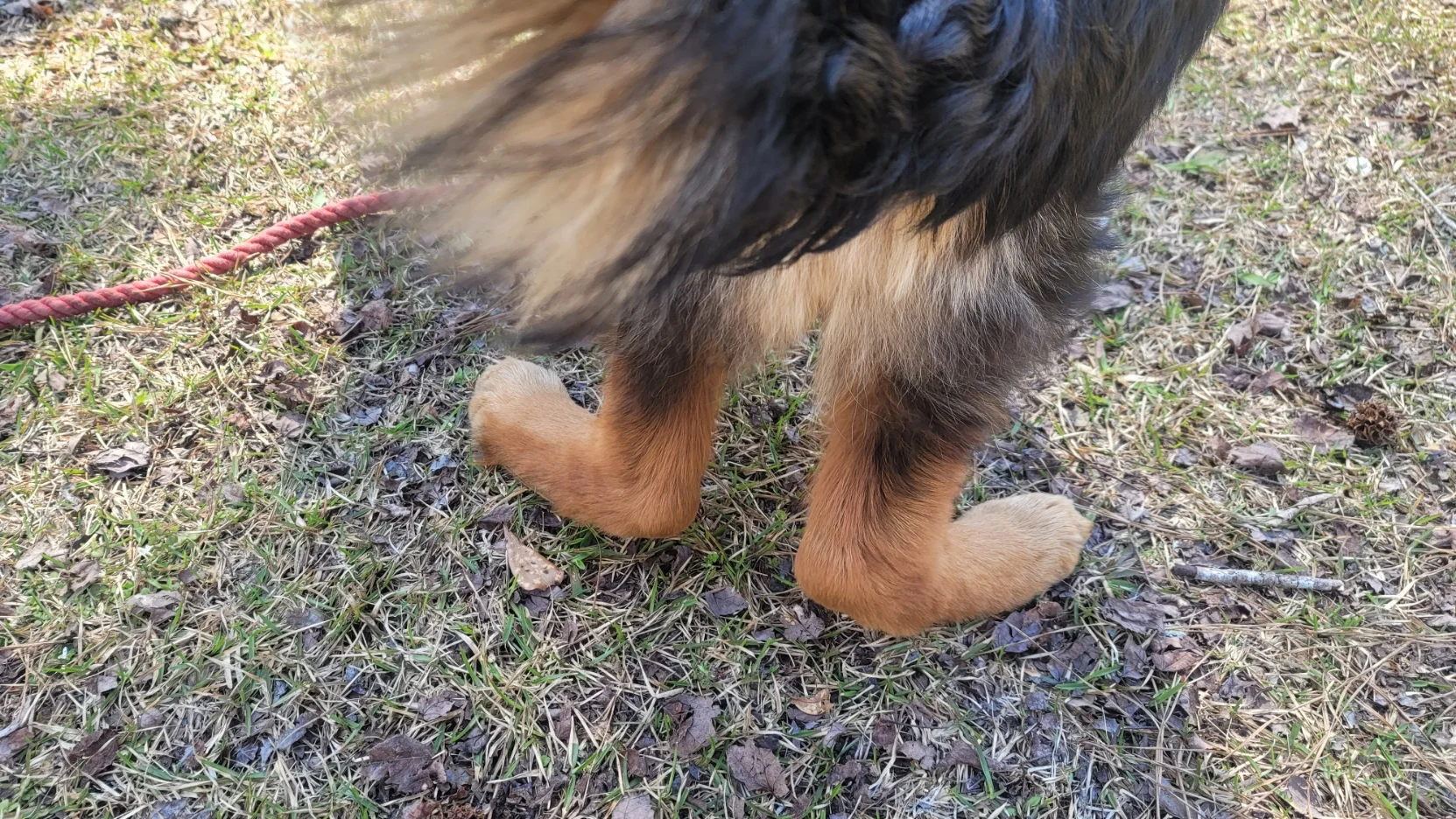
You’re at the dog park, watching your beloved companion run alongside other dogs, when you notice something unusual about their gait. Their back legs seem to angle inward at the ankle, causing their paws to splay outward in an awkward stance. If this sounds familiar, your dog might have a condition called cow hock.
Cow hock in dogs occurs when the hock joints are positioned inward, creating a splayed appearance in the back legs. While this structural variation might look concerning, understanding what cow hock truly means for your four-legged friend is the first step toward ensuring they live a happy, healthy life. Whether you’re a concerned pet parent or a breeder looking to make informed decisions, this comprehensive guide will walk you through everything you need to know about this common canine condition.
Key Takeaways:
- Cow hock is a genetic structural variation affecting hind leg alignment, not a disease
- Mild to moderate cases typically don’t cause pain or significantly impact quality of life
- Strengthening exercises and proper weight management can help improve your dog’s mobility
- The condition is different from hip dysplasia, though severe cases may warrant veterinary evaluation
- Early intervention with targeted exercises yields the best results for managing symptoms
What Exactly Is Cow Hock in Dogs?
Understanding the Cow Hock Definition
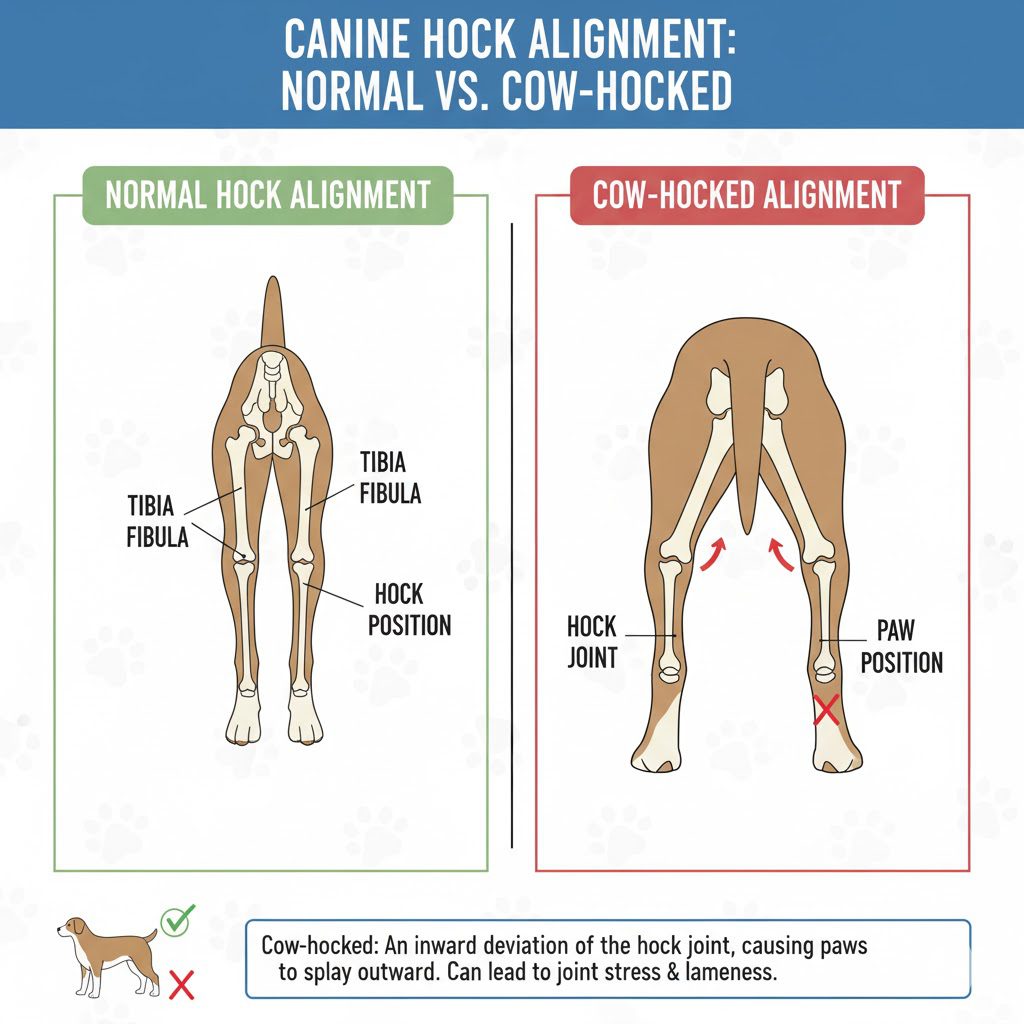
When a dog is cow-hocked, their hocks are positioned inward, bringing the points of the hocks closer together than normal while the toes point outward. Think of your dog’s hock as equivalent to your ankle joint. In a perfectly aligned dog, these joints remain straight during movement, ensuring smooth and stable motion.
Imagine standing with your feet turned outward while your knees angle inward—that’s essentially what your dog experiences with this structural variation. As an experienced breeder with over two decades in the field, I’ve seen countless cases where concerned owners mistake this conformational trait for a serious medical condition when, in reality, it’s often a manageable structural characteristic.
The Anatomy Behind Cow Hock in Canines
The root cause lies in growth rate differences between the tibia and fibula, the two bones in the lower rear leg. When one bone develops at a different pace than the other, it causes the lower leg and feet to twist outward. This creates the characteristic stance we recognize as cow hock deformity.
The hock joint itself is a complex structure that bears significant weight during your dog’s daily activities. When properly aligned, these joints work in harmony with surrounding muscles, tendons, and ligaments to support efficient movement. However, when cow-hocked, this biomechanical efficiency becomes compromised to varying degrees.
Recognizing Cow Hock Symptoms in Dogs
Visual Signs of Cow Hock Condition
The most obvious indicators that your dog has cow hock include:
- Inward-angling hocks: The hock joints appear to turn toward each other
- Outward-facing paws: Feet point away from the body’s centerline rather than straight ahead
- Wider stance: Your dog may stand with their back legs farther apart than normal
- Unusual wear patterns: Check your dog’s paw pads for uneven wear, particularly on the outer edges
Gait Abnormalities and Movement Patterns
A well-structured dog’s hocks move up and down in a natural V-shape pattern. In contrast, a cow-hocked dog’s hocks may wobble outside or inside this V-pattern during movement. Some owners notice a characteristic bunny-hopping gait, where the dog hops awkwardly rather than walking smoothly.
From my years working with various breeds, I’ve observed that extremely cow-hocked dogs may swing their legs in an arc during forward movement to avoid their hocks bumping together. This compensatory movement can make walks appear more labored than they should be.
When Cow Hock Symptoms Indicate Severity
Not all cow hock presentations are equal. Here’s how to gauge severity:
Mild Cases:
- Minimal inward rotation
- No pain or discomfort
- Normal activity levels
- Good performance in physical activities
Moderate Cases:
- Noticeable inward rotation
- Occasional awkwardness in movement
- May struggle with balance on certain surfaces
Severe Cases:
- Pronounced inward rotation with potential for luxating patella, hind leg weakness, and abnormal gait
- Visible difficulty with stairs or uneven terrain
- Potential pain during extended activity
- May tire more easily than other dogs
What Causes Cow Hock in Dogs?
The Genetic Component
The cow-hock trait is thought to be genetic, which significantly impacts breeding decisions. As a professional breeder, I always counsel clients that deliberately breeding dogs with pronounced cow hock can exacerbate structural problems in future generations.
The inheritance pattern isn’t fully understood, but evidence suggests it’s a polygenic trait—meaning multiple genes contribute to its expression. This complexity makes it challenging to completely eliminate from breeding lines, even with careful selection.
Breed Predispositions: Which Dogs Are at Risk?
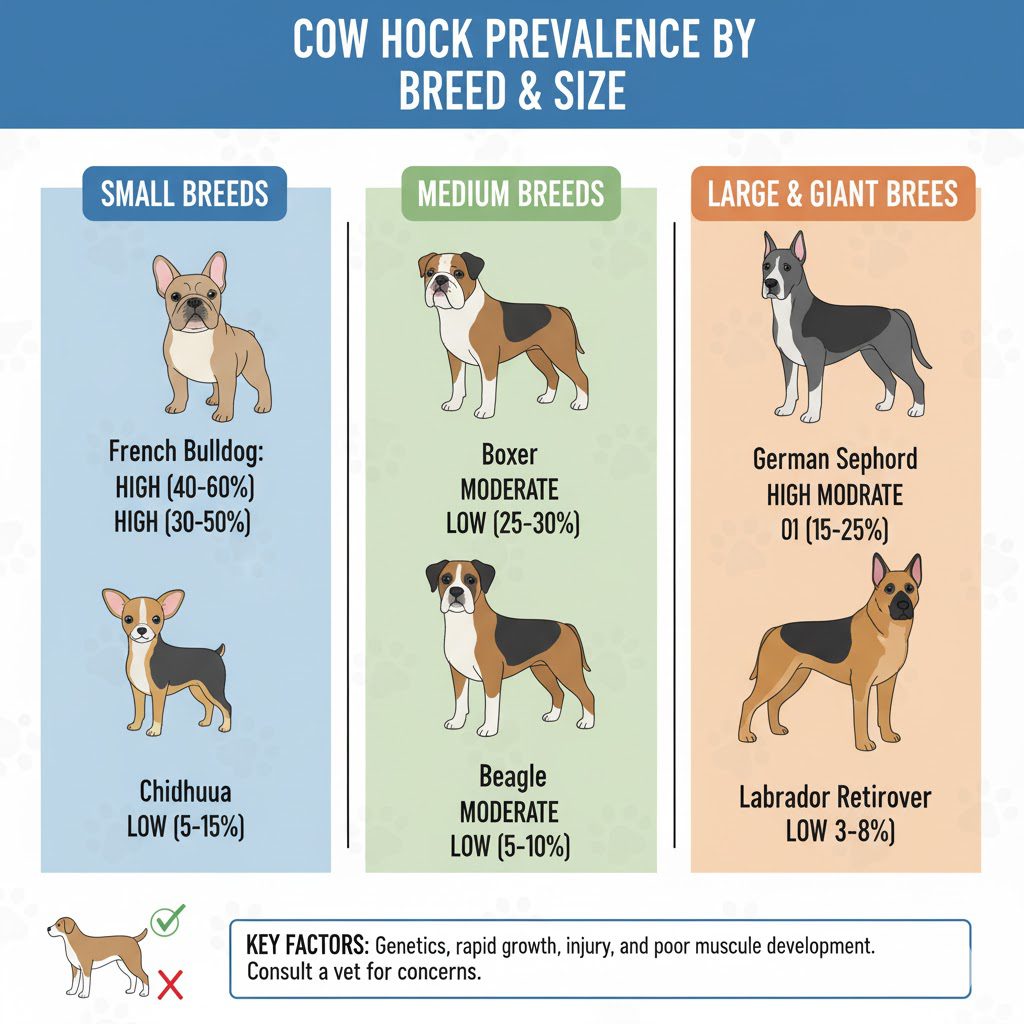
Certain breeds show higher susceptibility to developing cow hocks due to their genetic makeup. These include:
Giant Breeds:
- Great Danes
- Mastiffs
- Saint Bernards
- These breeds grow rapidly, which can sometimes result in bone misalignment
Working Dog Breeds:
- German Shepherds (particularly common in show lines)
- Rottweilers
- Doberman Pinschers
- Their active lifestyles can stress developing joints, potentially leading to cow hock formation
Smaller Breeds:
- Bulldogs
- Pugs
- Pekingese
Environmental Factors vs. Genetics
A common misconception is that environmental factors cause cow hock. Cow-hocked conformation is primarily influenced by genetics rather than environmental factors. However, certain environmental conditions during puppyhood can affect how prominently the trait manifests:
- Rapid growth from overfeeding
- Inappropriate exercise during critical developmental stages
- Prolonged exposure to slippery flooring surfaces
- Inadequate nutrition affecting bone development
Diagnosing Cow Hock in Dogs
When to Visit Your Veterinarian
If you suspect your dog has cow hock, scheduling a veterinary examination is essential. A proper diagnosis typically involves X-rays to reveal the extent of misalignment and determine the best course of action. Don’t wait until your dog shows signs of pain or mobility issues early assessment provides more management options.
During the examination, your veterinarian will:
- Evaluate your dog’s standing posture from multiple angles
- Observe their gait on various surfaces
- Palpate the hock joints for stability and range of motion
- Assess overall hind limb musculature
Diagnostic Tests and Imaging
X-Ray Evaluation: The gold standard for assessing bone alignment and joint structure. X-rays can reveal:
- Precise angles of joint misalignment
- Presence of concurrent conditions like hip dysplasia
- Bone density and development patterns
- Early signs of joint degeneration
Physical Examination: Your vet will perform hands-on assessment to check for:
- Joint stability and laxity
- Muscle development and symmetry
- Pain responses
- Range of motion limitations
Differentiating Cow Hock from Hip Dysplasia
This distinction is crucial because many owners worry that cow hock indicates hip dysplasia. Large breed dogs have a predisposition for hip dysplasia, but cow-hocked conformation is not related to dysplasia.
Key Differences:
| Cow Hock | Hip Dysplasia |
|---|---|
| Present from birth | Develops over time, typically after 5 months |
| Affects hock joint alignment | Affects hip socket and femoral head |
| May actually score better on OFA hip screenings in mild cases | Shows abnormalities on hip X-rays |
| Typically not painful in mild-moderate cases | Often causes pain and lameness |
| Genetic structural trait | Genetic joint disease |
However, severe cow hocks can be an indicator of hip dysplasia because they may cause a weak rear end affecting hip musculature. If your large-breed dog shows pronounced cow hocking, discussing hip evaluation with your veterinarian is wise.
Treatment Options for Cow Hock in Dogs
Can Cow Hock Be Corrected?
Let’s address this question directly: Cow hocks cannot be completely corrected, and most treatments focus on strengthening the hindquarters to help mask the appearance and compensate for associated weakness. If the cow-hocked conformation is genetically determined, it will persist.
This doesn’t mean you’re helpless. While you can’t fundamentally change the structural alignment, you can significantly improve your dog’s quality of life through targeted interventions.
Managing Cow Hock in Dogs Through Exercise
The cornerstone of managing cow hock involves specific exercises designed to strengthen supporting musculature. The most popular exercises for cow hocks are uphill walks, low hurdles, swimming, and exercising on a treadmill in water.
Effective Cow Hock Exercises:
- Uphill Walking:
- Start with gentle inclines, gradually increasing steepness
- Sessions of 10-15 minutes, 2-3 times daily
- Builds thigh and gluteal muscles that support proper alignment
- Low Hurdle Work:
- Set obstacles just above hock height
- Encourages deliberate leg placement and muscle engagement
- Begin with 5-6 repetitions, building to 10-12 as strength improves
- Swimming:
- Provides resistance without joint impact
- Excellent for building overall hind limb strength
- Start with 10-minute sessions, increasing as tolerated
- Controlled Stair Climbing:
- Walk slowly, one foot per step
- Emphasizes proper muscle recruitment
- 2-3 flights daily, monitoring for fatigue
- Backward Walking:
- Teaches body awareness and engages different muscle groups
- Start with 10 feet, gradually extending distance
- Practice several times throughout the day
Advanced Corrective Exercises for Cow Hock Alignment
The way to address cow hocks is to correct muscle imbalance through targeted exercise, strengthening the internal hip rotators and lengthening the external hip rotators.
Adducted Stand Exercise: In this exercise, both rear feet target a single platform, forcing the dog to engage weak internal hip rotators and disengage external hip rotators that cause cow hock alignment. This errorless learning approach builds endurance over time.
Posture Sit Exercise: After mastering the adducted stand, the dog must consciously choose to select internal hip rotators and deselect external hip rotators to move out of the cow hock position.
Progressive Exercise Protocol:
- Begin with static positions (holding proper alignment while standing still)
- Progress to semi-dynamic movements (rear stays still while front moves)
- Advance to fully dynamic patterns once 85% success rate achieved
- Maintain consistency with 3-5 sessions daily, 10-15 minutes each
Supplements for Joint Support
While supplements won’t correct the structural alignment, they can support overall joint health. Cosequin is a popular joint supplement containing glucosamine hydrochloride, sodium chondroitin sulfate, and MSM. These ingredients can help maintain optimal cartilage health in the joints.
Recommended Supplements:
- Glucosamine and chondroitin combinations
- Omega-3 fatty acids (fish oil)
- Green-lipped mussel extract
- MSM (methylsulfonylmethane)
- Hyaluronic acid
Always consult your veterinarian before starting any supplement regimen, especially for growing puppies where proper dosing is critical.
When Is Cow Hock Surgery Necessary?
In severe cases, surgical intervention might be necessary to correct the misalignment. However, surgery is typically reserved for extreme situations where:
- Conservative management has failed
- The dog experiences significant pain
- Quality of life is substantially impaired
- Concurrent conditions require surgical correction
Surgical options may include corrective osteotomies or joint stabilization procedures. Recovery is lengthy and requires dedicated rehabilitation, making surgery a last resort rather than a first-line treatment.
Living with a Cow-Hocked Dog
Weight Management: A Critical Factor
Maintaining an optimal body condition significantly reduces stress on compromised joints. Extra pounds multiply the forces acting on your dog’s hocks during every step. As a rule of thumb:
- You should easily feel (but not see) your dog’s ribs
- A visible waist when viewed from above
- An abdominal tuck when viewed from the side
Work with your veterinarian to determine your dog’s ideal weight and adjust feeding accordingly.
Home Modifications for Comfort
Making your environment more cow-hock-friendly helps your dog navigate daily life:
Flooring Solutions:
- Add non-slip rugs or mats in high-traffic areas
- Consider rubber-backed runners on hardwood or tile
- Use yoga mats as temporary traction surfaces
Accessibility Aids:
- Install ramps for furniture or vehicles
- Use harnesses with rear support for stairs
- Provide orthopedic beds to support proper rest positions
Exercise Management:
- Prioritize softer surfaces like grass or dirt trails
- Avoid prolonged running on concrete or asphalt
- Monitor for signs of fatigue during activities
Activity Recommendations and Restrictions
Dogs shouldn’t pull sleds or weights, but allowing them to run otherwise is fine when they’re eager to do so. The key is balance adequate exercise to maintain muscle strength without overtaxing compromised structures.
Appropriate Activities:
- Moderate-paced walks on varied terrain
- Swimming and hydrotherapy
- Controlled play sessions
- Low-impact agility work (avoid high jumps)
Activities to Limit:
- Weight pulling or carting (unless veterinarian-approved)
- Excessive jumping
- Sharp pivoting movements
- Extended high-speed running
The Prognosis: Long-Term Outlook for Cow Hocked Dogs
Many owners worry about their dog’s future mobility. Regarding aging, dogs with cow-hocked conformation don’t typically experience worse conditions than those with other conformations when joint health is maintained with proper care and sufficient exercise.
With appropriate management:
- Mild cases often live normal, active lives with no intervention
- Many slightly cow-hocked dogs excel in the field and in agility
- Moderate cases benefit significantly from targeted exercise programs
- Even severe cases can maintain good quality of life with dedicated care
Preventing Cow Hock Issues in Dogs
Responsible Breeding Practices
As someone deeply involved in breeding programs, I can’t emphasize enough the importance of selection decisions. The cow-hocked trait is thought to be genetic, meaning a dog’s prospects as a stud or dam are practically nil, even if no other genetic problems arise.
Breeding Recommendations:
- Screen breeding stock for structural soundness
- Review pedigrees for conformational faults in ancestors
- Consider professional evaluation by breed specialists
- Prioritize functional structure over extreme angulation
- Document and track structural traits across generations
Proper Puppy Development
While you can’t change genetic predisposition, supporting optimal growth helps minimize the condition’s manifestation:
Nutrition Guidelines:
- Feed high-quality puppy food appropriate for your dog’s expected adult size
- Avoid overfeeding that accelerates growth rate
- Large breeds benefit from “large breed puppy” formulations
- Monitor body condition closely during growth phases
Exercise Recommendations for Growing Puppies:
- Limit forced exercise until growth plates close
- Allow free play but avoid repetitive high-impact activities
- Introduce swimming early for low-impact muscle development
- Avoid stairs and jumping until skeletal maturity
Environmental Considerations:
- Provide good traction surfaces during puppyhood
- Avoid extended time on slippery floors
- Ensure adequate space for natural movement
- Support proper rest with appropriate bedding
Early Intervention Strategies
Spotting cow hocks early can make a significant difference. If you notice concerning signs in your puppy:
- Document with photos and videos for veterinary review
- Begin gentle strengthening exercises appropriate for age
- Maintain ideal body condition throughout growth
- Schedule regular veterinary evaluations to monitor progression
Common Questions About Cow Hock in Dogs
Does Cow Hock Cause Pain?
In dogs, cow hocks are normally not painful. However, severe cow hocks are linked to weakness in the hind end in younger dogs, and activities involving balance and climbing can be more difficult. Pain typically arises from secondary complications rather than the structural variation itself.
Will My Cow-Hocked Puppy Outgrow It?
Many puppies show some degree of cow hocking during rapid growth phases, particularly between 4-8 months. Some do improve with maturity, but if the trait is genetic, it persists throughout life. The degree of cow hocking may become less apparent as muscle mass increases, but the underlying structure remains unchanged.
Can Cow Hock Lead to Arthritis?
Severe cases of cow hocks alter the weight-bearing angle of the knees, hips, and hocks, potentially accelerating joint wear. Over years, this abnormal stress distribution may contribute to arthritis development. However, with proper weight management, appropriate exercise, and joint support, many cow-hocked dogs maintain healthy joints into senior years.
Should I Avoid Breeding My Cow-Hocked Dog?
Deliberately breeding for a conformation fault is frowned upon because it potentially exacerbates the problems associated with it. Responsible breeders work to improve structural soundness in their lines. If your dog has noticeable cow hocking, excluding them from breeding programs helps prevent passing this trait to future generations.
How Does Cow Hock Affect Show Dogs?
Cow hocks are not desired in any dog breed standard, and structural abnormalities are grounds for losing marks in the conformation show ring. Excessive angulation, like that of extreme cow hocks, is considered detrimental to joint support, firmness, and overall endurance. While some controversy exists around judging consistency, cow-hocked dogs typically face penalization in conformation competitions.
Conclusion: Embracing Life with Cow Hock
Understanding cow hock in dogs empowers you to make informed decisions about your furry companion’s care. While this structural variation presents challenges, it doesn’t define your dog’s potential for a joyful, active life. Dogs with cow-hocked conformation can enjoy normal activities when joint health is maintained with proper care.
Key Prevention and Management Strategies:
- Begin strengthening exercises early and maintain consistency
- Keep your dog at an ideal body weight throughout life
- Provide joint-supportive supplements as recommended by your veterinarian
- Create a home environment that accommodates your dog’s needs
- Monitor for changes in gait or mobility, addressing concerns promptly
Remember that every dog is unique. Whether your cow-hocked companion is a show prospect, working dog, or beloved family pet, they deserve care tailored to their individual needs. With dedication, appropriate management, and lots of love, your dog can thrive despite structural imperfections.
The journey with a cow-hocked dog teaches us valuable lessons about acceptance, adaptation, and the resilience of our canine friends. Focus on what your dog can do rather than their structural limitations, and you’ll discover that those distinctive hind legs are just one small part of what makes them special.
Take action today: Schedule a veterinary evaluation if you suspect cow hock, begin incorporating recommended exercises into your routine, and connect with other owners managing similar conditions. Your proactive approach makes all the difference in your dog’s quality of life and longevity.