


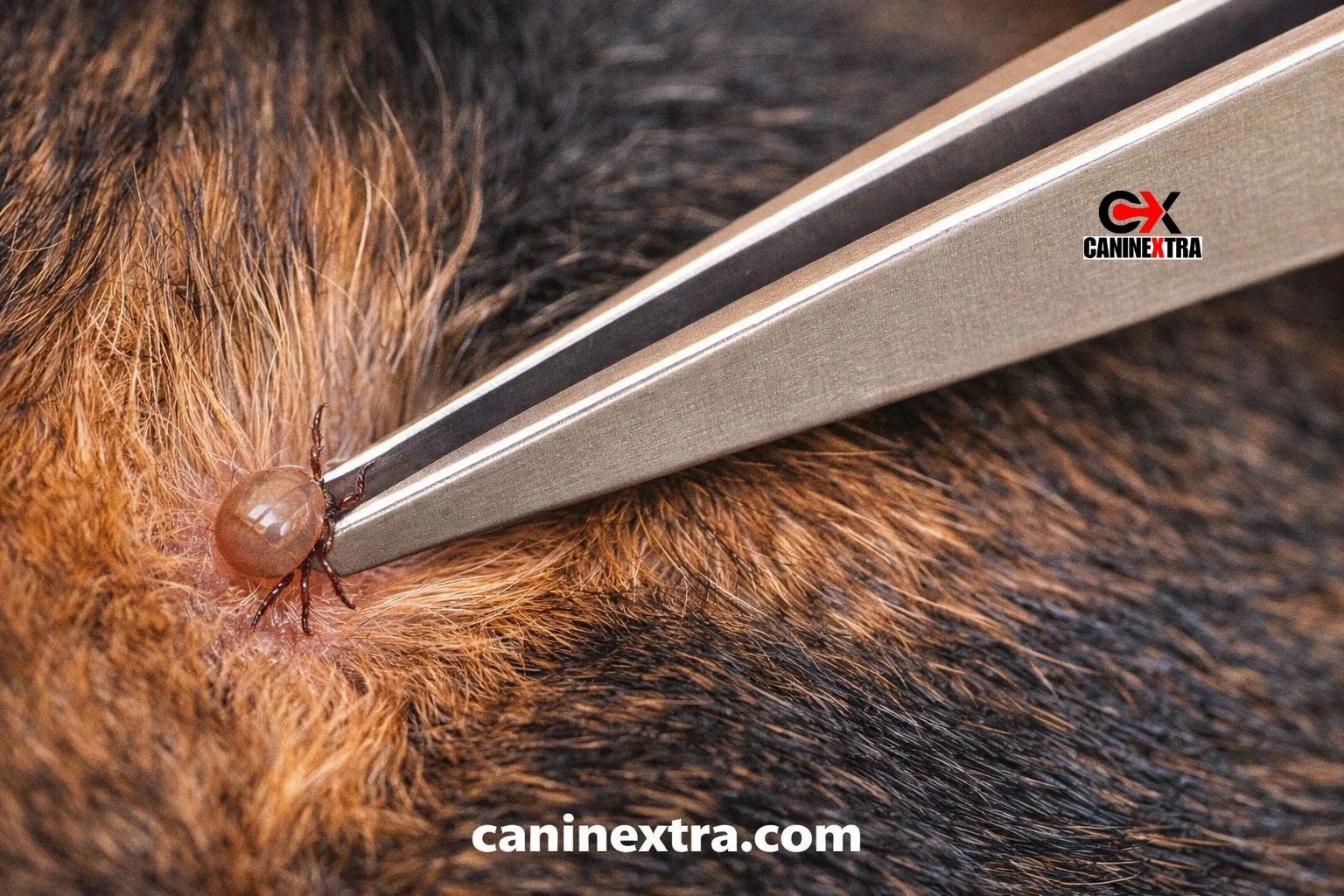
Your dog comes inside from the yard, and there it is, a tick burrowing into their skin. you wonder what kills ticks on dogs instantly?, Isopropyl alcohol kills ticks on contact within seconds, making it the fastest safe solution veterinarians recommend for emergency tick removal. But speed alone won’t protect your dog from tick-borne diseases like Lyme disease or Rocky Mountain spotted fever if you don’t remove the tick properly.
This guide reveals exactly what kills ticks instantly, how to safely extract ticks without leaving mouthparts embedded, and the prevention methods that reduce your dog’s tick exposure by up to 95%. You’ll get step-by-step protocols backed by veterinary science, not internet myths.
Key Takeaways:
- Isopropyl alcohol (70% concentration) kills ticks on contact in 10-30 seconds
- Proper tick removal with fine-tipped tweezers prevents disease transmission within the critical 24-48 hour window
- Prescription topicals like fipronil eliminate attached ticks within 6-12 hours
- Natural remedies don’t kill ticks instantly and can endanger your dog
- Monthly preventatives reduce tick attachment by 95% when applied correctly
- The longer a tick feeds, the higher the disease transmission risk, removal speed matters
What Actually Kills Ticks on Dogs Instantly?
Isopropyl alcohol at 70% concentration kills ticks within 10-30 seconds of direct contact. When you apply rubbing alcohol directly to an attached tick using a cotton swab, it penetrates the tick’s exoskeleton and disrupts cellular function, causing rapid death. This method works because alcohol dehydrates the tick’s body and destroys its waxy protective coating.
However, here’s what most articles won’t tell you: killing the tick instantly doesn’t guarantee safe removal. Dead ticks can remain firmly attached with their mouthparts embedded in your dog’s skin. You still need to extract the entire tick using proper technique to prevent infection and ensure complete removal.
The Science Behind Instant Tick Death
Ticks are parasitic arachnids with eight legs, related to mites and spiders rather than insects. Their bodies contain a hemolymph circulatory system that’s vulnerable to chemical disruption. When exposed to concentrated alcohol, the tick’s respiratory spiracles (breathing pores) become blocked, and cellular membranes break down within seconds.
Research from the Journal of Medical Entomology confirms that 70% isopropyl alcohol achieves complete tick mortality in under one minute. Lower concentrations (50% or less) may require 3-5 minutes and aren’t reliable for instant results.
Why “Instant Kill” Methods Get Misunderstood
Many dog owners search for ways to instantly kill ticks, but they’re really asking two different questions: “How do I stop this tick from feeding right now?” and “How do I safely remove this tick without spreading disease?” The answer requires both speed and proper technique, one without the other leaves your dog at risk.
Safe Tick Removal: The 5-Step Veterinary Protocol
Killing the tick is only step one. Here’s the complete process veterinarians follow:
1. Prepare Your Supplies
- Fine-tipped tweezers or tick removal tool
- 70% isopropyl alcohol in a small container
- Cotton swabs
- Disposable gloves
- Clean tissue or paper towel
2. Apply Alcohol (Optional Pre-Treatment) Soak a cotton swab in rubbing alcohol and dab it directly on the tick. Wait 10-15 seconds. This weakens the tick’s grip but doesn’t guarantee it will release naturally.
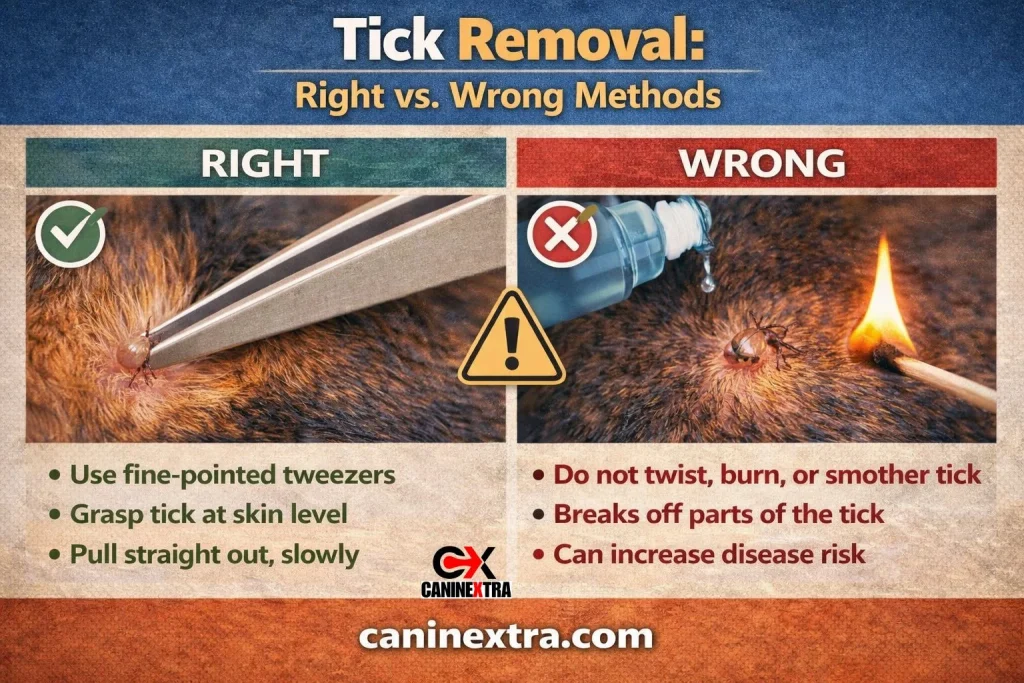
3. Grasp the Tick at Skin Level Using fine-tipped tweezers, grasp the tick as close to your dog’s skin as possible. Never squeeze the tick’s body, this can inject saliva and bacteria into your dog’s bloodstream.
4. Pull Straight Upward with Steady Pressure Apply even, continuous pressure without twisting or jerking. The tick should release within 5-10 seconds. If mouthparts remain embedded, they’ll typically work themselves out naturally within a few days.
5. Dispose and Disinfect Drop the tick into a container of rubbing alcohol to kill it permanently. Clean the bite area with antiseptic solution. Wash your hands thoroughly.
CRITICAL WARNING: Never use petroleum jelly, nail polish, matches, or essential oils to remove ticks. These methods don’t work and can cause the tick to regurgitate infectious material into your dog’s bloodstream.
Visual Guide: Correct vs. Incorrect Tick Removal
| Correct Method | Dangerous Method | Result |
|---|---|---|
| Grasp at skin level with tweezers | Grasp tick’s body | Body ruptures, mouthparts stay embedded |
| Pull straight up, steady pressure | Twist or jerk | Mouthparts break off |
| Use fine-tipped tools | Use fingers | Infection risk from body fluids |
| Apply alcohol after removal | Apply heat or petroleum jelly | Tick regurgitates into wound |
Prescription Treatments That Kill Ticks Fast
While alcohol kills on contact, prescription spot-on treatments and oral medications eliminate ticks systematically within hours. These products also provide ongoing prevention.
Fast-Acting Topical Treatments
Fipronil (Frontline Plus)
Kills adult ticks within 12 hours of contact. Works by disrupting the tick’s nervous system before it can transmit disease. Applied monthly between shoulder blades.
Selamectin (Revolution)
Eliminates American dog ticks within 24 hours. Also prevents heartworm and treats ear mites. Single application lasts 30 days.
Afoxolaner (NexGard)
Oral medication that kills ticks within 8 hours and fleas within 4 hours. Active ingredient circulates in bloodstream. Monthly chewable tablet.
How Long Before Disease Transmission Occurs?
Understanding transmission timelines helps you assess risk:
- Lyme disease: Requires 24-48 hours of tick attachment
- Rocky Mountain spotted fever: Can transmit in 4-6 hours
- Ehrlichiosis: Transmission begins after 3 hours
- Anaplasmosis: Risk increases after 24 hours
This is why preventing ticks from attaching in the first place provides better protection than relying solely on removal speed.
Tick Prevention: Reduce Attachment Risk by 95%
Preventing tick exposure protects your dog far more effectively than reactive removal. Here’s what works:
Monthly Preventative Products
Apply prescription tick preventatives year-round, even in winter. Ticks can survive in temperatures above 35°F and become active during mild winter days.
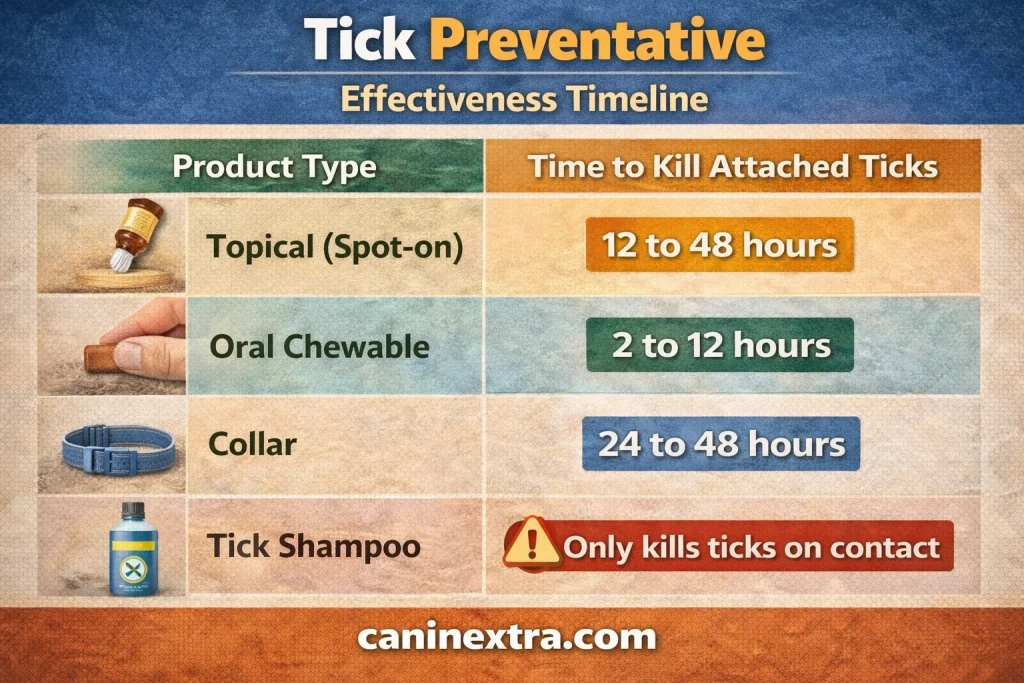
Effectiveness by Product Type:
- Spot-on treatments: 85-95% protection
- Oral medications: 90-98% protection
- Tick collars: 75-90% protection
- Natural repellents: 20-40% protection (unreliable)
Environmental Tick Control
Your Yard:
- Keep grass cut below 3 inches
- Remove leaf litter and brush piles
- Create 3-foot wood chip barriers between lawn and wooded areas
- Apply pet-safe yard sprays in spring and fall
High-Risk Areas: Ticks prefer moist, shaded environments with tall vegetation. They live in wooded areas, brushy fields, and areas where deer frequent. Deer ticks (blacklegged ticks) and lone star ticks are particularly common in the Eastern and Midwestern United States.
Post-Walk Tick Checks
Inspect your dog within 2 hours of outdoor activity. Common tick attachment sites:
- Between toes
- Inside ears
- Under collar
- Armpits and groin
- Around tail base
- Eyelids and facial folds
Regular immune system support helps your dog fight off tick-borne infections more effectively if exposure occurs.
Natural Remedies: Do They Actually Work?
Let’s examine common home remedies with honest, evidence-based assessment:
Apple Cider Vinegar
Claim: Creates acidic skin environment that repels ticks
Reality: No scientific evidence supports effectiveness. Doesn’t kill attached ticks. Can cause skin irritation when applied concentrated.
Essential Oils (Peppermint, Eucalyptus, Lavender)
Claim: Natural tick repellent
Reality: May offer minimal repellent effect (20-30% reduction in some studies) but doesn’t kill ticks instantly. Some essential oils are toxic to dogs, especially tea tree oil. Never apply undiluted.
Diatomaceous Earth
Claim: Kills ticks through dehydration
Reality: Can kill ticks in controlled environment over 24-48 hours. Ineffective on attached ticks. Inhalation risk for both pets and humans.
Dawn Dish Soap
Claim: Drowns ticks when mixed with water
Reality: Doesn’t kill ticks faster than water alone. No instant effect. Doesn’t loosen tick’s grip during removal.
Many home remedies might help prevent ticks in your environment, but none kill attached ticks instantly or work as reliably as veterinary-recommended products. For serious tick infestations, similar to treating mange, professional veterinary intervention provides the safest and most effective solution.
Tick Species You’ll Encounter in the USA
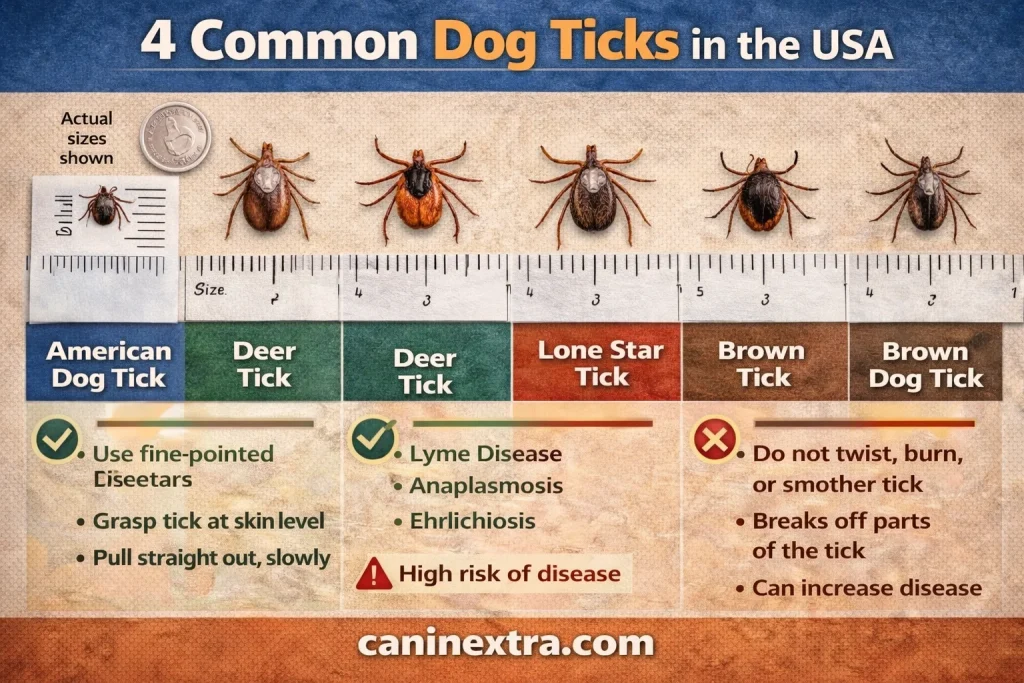
Different tick species carry different diseases. Identification helps assess risk:
American Dog Tick (Dermacentor variabilis)
- Appearance: Brown with white/gray markings
- Size: 5-15mm when engorged
- Disease Risk: Rocky Mountain spotted fever, tularemia
- Geographic Range: Eastern and Western United States
- Peak Season: April-August
Blacklegged Tick/Deer Tick (Ixodes scapularis)
- Appearance: Dark brown to black body
- Size: 3-5mm (smaller than dog tick)
- Disease Risk: Lyme disease, anaplasmosis, babesiosis
- Geographic Range: Northeast, Upper Midwest, Pacific Coast
- Peak Season: Spring and fall
Brown Dog Tick (Rhiphodesanguineus)
- Appearance: Reddish-brown, no markings
- Size: 3-10mm
- Disease Risk: Rocky Mountain spotted fever, ehrlichiosis
- Geographic Range: Throughout United States
- Peak Season: Year-round (survives indoors)
Lone Star Tick (Amblyomma americanum)
- Appearance: Females have white spot on back
- Size: 4-10mm
- Disease Risk: Ehrlichiosis, Southern tick-associated rash illness (STARI)
- Geographic Range: Southeast, expanding northward
- Peak Season: April-September
When to See a Veterinarian Immediately
Seek emergency veterinary care if you observe:
Within 48 Hours of Tick Removal:
- Redness spreading more than 2 inches from bite site
- Swelling that increases rather than decreases
- Discharge or pus from bite area
- Fever above 103°F
Tick-Borne Disease Symptoms (3-30 Days Post-Exposure):
- Lethargy and loss of appetite
- Joint pain or limping (shifting leg lameness)
- Swollen lymph nodes
- Unexplained fever
- Neurological symptoms (seizures, loss of coordination)
Severe Tick Infestation: If you find more than 5 ticks on your dog during one check, this indicates severe environmental exposure. A comprehensive treatment plan from your veterinarian is essential.
Tick Paralysis: A rare but serious condition where neurotoxins from certain tick species cause ascending paralysis. Remove the tick immediately and seek emergency care. Symptoms reverse within 24-72 hours after tick removal.
Frequently Asked Questions
What kills ticks on dogs instantly at home?
Isopropyl alcohol at 70% concentration kills ticks within 10-30 seconds when applied directly. Use a cotton swab to saturate the tick, wait briefly, then remove with tweezers. This is the fastest safe method for home use without prescription medication.
Can vinegar kill ticks on dogs instantly?
No. Apple cider vinegar doesn’t kill ticks instantly or effectively. While it may have mild repellent properties, it won’t kill attached ticks and can irritate your dog’s skin when applied concentrated to tick bite areas.
How long does it take for a tick to die after removal?
A removed tick can survive 2-3 days without a host if kept in a sealed container at room temperature. To ensure complete death, submerge the tick in rubbing alcohol or crush it thoroughly with a hard object while contained in tissue.
Do ticks fall off dead after treatment?
Yes, when using prescription spot-on treatments or oral medications. Dead ticks typically fall off within 24-48 hours as the attachment weakens. Don’t remove them prematurely, let the medication work completely to ensure full tick death.
What happens if you don’t remove a tick from a dog?
The tick will continue feeding for 3-10 days until fully engorged, then drop off naturally. However, disease transmission risk increases dramatically with longer attachment times. Remove ticks as soon as discovered to minimize infection risk.
Can ticks live in your house?
Yes. Brown dog ticks can establish populations indoors, living in cracks, baseboards, and furniture. A severe tick infestation requires professional pest control. Other tick species typically don’t survive well indoors and need outdoor environments to complete their life cycle.
What is the best tick prevention for dogs?
Oral prescription medications like NexGard or Simparica provide the most reliable protection (95-98% effectiveness). They kill ticks before disease transmission occurs and last 30 days per dose. Combine with environmental management for maximum protection.
How do you know if a tick head is still in your dog?
A small dark spot remaining at the bite site after removal indicates embedded mouthparts. This typically resolves naturally within 3-7 days. Monitor for signs of infection (increased redness, swelling, discharge) and consult your vet if symptoms develop.
Can I use hydrogen peroxide to kill ticks on my dog?
Hydrogen peroxide at 3% concentration has minimal effect on ticks and isn’t recommended for instant kill. It can damage healthy tissue around the bite area. Stick with isopropyl alcohol for faster, safer results.
What kills tick eggs on dogs?
Ticks don’t lay eggs on dogs, females drop off to lay eggs in the environment (up to 3,000 eggs per female). Regular vacuuming, washing dog bedding in hot water (130°F+), and yard treatments eliminate tick larvae and nymphs before they can attach to your dog.
Are natural tick killers safe for puppies?
Most natural remedies lack proven safety data for puppies under 12 weeks. Prescription tick preventatives have age and weight restrictions (typically 8 weeks and 4 pounds minimum). Consult your veterinarian before using any tick treatment on puppies or pregnant dogs.
How quickly do ticks transmit Lyme disease?
Lyme disease transmission requires 24-48 hours of tick attachment. The bacteria (Borrelia burgdorferi) lives in the tick’s midgut and must migrate to salivary glands before transmission occurs. Removing ticks within 24 hours significantly reduces Lyme disease risk.
Conclusion
Isopropyl alcohol kills ticks on dogs instantly, achieving death within 10-30 seconds of direct contact. However, effective tick management requires proper removal technique, awareness of disease transmission timelines, and consistent prevention strategies. The combination of monthly prescription preventatives, environmental control, and prompt tick removal when exposure occurs provides your dog with the strongest protection against tick-borne diseases.
Looking forward, climate change is expanding tick habitat ranges northward, increasing exposure risks in previously low-risk areas. Stay informed about tick activity in your region and maintain year-round prevention, even in traditionally cold-weather months.
Take Action Now: Check your dog thoroughly after every outdoor activity, focusing on hidden areas like between toes and inside ears. Apply your next dose of prescription tick preventative on schedule, protection gaps leave your dog vulnerable. If you find an attached tick, remove it within 24 hours to minimize disease transmission risk. Keep fine-tipped tweezers and 70% isopropyl alcohol in your pet first aid kit for immediate response.
