

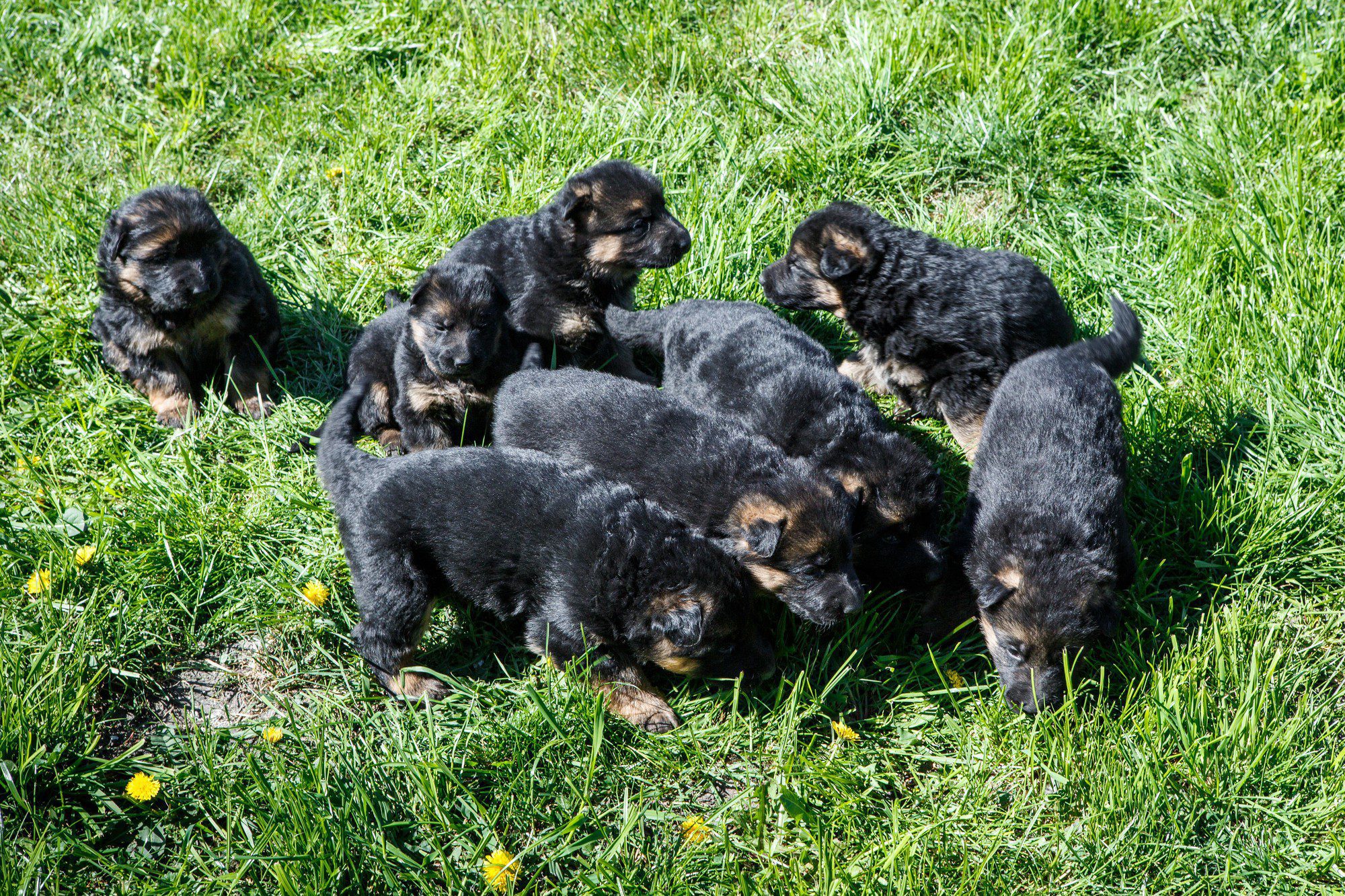
Your dog is pregnant, and you’re wondering: how many puppies should I prepare for? The average dog litter contains five to six puppies, but this number varies dramatically based on breed, age, health, and genetics.
Understanding puppy litter size isn’t just about counting, it’s about preparing for a safe delivery, ensuring adequate veterinary care, and giving each puppy the best start possible. Whether you’re a first-time breeder or experienced with canine reproduction, knowing what influences litter size helps you make informed decisions throughout pregnancy and whelping.
Key Takeaways:
- Average litter size ranges from 5-6 puppies, but can vary from 1 to 24 puppies depending on breed
- Larger dog breeds typically produce bigger litters than small breeds
- A mother dog’s age, health, and genetics significantly impact how many puppies she’ll carry
- First-time mothers usually have smaller litters than experienced dogs
- Veterinary ultrasound or X-rays after day 45 provide accurate puppy counts
- Proper nutrition and prenatal care support healthier litters and safer deliveries
What Determines Puppy Litter Size?
Most dogs give birth to between one and twelve puppies, with five to six puppies being the most common across all dog breeds. However, litter size depends on multiple biological and environmental factors working together.
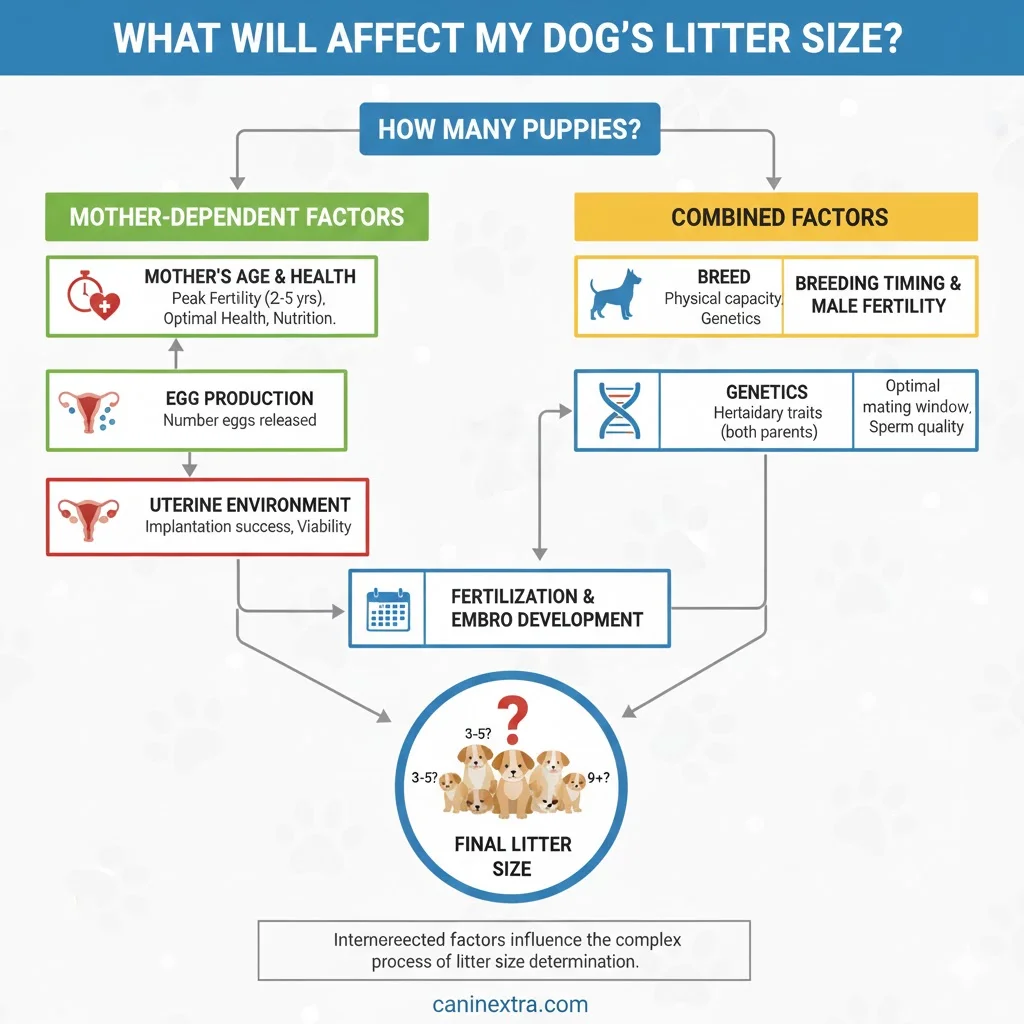
The number of puppies in a litter is primarily determined by the female dog’s ovulation cycle, the male’s fertility, breed characteristics, and maternal health. During breeding, the female dog releases multiple eggs that can be fertilized. Not all fertilized eggs successfully implant and develop, which explains why predicted litter sizes sometimes differ from actual births.
Why Litter Size Matters
Knowing your dog’s expected litter size helps you:
- Prepare adequate space for whelping and raising puppies
- Budget for veterinary care, vaccinations, and supplies
- Monitor the delivery process for complications
- Ensure the mother dog receives proper nutrition throughout pregnancy
- Identify potential health risks associated with very large or very small litters
Critical Note: Litters with only one or two puppies carry higher risks for delivery complications, while litters exceeding 12 puppies may challenge the mother’s ability to nurse adequately.
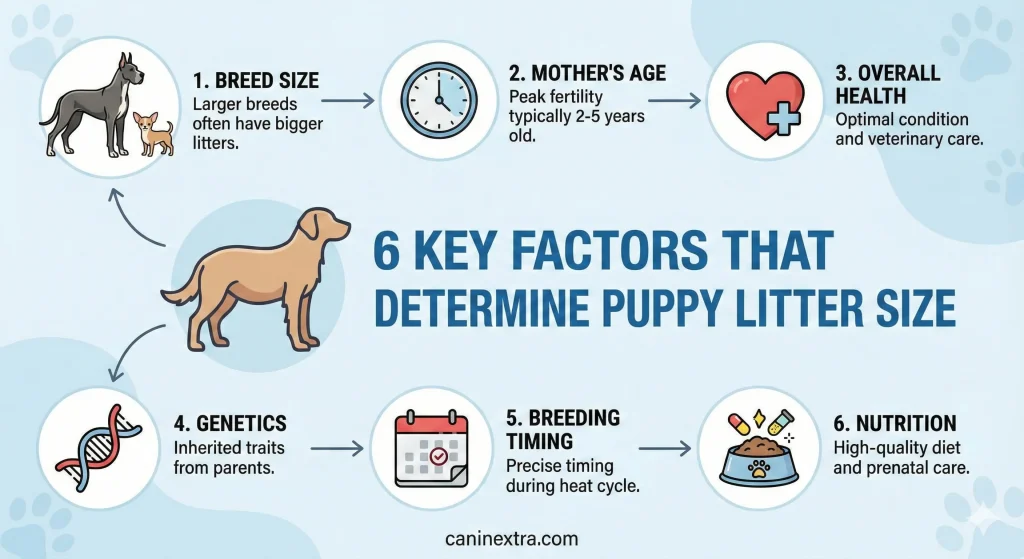
[Suggested Image: Infographic showing “6 Key Factors That Determine Puppy Litter Size” with icons for breed, age, health, genetics, breeding timing, and nutrition]
Average Litter Size by Dog Breed
Breed size plays the most significant role in determining litter size. Larger breeds typically produce more puppies per litter than smaller breeds, though exceptions exist.
Small Breed Dogs (Under 25 pounds)
Small breed dogs usually have smaller litters ranging from one to six puppies. Their physical size limits how many puppies they can safely carry.
Common small breeds and typical litter sizes:
- Chihuahuas: 1-3 puppies (average 2)
- Yorkshire Terriers: 2-5 puppies (average 3)
- Pomeranians: 1-5 puppies (average 3)
- Maltese: 2-5 puppies (average 3)
- Toy Poodles: 2-4 puppies (average 3)
Small breed mothers require extra monitoring during delivery since even modest litter sizes can pose challenges given their compact frames.
Medium Breed Dogs (25-50 pounds)
Medium-sized dogs carry moderate litters, typically producing five to six puppies per litter.
Common medium breeds and typical litter sizes:
- Beagles: 4-6 puppies (average 5)
- Cocker Spaniels: 4-7 puppies (average 5)
- Bulldogs: 4-5 puppies (average 4)
- Border Collies: 4-8 puppies (average 6)
- Australian Shepherds: 6-9 puppies (average 7)
Large Breed Dogs (50-100 pounds)
Large dog breeds consistently produce bigger litters, often ranging from six to ten puppies.
Common large breeds and typical litter sizes:
- Labrador Retrievers: 5-10 puppies (average 7)
- Golden Retrievers: 6-10 puppies (average 8)
- German Shepherds: 5-10 puppies (average 7)
- Boxers: 6-8 puppies (average 7)
- Rottweilers: 6-12 puppies (average 9)
Giant Breed Dogs (Over 100 pounds)
Giant breeds can carry the largest litters, sometimes reaching twelve puppies or more, though their average typically ranges from eight to ten puppies.
Common giant breeds and typical litter sizes:
- Great Danes: 8-10 puppies (average 8)
- Mastiffs: 6-10 puppies (average 8)
- Saint Bernards: 6-10 puppies (average 8)
- Newfoundlands: 8-10 puppies (average 9)
Record-Breaking Litters:
The largest litter of puppies ever recorded was 24 puppies, born to a Neapolitan Mastiff in 2004. While extraordinary, such large litters are exceptionally rare and require intensive veterinary intervention.
| Breed Size Category | Average Litter | Typical Range | Maximum Recorded |
|---|---|---|---|
| Toy/Small (under 25 lbs) | 2-4 puppies | 1-6 puppies | 10 puppies |
| Medium (25-50 lbs) | 5-6 puppies | 4-8 puppies | 14 puppies |
| Large (50-100 lbs) | 7-8 puppies | 5-12 puppies | 17 puppies |
| Giant (100+ lbs) | 8-10 puppies | 6-15 puppies | 24 puppies |
Factors That Influence Litter Size
Beyond breed, several biological and environmental factors play crucial roles in determining how many puppies a dog will carry.
1. Age of the Mother Dog
A female dog’s age significantly impacts litter size. Dogs experience their peak fertility between ages 2-5 years, producing the largest litters during this window.
Age-related litter size patterns:
- First heat cycle (6-18 months): Not recommended for breeding; if bred, expect 1-3 puppies
- 2-3 years old: Optimal breeding age with larger, healthier litters
- 4-5 years old: Peak fertility with maximum litter sizes
- 6-7 years old: Gradual decrease in litter size begins
- 8+ years old: Significantly smaller litters and increased health risks
First-time mothers typically produce smaller litters regardless of age. A dog breeding for the first time at age 3 might have 4 puppies, while her second litter at age 4 could contain 8 puppies.
2. Health and Nutrition
The mother dog’s overall health and nutritional status directly affect litter size and puppy viability.
Health factors that support larger, healthier litters:
- Optimal body condition (not overweight or underweight)
- Balanced diet rich in protein, calcium, and essential fatty acids
- Regular veterinary check-ups and up-to-date vaccinations
- Freedom from parasites and infections
- Adequate prenatal supplementation (folic acid, omega-3s)
Dogs with chronic health conditions, obesity, or poor nutrition tend to have fewer puppies and higher rates of pregnancy complications. In my 18 years working with breeding dogs, I’ve observed that mothers receiving proper prenatal care consistently produce litters 15-20% larger than those without nutritional support.
3. Genetics and Breeding Line
Genetic factors inherited from both parents influence litter size. Some family lines consistently produce larger or smaller litters across generations.
Genetic considerations:
- Hereditary fertility traits: Some dogs come from lines known for large litters
- Inbreeding effects: Closely related parents may produce smaller litters
- Breed-specific genetics: Purebred dogs follow more predictable patterns than mixed breeds
- Parental litter history: If the mother or father came from large litters, their offspring likely will too
4. Timing of Breeding
Proper breeding timing dramatically impacts fertilization success and litter size. Female dogs have a narrow fertility window during their heat cycle.
Optimal breeding timeline:
- Day 1-9 of heat: Proestrus, not fertile yet
- Day 10-14: Peak fertility window, optimal breeding time
- Day 15-21: Declining fertility
Breeding too early or too late during the cycle results in fewer eggs being fertilized, decreasing litter size. Multiple breedings during the peak fertility window increase the chances of a larger litter.
5. Male Dog Fertility
The breeding male’s sperm quality and quantity affect how many eggs successfully fertilize.
Factors affecting male fertility:
- Age (prime fertility at 2-6 years)
- Overall health and nutrition
- Frequency of breeding (overuse decreases sperm count)
- Genetic factors affecting sperm motility
Experienced breeders often request semen analysis for stud dogs to ensure optimal fertility before breeding.
6. Environmental and Stress Factors
Stress during breeding and early pregnancy can decrease litter size by affecting implantation success.
Stress factors that may reduce litter size:
- Major environmental changes
- Excessive travel or showing during early pregnancy
- Poor living conditions
- Competition with other dogs
- Inadequate rest and recovery time
How to Determine Litter Size During Pregnancy
Several veterinary methods can estimate or accurately count puppies before delivery.
Week 3-4: Ultrasound Detection
Veterinary ultrasound can detect pregnancy as early as 21-25 days after breeding. However, ultrasounds at this stage confirm pregnancy but cannot accurately count individual puppies due to their small size and positioning.
What ultrasound reveals:
- Confirms viable pregnancy
- Detects fetal heartbeats
- Identifies potential complications early
- Estimates approximate number (not precise)
Week 6-7: X-Ray Confirmation
X-rays taken after day 45 of pregnancy provide the most accurate puppy count. By this stage, fetal skeletons have calcified enough to appear clearly on radiographs.
Benefits of X-ray counting:
- 95%+ accuracy for puppy counts
- Helps identify abnormal positioning
- Reveals potential delivery complications
- Allows proper preparation for whelping
I always recommend X-rays around day 55-58 for breeders wanting an exact count. This timing gives sufficient skeletal development while leaving time to prepare if the litter is larger or smaller than expected.
Week 8: Palpation (Experienced Veterinarians Only)
Some experienced veterinarians can estimate litter size through careful abdominal palpation around day 28-35. However, this method is less accurate than imaging and carries risks if performed incorrectly.
Important note: Never attempt to palpate your dog’s abdomen yourself, as improper technique can harm developing puppies.
Home Monitoring Signs
While you cannot count puppies at home, several signs indicate pregnancy and approximate litter size:
- Increased abdominal size: Larger litters show more dramatic expansion
- Active movement: Multiple puppies create more visible movement in late pregnancy
- Increased appetite: Dogs carrying larger litters require more calories
- Mammary development: More pronounced with larger litters
| Detection Method | Timing (Days After Breeding) | Accuracy | Primary Purpose |
|---|---|---|---|
| Ultrasound | 21-28 days | Low for counting | Confirm pregnancy, check viability |
| Palpation | 28-35 days | Moderate | Estimate only, not precise |
| X-Ray | 45-58 days | 95%+ accurate | Exact puppy count |
| Visual/Home Signs | 50+ days | Very low | General pregnancy confirmation |
Preparing for Your Dog’s Litter
Once you know your dog is pregnant, proper preparation ensures the safest possible delivery and healthiest puppies.
Nutrition Adjustments by Litter Size
Dogs carrying larger litters require significantly more calories and nutrients than those with smaller litters.
Feeding guidelines during pregnancy:
- Weeks 1-4: Maintain normal high-quality adult dog food portions
- Weeks 5-6: Increase food by 25-50% depending on litter size
- Weeks 7-9: Feed multiple small meals (3-4 daily) with 50-75% more calories
- Post-delivery: Lactating mothers need 2-4 times normal food intake
Supplement with:
- High-quality puppy food (higher protein and fat)
- Prenatal vitamins with folic acid
- Calcium supplements (only if recommended by your veterinarian)
- Omega-3 fatty acids for brain development
Warning: Excessive calcium supplementation during pregnancy can cause complications. Always consult your veterinarian before adding supplements.
Whelping Area Setup
Create a dedicated whelping space approximately 2 weeks before the expected delivery date.
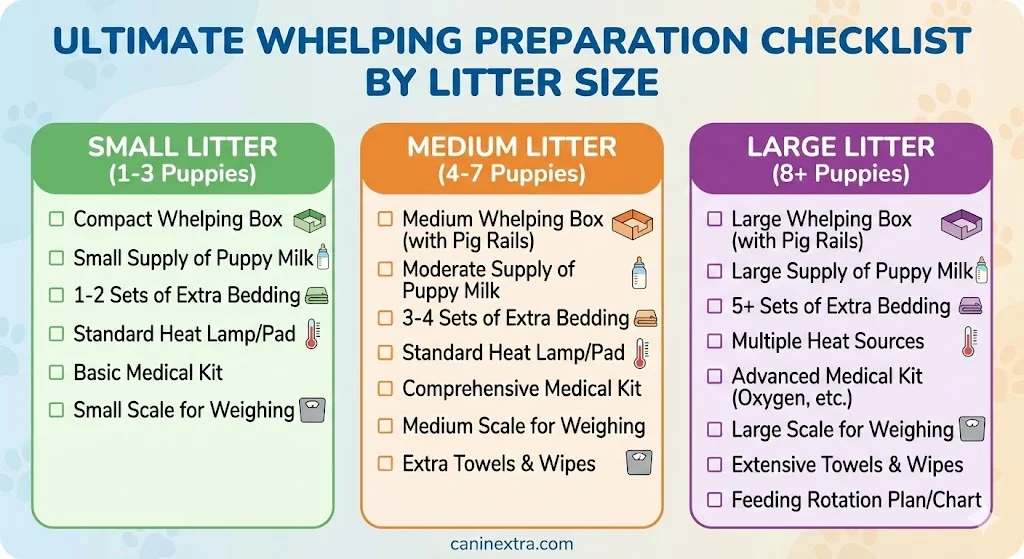
Essential whelping supplies:
- Whelping box (6 inches taller than mother when standing, large enough for her to lie extended)
- Clean towels and blankets (washable, multiple sets)
- Heating pad or heat lamp (for puppies, not mother)
- Digital scale for weighing puppies
- Emergency supplies (sterile scissors, dental floss, bulb syringe)
- Veterinarian’s emergency contact information
For litters exceeding 8 puppies, consider a larger whelping box with puppy rails to prevent accidental crushing.
Monitoring the Delivery Process
Understanding normal delivery progression helps identify when veterinary intervention is needed.
Normal delivery timeline:
- Stage 1 (6-12 hours): Restlessness, nesting, temperature drop to 97-99°F
- Stage 2 (variable): Active labor with 30-60 minutes between puppies
- Stage 3: Placenta delivery after each puppy
When to call your veterinarian:
- More than 2 hours of strong contractions without a puppy
- More than 4 hours between puppies
- Green/black discharge before first puppy arrives
- Excessive bleeding
- Mother appears weak, distressed, or unresponsive
- Known large litter (10+ puppies) requiring monitoring
Supporting Large Litters
Litters exceeding 10 puppies present unique challenges requiring extra attention.
Large litter management:
- Rotation feeding: Ensure all puppies get adequate nursing time by rotating access to mother
- Supplemental feeding: May need to bottle-feed some puppies with puppy milk replacer
- Weight monitoring: Weigh puppies daily to ensure adequate growth
- Extended veterinary care: More frequent check-ups for mother and puppies
- Temperature control: Large litters generate more heat; monitor for overheating
In a litter of 12 puppies I recently assisted with, we implemented 3-hour rotation schedules and supplemented the four smallest puppies with bottle feeding, resulting in 100% survival rate and healthy growth for all.
Managing Small Litters
Litters with one or two puppies also require special attention.
Small litter concerns:
- Dystocia risk: Single large puppies may be too big for natural delivery
- Prolonged pregnancy: Small litters may go beyond due date
- Mother milk production: May overproduce for the number of puppies
- Puppy socialization: Limited littermate interaction affects development
Plan for potential cesarean section if carrying only one or two puppies, especially in first-time mothers or breeds prone to delivery difficulties.
[Suggested Image: Checklist infographic “Ultimate Whelping Preparation Checklist by Litter Size”]
Variations in Litter Size: What’s Normal?
Not every pregnancy produces the “average” litter size for the breed. Understanding normal variation helps set realistic expectations.
Expected Ranges vs. Unusual Litters
Normal variations:
- ±2 puppies from breed average is completely normal
- A German Shepherd having 5 or 11 puppies (average 7-8) is typical
- First-time mothers having 50-60% of their breed’s average
Unusual but not concerning:
- Single puppy pregnancies (1-2% of all litters)
- Very large litters exceeding breed maximum by 2-3 puppies
Concerning variations requiring veterinary attention:
- Dramatic litter size decrease in previously fertile mother
- Suspected pregnancy with no puppies detected on imaging
- Reabsorption of entire litter (detected via ultrasound)
Why Litter Size Changes Between Pregnancies
The same mother dog may produce different sized litters with each pregnancy.
Common reasons for variation:
- Increasing age: First litter at age 2 (4 puppies), second at age 4 (8 puppies), third at age 7 (5 puppies)
- Different stud dogs: Male fertility varies significantly
- Breeding timing accuracy: Better timing = larger litters
- Health changes: Weight gain/loss, illness, or improved nutrition
- Resorption: Some embryos may be reabsorbed early in pregnancy
Mixed Breed vs. Purebred Dogs
Mixed breed dogs show less predictable litter sizes due to varied genetic backgrounds.
Hybrid vigor considerations:
- First-generation crosses often have larger litters than either parent breed
- Unpredictable size inheritance affects carrying capacity
- Health advantages may support better fertility
A Labrador-Poodle cross might produce anywhere from 5-12 puppies, with less reliable prediction than a purebred Labrador’s 7-8 puppy average.
Common Myths About Puppy Litter Size
Several misconceptions about litter size persist among dog owners and breeders.
Myth 1: “You can increase litter size with special diets”
Reality: While proper nutrition supports reproductive health, no diet can dramatically increase the number of eggs a dog releases during her cycle. Nutrition ensures puppies develop properly and the mother stays healthy, but genetic factors primarily determine egg production.
Myth 2: “The father’s breed determines litter size”
Reality: The mother’s breed and body size limit how many puppies she can physically carry, regardless of the father’s size. A Chihuahua mother bred to a Labrador father will still have a small litter (with serious health risks from oversized puppies).
Myth 3: “Dogs always have the same number of puppies each time”
Reality: Litter size varies naturally between pregnancies based on age, timing, male fertility, and other factors. Expecting identical litter sizes sets unrealistic expectations.
Myth 4: “More breedings during heat means larger litters”
Reality: While breeding multiple times during the peak fertility window can improve conception rates, it doesn’t increase the number of eggs released. A female releases her eggs on a specific schedule regardless of breeding frequency.
Myth 5: “Small litters mean something is wrong”
Reality: Single or two-puppy litters occur naturally and don’t necessarily indicate health problems. However, a veterinary examination helps rule out underlying issues and prepares for potential delivery complications.
Frequently Asked Questions
How many puppies can a dog have in one litter?
Dogs can have anywhere from one to twenty-four puppies in a single litter, though most litters contain five to six puppies. The largest litter ever recorded was 24 puppies born to a Neapolitan Mastiff. Breed size, maternal age, and genetics determine the actual number, with larger breeds typically producing more puppies than smaller breeds.
What is the average litter size for a first-time mother?
First-time mothers typically produce smaller litters than experienced dogs, averaging three to five puppies regardless of breed. A Golden Retriever’s first litter might contain 5-6 puppies, while subsequent litters could reach 8-10 puppies. This pattern occurs because younger dogs are still developing full reproductive maturity.
Can you tell how many puppies a dog is having before birth?
Yes, veterinary X-rays taken after day 45 of pregnancy provide 95%+ accurate puppy counts by revealing calcified skeletal structures. Ultrasounds earlier in pregnancy confirm pregnancy and check viability but cannot accurately count individual puppies. X-rays between days 55-58 give the most reliable count while allowing preparation time.
Do larger breeds always have bigger litters?
Generally yes, but with exceptions. Large and giant breeds typically produce 7-10 puppies per litter, while small breeds average 2-4 puppies. However, individual variation exists, some Chihuahuas have 6 puppies while some Great Danes have only 4. Breed size correlates with litter size but doesn’t guarantee specific numbers.
How many times can a dog have puppies?
Responsible breeding limits female dogs to 4-6 litters over their lifetime, with at least one year between pregnancies for recovery. While biologically capable of breeding every heat cycle (twice yearly), this practice severely compromises maternal health. Most veterinary organizations recommend breeding only until age 7-8 to protect the mother’s wellbeing.
What affects the size of a puppy litter?
Six primary factors determine litter size: breed size (larger breeds carry more), maternal age (peak at 2-5 years), health and nutrition (optimal body condition supports fertility), genetics (hereditary fertility traits), breeding timing (optimal fertilization window), and male fertility (sperm quality and quantity).
Is it normal for a dog to have just one puppy?
Yes, singleton puppies occur in 1-2% of all pregnancies and are normal, though less common. Small breeds experience single-puppy pregnancies more frequently. These pregnancies carry higher cesarean section risks because single puppies often grow larger and may not trigger normal labor hormones. Veterinary monitoring is essential for singleton pregnancies.
How long are dogs pregnant before having puppies?
Dogs are pregnant for 58-68 days, with 63 days (9 weeks) being average. Litter size doesn’t significantly affect pregnancy length, though single puppies may extend slightly beyond 65 days while very large litters sometimes deliver a day or two early. Count from the first successful breeding date, not the last.
Can a litter have puppies from different fathers?
Yes, this phenomenon called superfecundation occurs when a female mates with multiple males during her fertile period. Each egg can be fertilized by sperm from different males, resulting in puppies from the same litter having different fathers. This commonly happens in uncontrolled breeding situations and explains physical variation within some litters.
What should I do if my dog has a very large litter?
For litters exceeding 10 puppies, implement rotation feeding schedules ensuring all puppies get adequate nursing time, weigh puppies daily to monitor growth, consider supplemental bottle feeding for smaller puppies, maintain close veterinary supervision, and ensure the mother receives 2-4 times her normal caloric intake. Large litters require intensive management for optimal outcomes.
How do I know if my dog is done giving birth?
Signs that delivery is complete include: the mother relaxes and focuses on cleaning puppies, no more contractions visible, she willingly eats and drinks, all placentas have been delivered (count them), and she allows puppies to nurse peacefully. If you had an X-ray count, verify all puppies have been delivered. Contact your vet if unsure.
Does breeding age really affect litter size?
Absolutely. Dogs reach peak fertility at ages 2-5 years, producing their largest litters during this window. First heat cycles (under 18 months) and senior breeding (over 7 years) both result in smaller litters and higher complication rates. A 3-year-old dog might have 8 puppies while the same dog at age 8 produces only 4.
Conclusion
Understanding puppy litter size helps you prepare properly for your dog’s pregnancy, delivery, and the demanding weeks that follow. While breed characteristics provide general guidance, with larger breeds typically carrying seven to ten puppies and smaller breeds producing two to four, individual factors like maternal age, health, genetics, and breeding timing create significant variation.
The most important step is partnering with an experienced veterinarian throughout the breeding process. Schedule X-rays around day 55 for an accurate puppy count, maintain optimal nutrition throughout pregnancy, and prepare your whelping area based on expected litter size. Whether you’re welcoming two puppies or twelve, proper preparation and knowledge ensure the healthiest possible outcomes for mother and offspring.
If you’re planning to breed your dog, schedule a pre-breeding health examination to assess her suitability and optimize her condition. For currently pregnant dogs, book an X-ray appointment between days 55-58 for an accurate puppy count, then adjust your nutrition plan and whelping preparations accordingly. Monitor your dog’s temperature daily starting at day 58, a drop to 97-99°F signals labor will begin within 24 hours.