

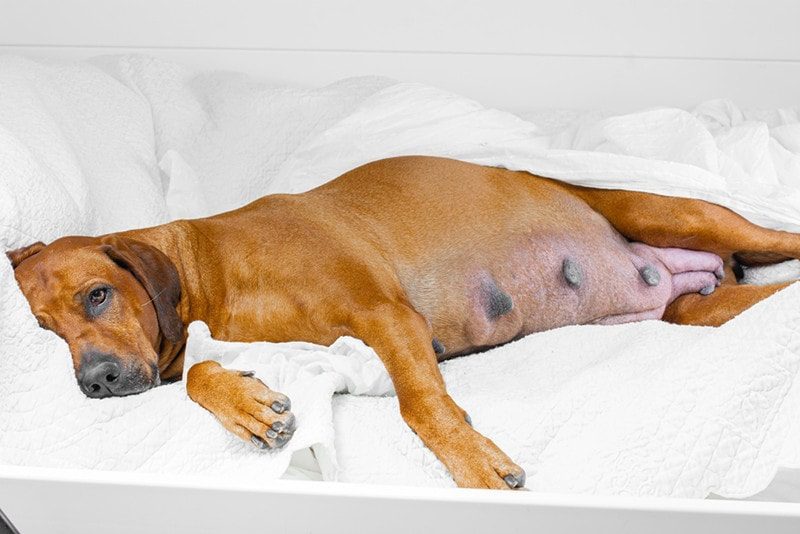
Your pregnant dog had three puppies confirmed on ultrasound at day 25, but only two were born. The missing puppy didn’t miscarry, it simply vanished.
Puppy absorption, medically known as canine fetal resorption, is when a mother dog’s body breaks down and reabsorbs deceased fetuses during early pregnancy. This process affects up to 43% of dog pregnancies, yet most breeders never realize it happened. Unlike a miscarriage where the fetus is expelled, absorbed puppies dissolve completely within the uterus, leaving no physical trace.
In this guide, you’ll learn exactly how puppy resorption works, which factors trigger it, how to detect it through ultrasound, and science-backed strategies to support healthy pregnancies in breeding dogs.
Key Takeaways:
- Puppy absorption occurs when deceased fetuses dissolve within the uterus during the first 44 days of pregnancy
- Research shows 11-48% of canine pregnancies experience some degree of fetal resorption
- The process happens silently with no outward symptoms in most cases
- Absorbed puppies don’t harm the mother or remaining littermates
- Prevention focuses on optimal nutrition, health screening, and stress reduction
- Once absorption begins, the puppy cannot be saved
What Is Puppy Absorption in Dogs?
Puppy absorption is a natural biochemical process where the tissues of a deceased fetus begin to break down and deteriorate inside the mother’s womb, leading to the complete disappearance of the organism. This isn’t a medical emergency, it’s nature’s way of managing pregnancy loss without endangering the mother or surviving puppies.
Here’s what actually happens: When a puppy dies during early gestation, the dam’s body begins to absorb the placental tissue first, followed by the actual fetus itself. Enzymes completely dissolve the soft tissues, and the compounds are reabsorbed into the mother’s bloodstream. The puppy literally disappears from the litter and uterus.
Why Can Absorption Only Happen Early in Pregnancy?
Puppy absorption cannot occur after approximately 44 days due to the development of skeletal bones, which cannot be reabsorbed. Before day 44, fetuses consist primarily of soft tissues and cartilage that enzymes can break down. After skeletal calcification begins, deceased puppies will either be stillborn at delivery or become mummified within the uterus.
Think of it this way: soft tissue dissolves, but bone does not. The 44-day mark is nature’s cutoff point.
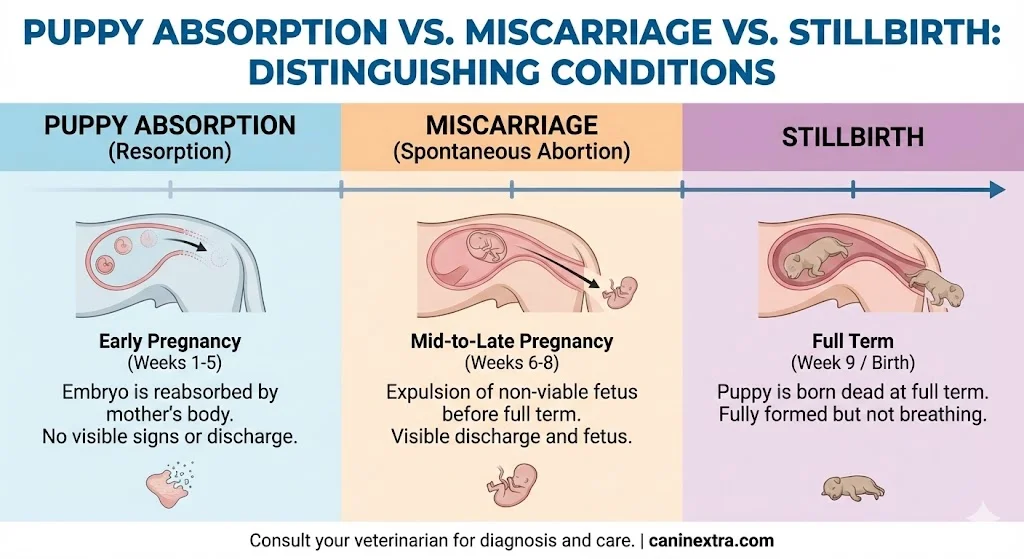
How Puppy Absorption Differs from Miscarriage
| Aspect | Puppy Absorption | Miscarriage |
|---|---|---|
| Timing | First 44 days of pregnancy | Any time during pregnancy |
| What happens | Fetus dissolves and is reabsorbed | Fetus is expelled from the body |
| Physical signs | None—completely internal | Vaginal discharge, contractions, expelled tissue |
| Detection | Requires ultrasound comparison | Visible to owner |
| Impact on litter | Remaining puppies continue developing normally | May trigger premature labor |
How Common Is Canine Fetal Resorption?
More common than you think. Research shows embryonic resorption affects 11-26% of conceptuses and 5-43% of pregnancies. A 2023 study found that in 48.3% of pregnancies, at least one resorption site was visible on ultrasound.
Why the range? Improved ultrasound technology now detects resorptions that would have gone completely unnoticed decades ago. Many dogs experience very early embryonic loss before day 22-25 when ultrasound can first detect pregnancy.
In my 18 years of veterinary reproductive medicine, I’ve seen countless breeders devastated when they learn about absorbed puppies. The reality is that fetal resorption occurs in approximately 11% of all dog pregnancies and is a normal part of canine reproduction. Usually only one or two puppies in a litter are affected, allowing the pregnancy to continue successfully.
Important perspective: Most absorbed fetuses had genetic or developmental abnormalities incompatible with life. Resorption is often nature’s quality control mechanism, not a breeding failure.
What Causes Puppy Absorption?
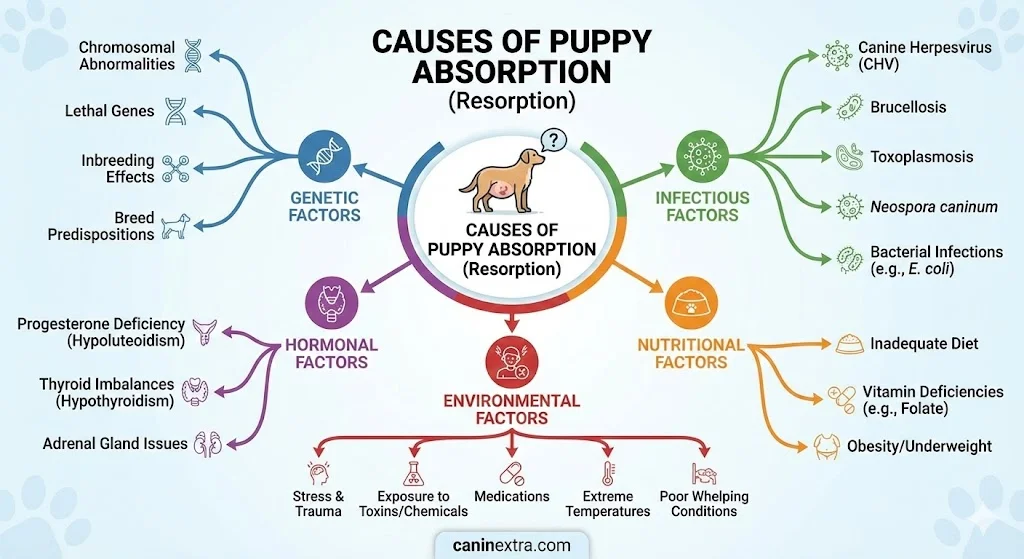
Fetal resorption stems from multiple factors, some preventable, many not. Let’s break down the primary causes based on veterinary research.
Genetic and Developmental Defects
A significant number of puppies who do not survive birth have genetic health conditions which mean they are unable to develop properly, normally due to random mutations in the DNA of the egg or sperm. These mutations occur spontaneously and aren’t inherited from the parents.
Genetic mutations are thought to be more common in older dams, which may put them at increased risk of pregnancy loss. Research confirms that age was significantly higher in pregnancies with resorptions than in normal ones (60.88 months versus 40.27 months).
Viral Infections
Common canine viruses can affect developing puppies:
- Canine herpesvirus 1: Can cause infertility and pregnancy loss, often without symptoms in females
- Canine distemper virus: May lead to spontaneous abortion and reabsorption due to illness stress
- Canine parvovirus: Linked to very early puppy reabsorptions and abortion
Bacterial Infections
Brucella canis is one of the causes of stillbirth and abortions during the last trimester that may also lead to early embryonic death and fetal resorption in dogs. This bacteria affects the reproductive tract and may cause lethargy, enlarged lymph nodes, and reduced appetite. It poses a risk to human health and is a reportable disease in most countries.
Other bacterial culprits include Salmonella, E. coli, Campylobacter, and Streptococcus species.
Parasitic Infections
Infections such as Toxoplasma gondii or Neospora caninum can cause pregnancy loss in dams, though parasites are a less common cause than viral or bacterial infections.
Hormonal Imbalances
Hypothyroidism: This condition occurs when the female does not make enough thyroid hormones for one reason or another. There’s ongoing debate about how significantly hypothyroidism impacts fertility and causes absorption.
Low progesterone levels: Progesterone maintains pregnancy. Insufficient levels can trigger fetal death and subsequent resorption.
Nutritional Deficiencies
Proper nutrition is required for fetuses to develop properly. If the mother does not consume everything she needs, some fetuses may not get the proper nutrients or calories. Specific deficiencies in protein, essential fatty acids, vitamins, and minerals compromise fetal viability.
Maternal Stress and Illness
If the dam is unwell for another reason (not related to pregnancy), or very stressed over a period of time, this can cause changes in hormonal levels and affect blood flow to the uterus, which can sadly result in the death of the growing puppies and puppy resorption.
Trauma
Physical trauma during pregnancy—car accidents, falls, or blunt force impact—can lead to fetal absorption, stillbirth, or miscarriage depending on timing and severity.
Overcrowding
When a dam conceives an exceptionally large litter, her body may not provide adequate nutrients and blood supply to all fetuses. Some may fail to thrive and undergo resorption.
Signs and Symptoms of Puppy Absorption
Here’s the challenging truth: One of the difficult things about fetal resorption is that there are often no outward symptoms that it is happening. The puppy’s body is absorbed back into the mother through the uterus, so there is no vulval discharge.
What You Won’t See
- No vaginal discharge
- No contractions or labor signs
- No expelled tissue
- No behavioral changes in most cases
- No signs of pain or discomfort
The process is not thought to be uncomfortable for the dam, and so there may be no changes to see in her. She continues eating, behaving, and appearing pregnant.
How Absorption Is Actually Detected
Early ultrasound comparison: The most reliable detection method. Often only one or two puppies in the litter are affected, and so the pregnancy may carry on regardless. Occasionally, all the puppies may be lost, in which case it can appear as though the dam is just having a phantom pregnancy.
Resorption is usually discovered when:
- An ultrasound at day 25-30 shows three viable fetuses with heartbeats
- A follow-up ultrasound at day 45-50 shows only two fetuses
- Two puppies are born, confirming the third was absorbed
Retrospective diagnosis: Comparing expected litter size based on early imaging with the actual number of puppies whelped.
Subtle indicators (not reliable on their own):
- Smaller abdominal size than expected for gestational age
- Fewer fetal movements felt compared to expected litter size
- Pregnancy behavior but no puppies born (full litter absorption)
Timeline: When Does Puppy Absorption Occur?
Understanding the pregnancy timeline helps breeders recognize the absorption window.
| Days Post-Breeding | Stage | Absorption Possibility |
|---|---|---|
| 0-15 | Pre-implantation | Embryonic loss (not absorption) |
| 16-25 | Implantation | Absorption can begin |
| 26-44 | Early fetal development | Prime absorption window |
| 45-50 | Skeletal calcification begins | Absorption no longer possible |
| 51-63 | Late pregnancy | Deceased puppies become stillborn or mummified |
Puppy absorption can occur at any time, though usually in the first half of pregnancy. After that, since the fetal skeleton begins to calcify, the deceased puppy may be passed stillborn either before or on the due date or may get mummified in the uterus.
Can Puppy Absorption Be Prevented?
While you can’t prevent all instances of fetal resorption, especially those caused by genetic abnormalities, you can significantly reduce risk through proper breeding practices and maternal care.
Pre-Breeding Health Screening
Test breeding dogs for:
- Brucella canis (mandatory pre-breeding test)
- Thyroid function (T4, free T4, TSH)
- Progesterone levels
- Genetic diseases specific to breed
Current vaccinations: Ensure your dam is up-to-date on core vaccines (parvo, distemper, herpesvirus) before breeding. Don’t vaccinate during pregnancy.
Parasite prevention: Complete fecal testing and treat any infections before breeding.
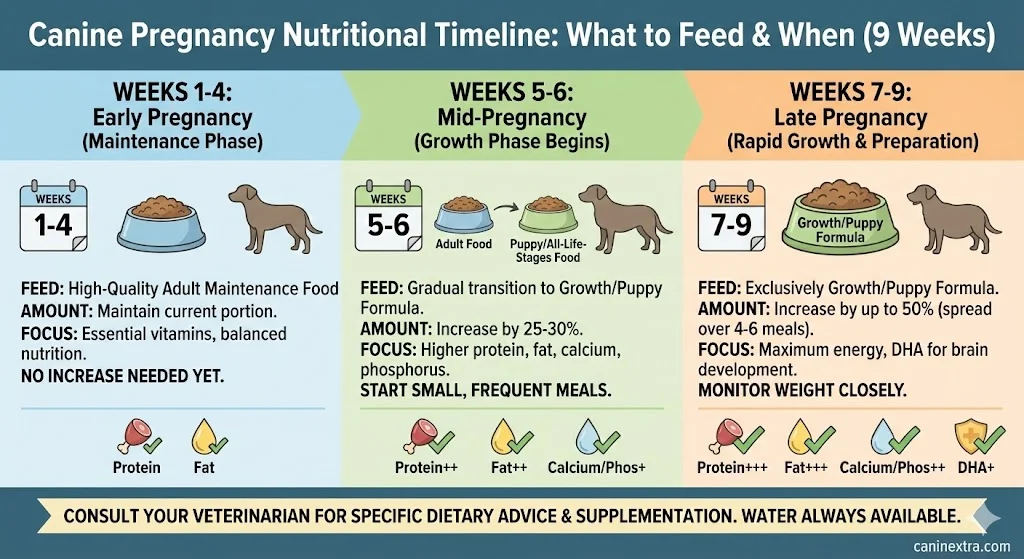
Optimal Nutrition During Pregnancy
There is some evidence to suggest that feeding a diet rich in protein and fatty acids may help to reduce the risk of puppy resorption. Fatty acids such as docosahexaenoic acid also aid brain development in puppies.
First 4-5 weeks (first half of pregnancy):
- Continue her regular high-quality adult dog food
- Avoid overfeeding, excessive weight gain increases complications
- Ensure at least 22% protein content
Weeks 6-9 (second half of pregnancy):
- Switch to puppy formula or performance dog food (higher protein and fat)
- Gradually increase food by 25-50% by week 9
- Feed smaller, more frequent meals as puppies occupy abdominal space
Essential nutrients for fetal development:
- Omega-3 fatty acids (DHA): Support brain and eye development; give with food for absorption
- Folic acid: Prevents neural tube defects; supplement early in pregnancy
- Protein: At least 22%, preferably 28-32% from animal sources
- Calcium and phosphorus: Do NOT supplement calcium before week 8 unless directed by veterinarian
Stress Reduction
- Provide a quiet, comfortable environment away from household chaos
- Avoid boarding or travel during pregnancy
- Maintain routine and familiar surroundings
- Minimize exposure to other dogs that might carry infections
Choose the Right Stud Dog
Select a genetically sound, disease-tested male from a reputable breeder. Review his reproductive history, consistent litter sizes and healthy puppies indicate good genetic compatibility.
Moderate Exercise
Maintain regular, moderate exercise throughout pregnancy. Avoid strenuous activity, jumping, or rough play, especially during the first 4 weeks when implantation occurs.
Progesterone Supplementation (Veterinary Guidance Required)
Some veterinarians recommend progesterone testing and supplementation for dams with a history of pregnancy loss. However, improper timing can cause issues. Sadly, once the process of absorption has started, there is no way to save the puppy.
Puppy Absorption vs. Full Litter Loss
When an entire litter is absorbed, the situation looks different from losing one or two puppies.
Signs of Complete Litter Absorption
- Dog appears pregnant initially, then abdominal size decreases
- Mammary glands may develop then regress
- No puppies born on expected due date
- Behavior resembles false pregnancy
- Ultrasound shows empty uterus where fetuses were previously visible
The pic below shows a positive pregnancy scan at 30 days gestation. Rescan at 7wks and nothing left. 6 puppies absorbed and 1 stillborn mummified. This real case from veterinary ultrasound demonstrates how dramatic full litter absorption can be.
What Causes Entire Litter Loss?
- Severe maternal infection (systemic illness affecting all fetuses)
- Brucella canis infection
- Profound hormonal imbalance
- Significant trauma
- Genetic incompatibility between dam and sire
- Toxic exposure
What Happens After Full Litter Loss?
The dam’s body returns to a non-pregnant state. Her hormones normalize within 2-4 weeks. Most dams can be safely bred again after one normal heat cycle, provided the underlying cause was identified and resolved.
When to Contact Your Veterinarian
While puppy absorption itself isn’t a medical emergency, certain situations require immediate veterinary attention:
Call your vet if your pregnant dog shows:
- Abnormal vaginal discharge (green, black, brown, or pus-colored)
- Lethargy or loss of appetite
- Fever above 102.5°F
- Abdominal pain or crying when touched
- Contractions or straining before day 58
- Sudden decrease in appetite during late pregnancy
Schedule an appointment if:
- You suspect absorption based on decreasing abdominal size
- Your dam has a history of pregnancy loss
- You want progesterone level monitoring
- Early ultrasound reveals multiple resorption sites
- You’re planning to breed again after a loss
Frequently Asked Questions
Can ultrasounds cause puppy absorption?
No. Canine fetal resorption is not caused by ultrasounds. This myth persists, but diagnostic ultrasound is completely safe during canine pregnancy. The confusion arises because ultrasound often reveals absorption that would otherwise go unnoticed.
How soon after puppy absorption can I breed my dog again?
Most veterinarians recommend waiting for one complete heat cycle (approximately 6 months) before breeding again. This allows your dam’s body to fully recover and gives you time to investigate potential causes of the loss.
Will absorbed puppies harm the mother dog?
No. Generally, absorbed puppies cause no complications to the mother dog. The resorption process is designed to safely eliminate nonviable fetuses without endangering the dam or surviving littermates.
Can I feel puppy absorption happening?
No. The process occurs internally without external symptoms. You won’t feel contractions, and your dog won’t show pain. Many breeders only discover absorption through ultrasound comparison or when fewer puppies than expected are born.
Does puppy absorption mean my dog has breeding problems?
Not necessarily. A 2023 study found 48.3% of pregnancies showed at least one resorption site. Occasional resorption of one or two puppies is normal. However, repeated full litter losses or consistent pattern of multiple absorptions warrants thorough veterinary investigation.
What’s the difference between puppy absorption and embryo loss?
Timing and stage of development. Embryo loss occurs very early in pregnancy, usually before days 15 to 17. Puppy absorption occurs after implantation through day 44. Both result in resorption, but embryo loss happens before ultrasound can detect pregnancy.
Can a dog reabsorb some puppies and deliver others normally?
Yes, absolutely. Often only one or two puppies in the litter are affected, and so the pregnancy may carry on regardless. The surviving puppies develop normally and are typically healthy at birth. The absorbed puppies simply vanish from the litter.
Are certain dog breeds more prone to puppy absorption?
Binary logistic regression showed a significant effect of age (P < 0.001), but not the size of the litter, nor the size of the mother. Age is the most significant factor, not breed. However, breeds with known reproductive challenges or those requiring artificial insemination may have slightly higher rates.
Is there medication to stop puppy absorption once it starts?
No. Sadly, once the process of absorption has started, there is no way to save the puppy. If an underlying infection or hormonal issue is identified early, treating the condition might save remaining littermates, but the already-deceased puppy cannot be revived.
Should I get an early ultrasound to check for absorption?
Early ultrasound (day 25-30) helps confirm pregnancy and count fetuses, but it won’t prevent absorption. Follow-up ultrasound (day 45-50) can detect any resorptions that occurred. If your dam has a history of pregnancy loss or you’re breeding a valuable litter, multiple ultrasounds provide useful information.
What does “vanishing twin” mean in dogs?
“Vanishing Twin” refers to the situation where the remains of the reabsorbed fetus can be taken up by the other twin or the mother. It’s another term for fetal resorption, emphasizing how completely the puppy disappears.
Can stress from showing or training cause puppy absorption?
It is suggested that maternal stress can cause pregnancy loss. Stress caused by unrelated illnesses can lead to resorption, but it is unclear if stress caused by environmental factors has the same effect. To be safe, avoid high-stress activities during pregnancy, especially the first 4 weeks.
The Bottom Line on Puppy Absorption
Puppy absorption is nature’s mechanism for managing early pregnancy loss in dogs. While discovering that your dam absorbed one or more puppies can be emotionally difficult, understanding that this affects nearly half of all canine pregnancies helps provide perspective.
The good news? This systematic approach actually benefits the mother, as it eliminates the risks associated with aborting a fetus while the other puppies continue to develop and survive until birth. Resorption protects your dam from dangerous complications and allows healthy littermates to thrive.
Focus your energy on what you can control: optimal pre-breeding health screening, excellent nutrition with adequate protein and omega-3 fatty acids, stress reduction, current vaccinations, and regular veterinary monitoring. These strategies won’t eliminate all instances of resorption, especially those caused by random genetic mutations, but they significantly improve outcomes for most breeding dogs.
Your next steps: Before your next breeding, schedule a comprehensive pre-breeding veterinary exam including Brucella testing, thyroid screening, and a review of your dam’s nutritional plan. If your dog has experienced absorption, discuss progesterone monitoring and any breed-specific reproductive considerations with a veterinarian experienced in canine reproduction.
Remember: a smaller-than-expected litter of healthy puppies represents a successful pregnancy. Quality always matters more than quantity.