


Urinary tract infections (UTI) can be tough on our dogs. Dogs with UTIs often feel a lot of pain and discomfort. This guide will show you how to treat dog UTI at home, spot the signs, and help your pet feel better.
Spotting UTI symptoms early is key to helping your dog get better. Look out for signs like more frequent peeing, changes in urine color, and odd behavior. We’ll share easy steps to help your dog with these infections and keep their urinary system healthy.
Key Takeaways
- UTIs can cause significant discomfort for dogs
- Early detection is critical for effective treatment
- Home remedies can complement veterinary care
- Hydration is important in preventing UTIs
- Regular monitoring helps keep urinary health in check
Understanding Dog UTIs and Their Symptoms
Urinary tract infections (UTIs) can be tough for our furry friends. Spotting the signs early is key to their health and comfort. These infections affect dogs of all ages, with some breeds and demographics more at risk.
Dogs get UTIs differently than humans. Knowing the symptoms is vital for good vet care. Let’s look at the main points about urinary tract infections in dogs.
Common Signs of UTIs in Dogs
Spotting a UTI in dogs needs careful watching. Look out for these important signs:
- Frequent urination attempts
- Straining or visible discomfort while urinating
- Blood in urine
- Strong or unusual urine odor
- Unexpected urinary accidents indoors
- Excessive licking of genital area
- Behavioral changes or reduced appetite
Risk Factors for Urinary Tract Infections
| Risk Category | Specific Factors |
|---|---|
| Age-Related | Senior dogs, puppies under 3 years |
| Gender | Female dogs more susceptible |
| Health Conditions | Diabetes, kidney issues |
| Anatomical | Shorter urethra in females |
When to Seek Veterinary Care
Not all UTI symptoms need urgent vet care. But, some signs are emergencies. Unproductive straining to urinate is one that needs quick vet help.
A vet can do important tests like urinalysis and urine culture. E. coli is the main cause of dog UTIs. Knowing the exact bacteria helps treat it better.
How to Treat Dog UTI at Home
Dealing with a urinary tract infection (UTI) in your dog can be tough. About 14% of dogs get UTIs, making it a big health issue for pet owners. We’ll look at home remedies for dog UTIs to help your furry friend feel better.
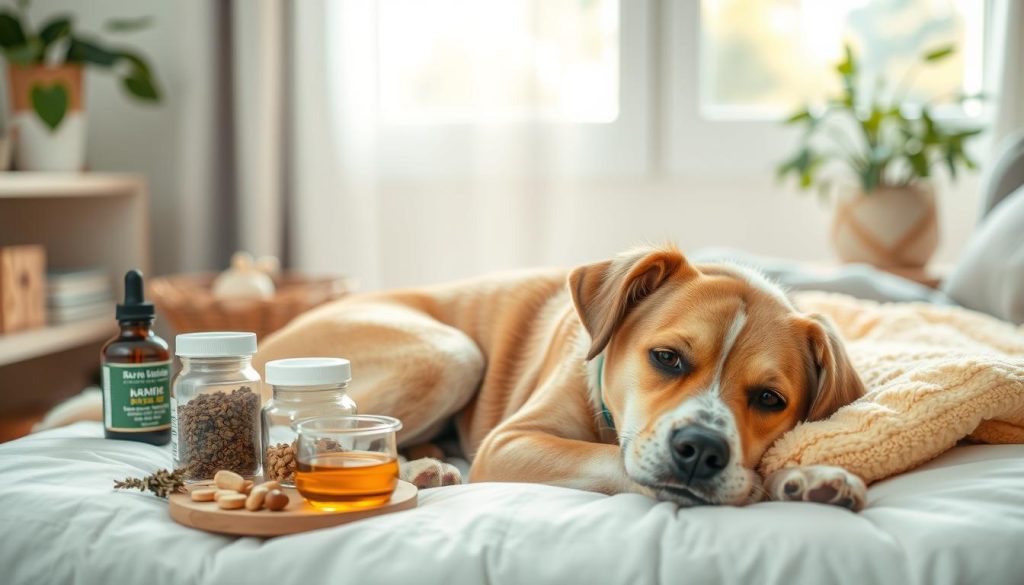
- Increase water intake to flush out harmful bacteria
- Provide frequent bathroom breaks
- Switch to wet food for better hydration
- Maintain proper hygiene
- Use natural supplements
Keeping your dog hydrated is key in treating UTIs. Adding apple cider vinegar to their diet is a good idea. Use 1 teaspoon for every 15 pounds of body weight daily. Cranberry supplements can also help, as they prevent bacteria from sticking to the urinary tract.
| Remedy | Dosage | Benefits |
|---|---|---|
| Vitamin C | 1/8 tsp per 10 pounds twice daily | Increases urine acidity, inhibits bacterial growth |
| Probiotics | Recommended supplement: PET | TAO Harmonize GI | Strengthens bladder mucosal lining |
| Herbal Remedies | Uva ursi, marshmallow root | Antimicrobial properties |
While home remedies can help, they’re not a full replacement for vet care. Female dogs and older dogs (7 years and up) are more likely to get UTIs. So, it’s important to keep an eye on their urinary health.
Important notes for pet owners:
- Watch for symptoms like frequent urination or blood in urine
- Maintain your dog’s hygiene
- Consult a veterinarian for persistent or severe symptoms
We aim to help your dog find relief from UTIs with these natural remedies. We also want to make sure their urinary health and comfort are taken care of.
Natural Remedies and Preventive Measures
Managing urinary tract infections in dogs needs a holistic approach. This includes natural remedies and vet advice. Knowing how to support your dog’s urinary health can prevent and treat UTIs well.

Herbal Solutions for UTI Relief
Herbal remedies can help your dog feel better with a urinary tract infection. Our top natural treatments are:
- Marshmallow root: Soothes urinary tract inflammation
- Cranberry supplements: Helps prevent bacterial adhesion
- D-mannose: Natural supplement that fights E. coli
- Parsley leaf juice: Supports urinary system health
Dietary Modifications for Urinary Health
Good nutrition is key in preventing and managing UTIs in dogs. Here are some dietary tips:
| Dietary Component | Benefit for Urinary Tract | Recommended Dosage |
|---|---|---|
| Apple Cider Vinegar | Lowers urine pH | 1 tsp (small dogs), 2 tsp (medium dogs) |
| Probiotics | Enhances immune system | Daily supplement |
| Water Intake | Flushes urinary system | Constant access to fresh water |
Hygiene and Grooming Tips
Good hygiene can lower UTI risk, more so for female dogs. Key practices include:
- Regular bathing and genital area cleaning
- Frequent bathroom breaks
- Keeping bedding and living areas clean
- Monitoring for early signs of urinary tract issues
Remember, while these natural remedies can help, always consult your veterinarian if your dog has a persistent UTI or shows severe symptoms.
Essential Lifestyle Changes for UTI Prevention
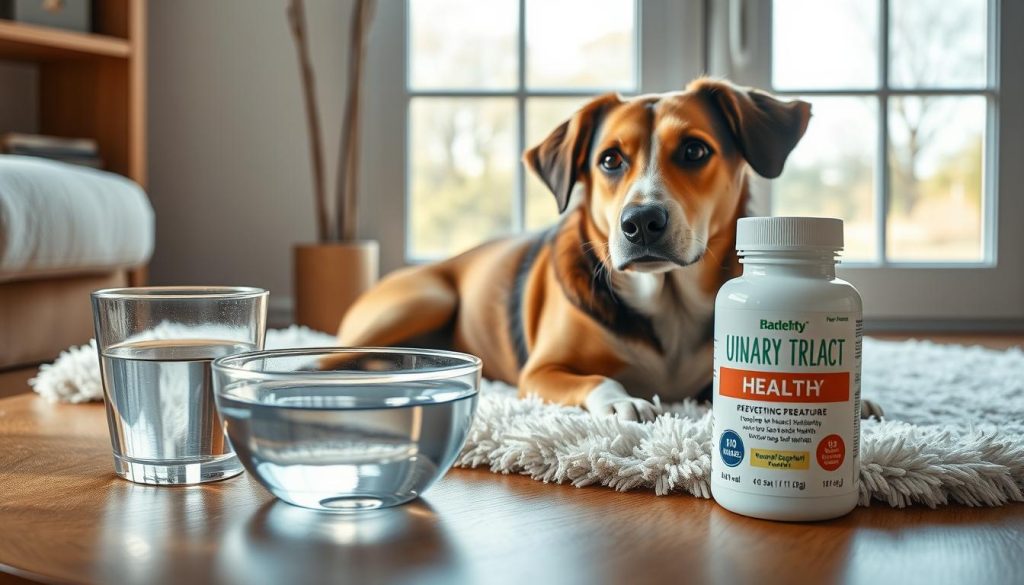
To stop UTIs, you need to change your dog’s lifestyle. Keeping your dog healthy is key. Making smart changes can lower UTI risks and keep your dog happy.
Drinking enough water is vital. Make sure your dog always has clean water. Watch how much they drink. Different dogs need different amounts of water.
- Ensure constant access to fresh water
- Track your dog’s water intake
- Encourage frequent bathroom breaks
- Monitor urine color and consistency
Exercise and stress control are important. Regular walks help your dog urinate right. Keeping your dog calm can prevent urinary problems.
When treating UTIs, always talk to your vet. Natural remedies can help, but don’t skip vet advice. Look out for signs like hard or frequent peeing in dogs.
Your dog’s diet matters too. Adding cranberry or probiotics can boost their health. These can help their immune system and urinary tract.
- Feed high-moisture diets
- Avoid excessive carbohydrates
- Consider immune-boosting supplements
- Maintain a balanced, nutritious diet
Prevention is better than treatment. With these changes, you can keep your dog safe from UTIs. This helps them stay healthy for a long time.
Conclusion
Knowing how to treat dog UTIs is key for pet owners. Our guide has covered ways to manage and prevent these infections. They affect about 14% of dogs over their lifetime.
Older dogs and those with health issues like diabetes face a higher risk. It’s vital to take proactive steps to keep their urinary tracts healthy.
Ensuring your dog drinks enough water and keeping them clean can help a lot. Also, watching for signs of infection is important. Male and small to medium dogs might need special care for UTIs.
When your dog gets a UTI, seeing a vet is essential. Home remedies and changes in lifestyle can help. But, antibiotics are usually needed for 14 days.
Natural options like D-mannose and more water can also help. They prevent bacteria from sticking to the urinary tract.
Prevention is always best. Keep up with vet visits and take a holistic approach to your dog’s health. This way, you can lower the risk of UTIs and keep your dog healthy.
