

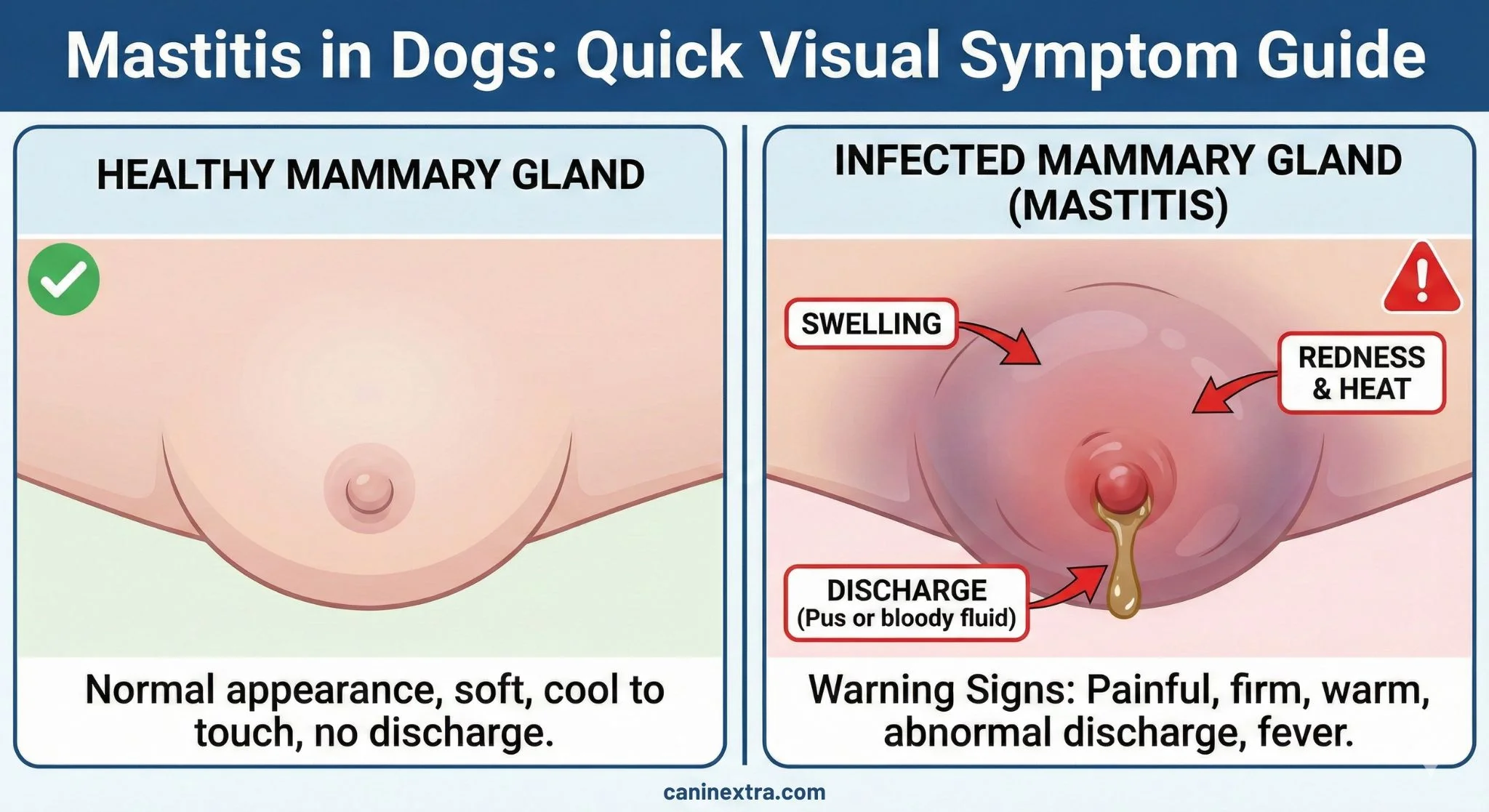
Your female dog just gave birth, and you notice her mammary glands look swollen and red. She’s refusing to let her puppies nurse, and she seems uncomfortable. This could be mastitis, a painful infection that affects nursing dogs and requires immediate attention.
Mastitis in dogs is inflammation of the mammary glands, most commonly caused by bacterial infection during or after pregnancy. Without proper treatment, this condition can escalate from mild discomfort to life-threatening septic infection within 24-48 hours. Understanding the warning signs and acting quickly can save your dog’s life and protect her newborn puppies.
Key Takeaways:
- Mastitis typically develops within 2-3 weeks after birth when bacteria enter the teat canal
- Swollen, hot, painful mammary glands are the primary warning signs requiring immediate veterinary care
- Gangrenous mastitis can cause tissue death and requires emergency surgery within hours
- Prescribed antibiotics and supportive care resolve most cases within 7-10 days when caught early
- Prevention focuses on maintaining clean whelping environments and monitoring nursing dogs daily
What Is Mastitis in Dogs?
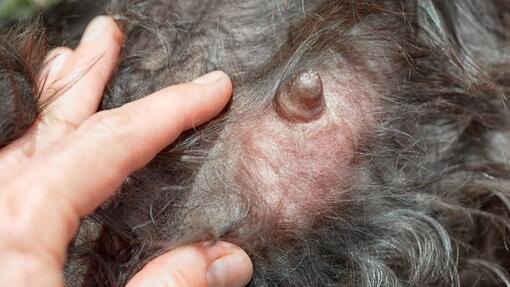
Mastitis in dogs is a condition of swollen mammary glands caused by bacterial infection or inflammation within the mammary tissue. This inflammatory disease primarily affects female dogs during nursing, though it can occur in pregnant dogs or even non-pregnant females in rare cases.
The mammary glands in female dogs become engorged with milk after birth, creating an ideal environment for bacterial growth if bacteria enter through the teat opening. Normal bacteria from the puppies’ mouths, skin flora, or environmental contamination can travel up the teat canal and multiply rapidly in the warm, nutrient-rich milk.
How Mastitis Develops
When a female dog gives birth, her body produces milk to nurse puppies. Each mammary gland has a teat with tiny openings that allow milk to flow out. These same openings can allow bacteria to flow in, especially when:
- Puppies scratch the teats with sharp nails while nursing
- The mother lies on dirty bedding with bacterial contamination
- Milk becomes trapped in the gland when puppies wean too early
- Trauma to the mammary gland creates entry points for infection
The infection causes inflammation within the mammary gland, leading to swelling, heat, pain, and potential abscess formation. Without treatment, bacteria can enter the bloodstream and cause systemic infection.
Critical Warning: Mastitis is not as visible in its early stages compared to advanced cases. Daily inspection of nursing dogs is essential for early detection.
[Suggested Image: Anatomical diagram showing normal mammary gland vs. inflamed mammary gland with labeled bacterial entry points]
Different Types of Mastitis in Female Dogs
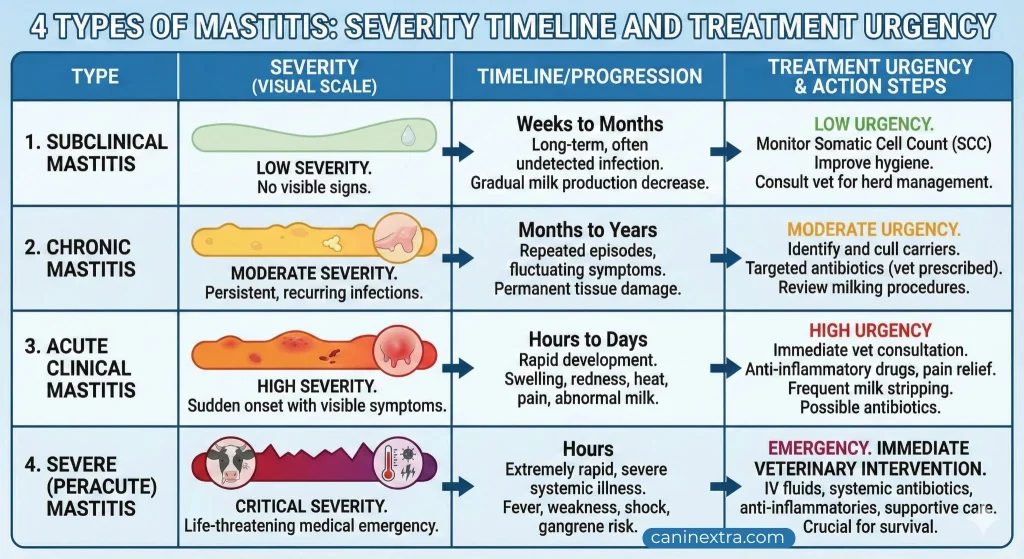
Understanding the severity and type of mastitis helps determine the urgency of treatment. Veterinarians classify canine mastitis into several categories based on symptoms and progression.
Acute Mastitis
Acute mastitis develops suddenly within 24-48 hours. The affected mammary gland becomes visibly swollen, red, hot to the touch, and extremely painful. Female dogs with acute mastitis often show systemic signs like fever (103-105°F), lethargy, loss of appetite, and reluctance to nurse puppies.
This is the most common form of mastitis affecting nursing dogs. Dogs develop mastitis in the acute form when bacterial infection establishes quickly in one or more glands. Treatment must begin within 24 hours to prevent progression to more severe forms.
Chronic or Subclinical Mastitis
Chronic mastitis develops slowly over weeks or months. The inflammation of the mammary gland is persistent but less dramatic than acute forms. The mother is still nursing, but you might notice:
- Slightly firm or lumpy mammary tissue
- Puppies favoring certain teats over others
- Reduced milk production in affected glands
- Mild discomfort without obvious swelling
Chronic or subclinical mastitis may not cause further signs of illness initially, making it harder to diagnose. However, it can flare into acute infection at any time.
Septic Mastitis
Septic mastitis occurs when bacteria multiply rapidly and release toxins into the bloodstream. This severe form causes life-threatening systemic infection. Signs include:
- High fever (105-106°F or higher)
- Vomiting and diarrhea
- Extreme lethargy or collapse
- Dark, bloody, or purulent milk discharge
- Multiple mammary glands affected
Septic mastitis requires emergency veterinary care with IV antibiotics and aggressive supportive treatment. The mortality rate is significant without immediate intervention.
Gangrenous Mastitis
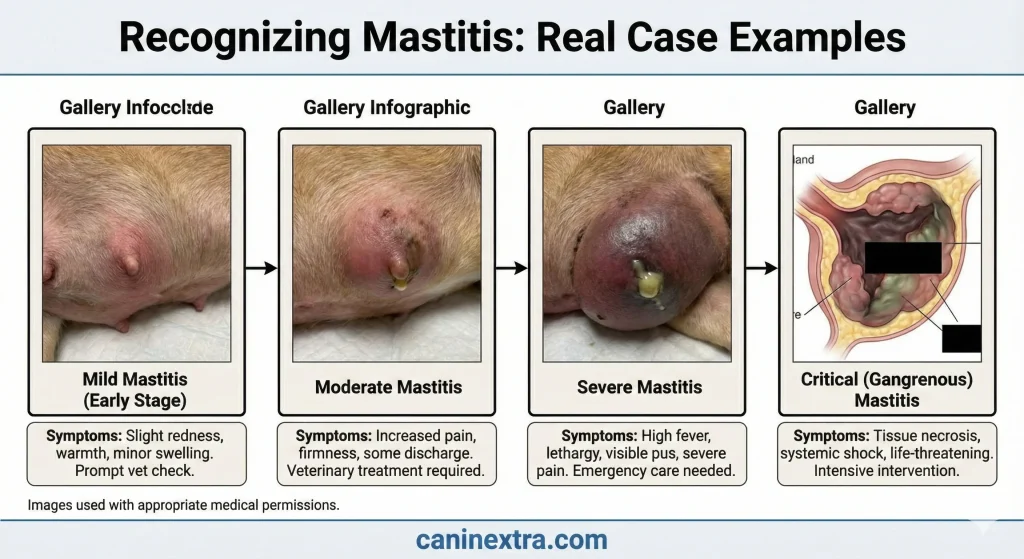
Gangrenous mastitis is the most severe and life-threatening type. Blood flow to the affected mammary gland becomes compromised, causing tissue death (necrosis). The mammary glands and teat may turn dark purple, blue, or black as tissue dies.
This emergency condition requires immediate surgical removal of dead tissue. Without surgery within hours, toxins from dying tissue can cause fatal septic shock. The survival rate depends on how quickly treatment begins.
| Type of Mastitis | Timeline | Severity | Treatment Urgency |
|---|---|---|---|
| Acute | 24-48 hours | Moderate to High | Within 24 hours |
| Chronic/Subclinical | Weeks to months | Low to Moderate | Within 48-72 hours |
| Septic | 12-24 hours | Severe | Emergency (immediate) |
| Gangrenous | 6-12 hours | Critical | Emergency (within hours) |
Symptoms of Mastitis in Dogs: What to Watch For
The signs of mastitis can vary greatly depending on severity, but early recognition saves lives. Here’s what to look for in nursing dogs.
Local Symptoms Affecting the Mammary Glands
Visible Swelling: The affected gland becomes noticeably larger, firm, and distended compared to other glands. Swelling of the mammary gland often affects only one or two glands initially but can spread.
Heat and Redness: The skin over the swollen mammary glands appears pink to deep red. The area feels hot compared to surrounding tissue, a classic sign of inflammation.
Pain Response: The dog may yelp, growl, or snap when you touch the affected area. She’ll often pull away from puppies trying to nurse from painful teats.
Abnormal Discharge: Milk from affected glands may appear discolored, yellow, green, brown, or blood-tinged. In severe cases, thick pus drains from the teat.
Texture Changes: The mammary gland feels hard, lumpy, or rope-like instead of soft and pliable. You might feel distinct nodules or abscesses under the skin.
Systemic Symptoms That Affect Overall Health
Fever: Rectal temperature above 102.5°F indicates infection. Septic cases often exceed 105°F.
Lethargy: The nursing dog sleeps excessively, shows little interest in puppies, and resists getting up to nurse.
Loss of Appetite: Dogs with mastitis often refuse food entirely or eat significantly less than normal.
Behavioral Changes: The mother may become irritable, anxious, or aggressive toward puppies. She might try to avoid nursing completely.
Dehydration: Decreased water intake, dry gums, and sunken eyes signal dehydration from fever and reduced nursing.
Symptoms in Puppies (Indirect Signs)
Sometimes puppies show symptoms before owners notice changes in the mother:
- Constant crying or restlessness (not getting enough milk)
- Weight loss or failure to gain weight appropriately
- Diarrhea or vomiting (from consuming infected milk)
- Sudden death in newborn puppies (from septic milk toxins)
Important: If puppies share their symptoms of distress, constant crying, failure to thrive, or sudden illness, examine the mother’s mammary glands immediately.
Common Causes of Mastitis in Dogs
Understanding what causes mastitis helps with prevention. Several factors contribute to inflammation of the mammary gland in nursing females.
Primary Causes
Bacterial Infection: The most common cause. Bacteria like Staphylococcus, Streptococcus, and E. coli enter through the teat opening. These organisms normally live on skin but cause infection when they penetrate mammary tissue.
Trauma to the Mammary Gland: Puppies with sharp nails scratch teats while nursing, creating microscopic wounds. The trauma to the mammary tissue allows bacterial entry. Injury from lying on rough surfaces or getting stepped on by other dogs also contributes.
Milk Stasis: When milk accumulates without proper drainage, it becomes a breeding ground for bacteria. This happens when:
- Puppies are weaned too quickly or removed from the mother suddenly
- A puppy dies, leaving unused mammary glands engorged
- The litter is small and doesn’t use all available glands
- Mastitis in one gland causes puppies to avoid nursing there
Poor Hygiene: Dirty whelping boxes with fecal contamination expose teats to harmful bacteria. Mothers lying in soiled bedding for extended periods significantly increase infection risk.
Contributing Factors
Systemic Infection: Blood-borne infections from other body sites can seed bacteria in mammary tissue. Dogs with urinary tract infections, skin infections, or dental disease have higher mastitis risk.
Immunosuppression: Stress from pregnancy and lactation temporarily weakens the immune system. Malnourished dogs or those with underlying health conditions are more susceptible.
Genetics: Some breeds appear predisposed to mastitis, though research is limited. Breeds with many nipples or those producing large litters may face higher risk.
Pseudopregnancy: Non-pregnant dogs sometimes produce milk due to hormonal fluctuations (false pregnancy). Without puppies to drain milk regularly, these dogs can develop mastitis.
Causes of Mastitis That Owners of Pregnant Dogs Should Know
Galactostasis Before Birth: Rarely, dogs produce milk before delivery. If the female dog gives birth several days after milk production begins, accumulated milk can become infected.
Retained Placenta: Incomplete placenta delivery after birth causes uterine infection that can spread to mammary tissue through the bloodstream.
Cesarean Section Complications: Surgical birth increases infection risk if proper post-operative hygiene isn’t maintained.
Owners of pregnant dogs should know these risk factors and monitor their dogs closely during the peripartum period.
How Veterinarians Diagnose Mastitis
Prompt and accurate diagnosis of mastitis ensures appropriate treatment. Here’s how vets identify and assess the condition.
Physical Examination
Veterinarians first diagnose mastitis through careful physical assessment. The vet examines all mammary glands for:
- Size differences between glands
- Temperature variations (using the back of the hand)
- Pain response when palpating tissue
- Texture abnormalities (firmness, lumps)
- Skin color changes
- Discharge from teats
They’ll also check vital signs, temperature, heart rate, respiratory rate, to assess systemic involvement. A thorough physical exam can identify postpartum mastitis in its early stages.
Milk Cytology
The vet collects milk samples from affected and normal glands. Under microscopy, infected milk shows:
- Elevated white blood cell counts (indicating inflammation)
- Bacteria visible on stained slides
- Abnormal cellular debris
- Red blood cells (if hemorrhagic)
This simple test confirms infection and helps rule out other causes of mammary enlargement.
Bacterial Culture and Sensitivity
For cases not responding to initial treatment, culture identifies the specific bacteria causing infection. The lab grows bacteria from milk samples and tests which antibiotics kill them effectively.
Culture results take 48-72 hours but provide crucial information for selecting the right antibiotic when standard treatments fail. This is especially important for chronic mastitis cases.
Blood Work
Complete blood count (CBC) and chemistry panel reveal:
- Elevated white blood cells (leukocytosis) confirming systemic infection
- Signs of dehydration (elevated kidney values)
- Electrolyte imbalances
- Liver function (important if septic)
Blood work helps assess severity of the mastitis and guides supportive care decisions.
Ultrasound Imaging
In severe or chronic cases, ultrasound examines internal mammary structure. It can identify:
- Abscesses within the gland
- Extent of tissue damage
- Gangrenous tissue requiring surgery
- Normal vs. diseased tissue boundaries
Ultrasound is particularly valuable when surgical intervention is being considered.
Differential Diagnosis
Vets must rule out other conditions affecting mammary glands:
- Mammary tumors: Can cause swelling but typically aren’t painful or hot
- Mammary hyperplasia: Benign enlargement without infection
- Trauma without infection: Swelling from injury alone
- Dermatitis: Skin infection mimicking mastitis
Proper diagnosis ensures the treatment of mastitis addresses the actual problem rather than a look-alike condition.
Treatment of Mastitis in Dogs: What to Expect
Effective treatment of mastitis in female dogs combines medication, supportive care, and sometimes surgery. Here’s the comprehensive approach veterinarians use.
Antibiotic Therapy
Prescribed antibiotics form the cornerstone of treating bacterial mastitis. Vets typically choose broad-spectrum antibiotics effective against common mammary pathogens:
First-line antibiotics include:
- Cephalexin (most commonly prescribed)
- Amoxicillin-clavulanate
- Clindamycin
- Trimethoprim-sulfa
Treatment duration: 14-21 days minimum, even if symptoms improve within days. Stopping antibiotics early allows bacteria to rebound and causes antibiotic resistance.
Critical: Never use leftover antibiotics from previous illnesses. The severity and type of mastitis determines which antibiotic works best.
Pain Management
Anti-inflammatory medications reduce pain and inflammation:
- Carprofen (Rimadyl): Common NSAID for moderate pain
- Meloxicam: Alternative NSAID
- Tramadol: For severe pain cases
- Cold compresses: Applied 10-15 minutes, 3-4 times daily to reduce swelling
Pain control is essential, comfortable mothers nurse more willingly, ensuring puppies receive adequate nutrition.
Milk Expression
Gentle manual expression of infected milk prevents further accumulation and bacterial multiplication:
- Warm the affected gland with a warm compress (5 minutes)
- Gently massage from the base toward the teat
- Apply light pressure to express milk
- Repeat 3-4 times daily
- Clean the area with mild soap and water afterward
Some vets recommend continuing nursing if milk culture shows low bacterial counts and puppies remain healthy. Others suggest hand-expression only to protect newborn puppies from infected milk.
Fluid Therapy
Dehydrated dogs with septic mastitis need IV or subcutaneous fluids to:
- Restore hydration status
- Support kidney function
- Improve antibiotic distribution
- Help flush bacterial toxins
Hospitalization may be necessary for 24-48 hours in severe cases with IV fluid administration.
Surgical Intervention
Gangrenous mastitis requires immediate surgical removal of dead tissue (debridement) or complete mastectomy of affected glands. Surgery prevents toxin absorption from necrotic tissue that causes fatal septic shock.
Post-surgical care includes:
- Continued IV antibiotics
- Pain management
- Wound care and bandage changes
- Preventing puppies from nursing near surgical sites
- Monitoring for infection or complications
Puppy Management
Protecting newborn puppies during treatment requires careful planning:
If continuing nursing:
- Allow nursing only from unaffected glands
- Use a cloth or bandage to cover infected teats
- Monitor puppies closely for vomiting, diarrhea, or lethargy
If stopping nursing:
- Switch to commercial puppy milk replacer immediately
- Bottle-feed every 2-3 hours for neonates
- Stimulate puppies to urinate and defecate after feeding
- Keep puppies warm (85-90°F for first week)
If mother is too sick to care for puppies:
- Separate puppies to a warm, clean area
- Provide round-the-clock feeding and care
- Consider fostering to another nursing dog if available
Home Care Instructions
Vets send dogs home with specific instructions:
- Administer all medications as directed (set phone alarms if needed)
- Keep whelping area scrupulously clean (change bedding 2-3 times daily)
- Monitor temperature daily (should normalize within 48 hours of starting antibiotics)
- Watch for worsening symptoms (increased swelling, darkening tissue, worsening lethargy)
- Ensure adequate water intake (offer fresh water frequently)
- Apply warm compresses before milk expression sessions
- Follow feeding recommendations for puppies
- Return for recheck in 48-72 hours or sooner if symptoms worsen
Most dogs with acute mastitis improve dramatically within 48 hours of starting antibiotics. Complete recovery takes 1-2 weeks with proper treatment.
How to Prevent Mastitis in Nursing Dogs
Prevention is always better than treatment. These strategies significantly reduce mastitis risk.
Maintain Excellent Hygiene
Clean whelping environment:
- Change bedding daily during the first two weeks post-birth
- Use washable, absorbent materials (not newspaper which is slippery and unhygienic)
- Disinfect whelping box weekly with pet-safe cleaners
- Keep the area dry, moisture promotes bacterial growth
Personal hygiene:
- Wash hands before handling puppies or mother
- Keep the mother’s rear end clean (gently wipe after toileting)
- Trim long fur around mammary glands to prevent matting and bacterial trapping
- Bathe the mother gently 1-2 weeks post-birth (after initial discharge stops)
Puppy Nail Care
Sharp puppy nails cause microscopic scratches on teats during nursing. Trim nails every 5-7 days starting at 1 week old:
- Use specialized puppy nail clippers or human nail clippers
- Remove just the sharp tips (avoid cutting too short)
- File rough edges smooth with an emery board
- Check all puppies, even the smallest ones
This simple step dramatically reduces trauma to the mammary tissue.
Monitor Nursing Sessions
Watch puppies nurse at least twice daily to ensure:
- All puppies are feeding adequately
- No puppies are being pushed away from nursing
- The mother allows nursing from all glands
- Milk flow appears normal
- No glands become overly engorged
Early detection of nursing problems prevents milk stasis.
Gradual Weaning
Abruptly separating puppies causes milk accumulation. Instead:
- Begin weaning at 3-4 weeks by introducing puppy food
- Gradually increase solid food over 4-6 weeks
- Reduce nursing sessions progressively
- Allow mother to naturally reduce milk production
- Don’t remove all puppies simultaneously at weaning
This prevents the sudden engorgement that leads to mastitis.
Nutrition and Hydration
Well-nourished mothers have stronger immune systems:
- Feed high-quality puppy food (higher calories and nutrients)
- Increase food amounts by 25-50% during lactation
- Provide unlimited fresh water (nursing dogs drink 2-3x normal amounts)
- Consider supplements if recommended by your vet
- Monitor body condition, nursing mothers should maintain healthy weight
Daily Inspection
Make examining mammary glands part of your daily routine:
- Check all glands for size, temperature, texture
- Gently express a few drops of milk to assess color and consistency
- Watch the mother’s behavior during examination
- Note any changes from previous days
- Record findings in a nursing log
Early detection of problems allows treatment before severe infection develops.
Breeding Considerations
- Ensure breeding dogs are current on vaccinations
- Treat any existing infections before breeding
- Maintain healthy body weight before pregnancy
- Provide prenatal veterinary care throughout pregnancy
- Prepare clean, safe whelping area several weeks before due date
Healthy mothers face lower mastitis risk.
When Mastitis Is NOT Recommended for Home Treatment
While some mild cases respond to home care, certain situations require immediate veterinary attention. Never attempt home treatment if:
- The dog’s temperature exceeds 103.5°F
- Multiple mammary glands are affected
- The tissue appears dark purple, blue, or black
- The dog refuses food for more than 12 hours
- Puppies are failing to thrive or showing illness
- The mother is lethargic or unable to stand
- Discharge from teats is bloody or purulent
- The dog is in obvious severe pain
- Symptoms worsen despite antibiotics (after 48 hours)
- The mother shows aggression toward puppies (unusual behavior)
These signs indicate severe mastitis requiring advanced medical intervention. Delays in treatment can result in loss of mammary glands, septic shock, or death.
Emergency Threshold: If you observe any signs of gangrenous mastitis (dark tissue discoloration), transport your dog to an emergency veterinary hospital immediately. Every hour matters with tissue death.
Frequently Asked Questions About Mastitis in Dogs
What causes mastitis in nursing dogs most commonly?
Bacterial infection causes most cases of mastitis. Normal skin bacteria enter through the teat opening when puppies scratch during nursing, or when the mother lies on contaminated bedding. The warm, nutrient-rich milk inside mammary glands allows bacteria to multiply rapidly, causing infection and inflammation. Milk accumulation from inadequate drainage also promotes bacterial growth.
Can puppies safely nurse from a dog with mastitis?
It depends on severity. Mild mastitis with clear culture results may allow nursing from unaffected glands under veterinary supervision. However, septic mastitis with purulent discharge poses serious risks to newborn puppies, who can develop fatal infections from contaminated milk. Most vets recommend hand-expression only and supplemental bottle-feeding until antibiotics clear the infection (48-72 hours minimum).
How long does it take to treat mastitis in dogs?
Acute mastitis typically improves within 48 hours of starting prescribed antibiotics, with complete resolution in 7-14 days. However, antibiotic treatment must continue for 14-21 days to fully eliminate infection and prevent recurrence. Chronic or subclinical mastitis may require 3-4 weeks of treatment. Gangrenous mastitis with surgical intervention needs 4-6 weeks for complete healing.
Can male dogs or non-pregnant females get mastitis?
Yes, but rarely. Male dogs have rudimentary mammary tissue that can become infected, though this is extremely uncommon. Non-pregnant females can develop mastitis during false pregnancy (pseudopregnancy) when hormonal changes cause milk production without puppies to drain the glands. Any dog producing milk can potentially develop mastitis if bacteria enter the mammary tissue.
Is mastitis contagious to other dogs or humans?
Mastitis itself is not contagious, it’s an internal infection of mammary tissue, not a communicable disease. However, the bacteria causing mastitis (Staphylococcus, Streptococcus, E. coli) can transfer to humans through contact with infected milk or discharge. Practice good hygiene, wash hands thoroughly after handling infected areas, and keep other dogs away from contaminated bedding or discharge.
How much does treatment of mastitis in dogs cost?
Treatment costs vary by severity and location. Basic treatment (exam, antibiotics, pain medication) for mild acute mastitis typically ranges from $200-$400. Moderate cases requiring blood work, culture, and hospitalization cost $500-$1,200. Severe septic or gangrenous mastitis requiring surgery, intensive care, and extended hospitalization can exceed $2,000-$5,000. Pet insurance often covers mastitis treatment as an illness, not a breeding-related exclusion.
What happens if mastitis goes untreated?
Untreated mastitis progresses rapidly from acute infection to septic shock within 24-72 hours. The infection spreads through the bloodstream, causing multi-organ failure. Gangrenous mastitis develops when blood supply to mammary tissue is cut off, resulting in tissue death and potentially fatal toxin release. Mortality rates exceed 50% in untreated severe cases. Even surviving dogs may lose affected mammary glands permanently.
Can I prevent my dog from getting mastitis entirely?
While you cannot guarantee prevention, you can dramatically reduce risk through proper management. Maintain pristine whelping hygiene with daily bedding changes. Trim puppy nails weekly to prevent teat scratches. Inspect mammary glands daily for early warning signs. Ensure adequate puppy nursing from all glands. Wean gradually over 4-6 weeks rather than abruptly. These steps reduce mastitis risk by approximately 80-90% according to breeding kennel data.
Should I stop breeding a dog who has had mastitis?
One episode of mastitis doesn’t necessarily mean you should retire a breeding dog. If the mastitis was mild, responded quickly to treatment, and resulted from preventable causes (poor hygiene, nursing trauma), the dog can safely have future litters with improved management. However, recurrent mastitis across multiple pregnancies suggests underlying issues, chronic mammary disease, immune problems, or structural abnormalities, and breeding retirement should be considered.
How do I know if my dog’s mastitis is improving?
Positive signs of improvement include: decreased swelling within 48 hours of starting antibiotics, reduced skin redness and heat, normal body temperature (under 102.5°F), improved appetite and energy, willingness to allow puppies to nurse without pain, and milk returning to normal color (white, not discolored). If symptoms don’t improve within 48-72 hours of treatment, or if they worsen at any time, contact your veterinarian immediately for treatment adjustment.
Can I use home remedies instead of antibiotics for mastitis?
No. Home remedies like warm compresses and cabbage leaves may provide symptom relief but cannot eliminate bacterial infection. Mastitis is caused by bacteria multiplying inside mammary tissue, requiring systemic antibiotics to penetrate tissue and kill pathogens. Attempting home treatment delays proper care and allows infection to progress to life-threatening stages. Always consult a veterinarian for mastitis diagnosis and treatment.
What’s the difference between mastitis and normal mammary engorgement?
Normal engorgement occurs when milk production exceeds puppy consumption, causing firm, enlarged glands that remain cool to touch, non-painful, and produce normal white milk. The mother shows no signs of illness. Mastitis involves hot, painful, swollen glands with discolored milk discharge, accompanied by fever, lethargy, and reluctance to nurse. If you’re uncertain, veterinary examination provides definitive diagnosis.
Conclusion
Mastitis in dogs is a serious but treatable condition affecting nursing mothers. The key to successful outcomes is early recognition and prompt veterinary care. Swollen, hot, painful mammary glands accompanied by fever or lethargy always warrant immediate medical attention, these symptoms can escalate to life-threatening infection within hours if ignored.
Prevention through excellent hygiene, proper puppy management, and daily monitoring protects your nursing dog from this painful condition. For dogs who develop mastitis, prescribed antibiotics combined with supportive care resolve most cases completely within two weeks. The severity of the mastitis determines treatment intensity, ranging from oral antibiotics for mild cases to emergency surgery for gangrenous infections.
Stay vigilant during the critical first three weeks after birth when mastitis risk peaks. Trust your instincts, if something seems wrong, seek veterinary guidance immediately. Your quick action can save your dog’s life and ensure healthy puppies.
Examine your nursing dog’s mammary glands twice daily by gently feeling each gland for heat, swelling, or pain. Record daily observations in a nursing log. At the first sign of abnormality, increased warmth, firmness, redness, or behavioral changes, contact your veterinarian within 12 hours. Keep your vet’s emergency number readily accessible throughout your dog’s nursing period. Consider taking photos of normal mammary glands post-birth for comparison if you suspect changes later.